James Joyce: Rigatoni Con Stracotto

Tags

, , , , , , , , , , ,

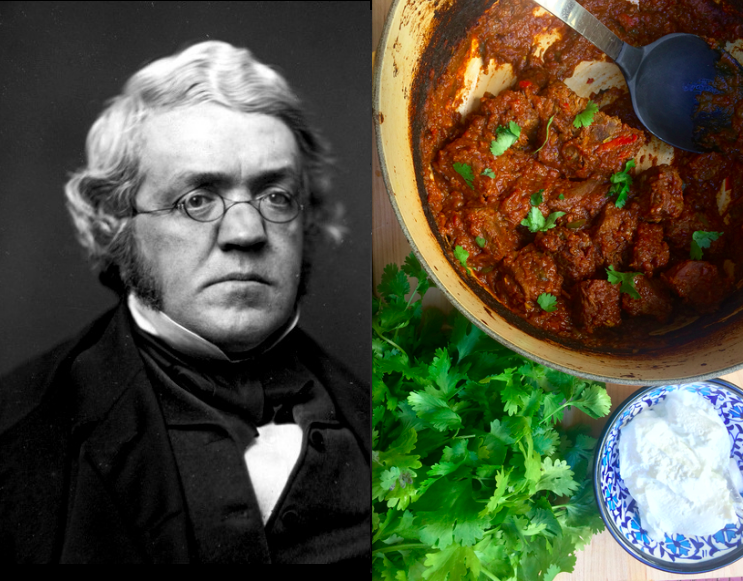
James Joyce - Rigatoni con Stracatto

I read Ulysses in my first year of college, armed with a “European Literary Tradition” class syllabus and a book of annotations that was nearly as long as the novel itself. The details of Proteus and Stephen Dedalus didn’t stay with me in the least, but what remained was the overwhelming sense of loneliness I felt: people were always sadly eating kidneys in a pub, a kind of dual gastronomic punishment (first the solitude, then the kidneys). For a generation that’s been told that we should never eat alone, Leopold Bloom’s day seems like a cautionary tale (an extremely elaborate one).

Restaurants can be a taunt to the solitary diner: you can’t even be alone with your loneliness when there’s a table of strangers at your elbow. And your pity party of one would have felt particularly grim if you were seated next to James Joyce’s party of ten. When the Joyces went out, they went as a pack—a boisterous one. Hemingway shared the gossip from Paris in his letters: ”[Joyce] and all his family are starving but you can find the whole celtic crew of them every night in Michaud’s, where Binney and I can only afford to go about once a week.” I picture a modern-day Joyce dining out, making it rain Euros while ordering bottle service.

Unlike his withdrawn characters, Joyce’s enjoyment of food was wrapped up in his enjoyment of others, and vice versa. Writing to his brother, Stanislaus, he requested both food and company: “a slice of corned beef and cabbage, a sizeable beefsteak prepared on a gridiron, and (excuse the hierarchy) an intelligent supra-burgher like yourself to share the meal.”

But Joyce’s favorite dining companion was his wife, Nora—who conveniently also did all the cooking. A day with the Joyces meant a day of eating, starting with hot chocolate at 9 a.m. “At midday we have lunch which we (or rather she) buys, cooks (soup, meat, potatoes and something else)…. At four o’clock we have chocolate and at eight o’clock dinner which Nora cooks.” If anyone tells you having multiple hot chocolates a day is wrong, direct them here. 
Eating wasn’t all that went on in the Joyce’s kitchen; if you read their infamously naughty correspondence, you might not want to eat off their dining table when you learn where it’s been. But their exploits prove what Joyce clearly already knew: the kitchen isn’t just a place for the stomach, but for the heart. As he writes to Nora, after a short absence, “I shall not quit the kitchen for a whole week after I arrive, reading, lolling, smoking, and watching you get ready the meals and talking, talking, talking, talking to you. O how supremely happy I shall be! God in heaven, I shall be happy there!”

Rigatoni con Stracatto Recipe

When Joyce mentions food in his letters, he usually mentions it in bulk: ”I would like roast beef, rice-soup, capuzzi garbi, mashed potatoes, pudding and black coffee,” he writes Nora. “No, no I would like stracotto di maccheroni, a mixed salad, stewed prunes, torroni, tea and presnitz. Or no I would stewed eels or polenta with… Excuse me, dear, I am hungry tonight.”

Browse these endless lists of dishes (which also find their way into Ulysses), and you’ll almost assuredly find a soup or two. Joyce constantly mentions soups and stews in both his letters and his novels“thick giblet soup” is a favorite of Leopold Bloom, although Joyce has a particular fondness for stracotto, a braised pot roast served with pasta, which he discovered while living in Trieste. It’s a hearty dish, more suitable for a stick-to-your-ribs winter meal than for middle-of-summer Bloomsday, but Leopold Bloom’s meals weren’t particularly seasonal either (Kidneys? Cocoa and cider? in June?).

This is one of those one-pot wonders with flavors so rich, you’ll wonder why it wasn’t more work. As my roast simmered away on the stove, I remembered what Joyce wrote while struggling with Ulysses: ”The ingredients will not fuse until they have reached a certain temperature.” More effort doesn’t always mean a better result. Sometimes it’s just a matter of letting the flavors meld.

(Adapted from Gourmet)

2 pounds boneless chuck roast
1/4 teaspoon salt
1/4 teaspoon pepper
2 tablespoons olive oil, divided
2 large onions, finely chopped
2 carrots, in 1-inch pieces
2 celery ribs, in 1-inch pieces
6 cloves garlic, minced
1 cup red wine
2 cups beef or veal stock
1 can (14 ounces) crushed tomatoes
1 teaspoon dried thyme
1 teaspoon dried oregano
2 bay leaves
1/2 teapoon red chili flakes
Kosher salt and freshly ground pepper, to taste
1 pound dry rigatoni
Grated parmesan, to taste

1. Pat roast dry with paper towels and season with salt and pepper. In a large pot over medium heat, add 1 teaspoon oil until hot but not smoking. Add meat and brown on both sides, about 12 minutes total. Transfer to a platter and set aside.

2. To the same pot, add remaining 1 tablespoon oil and onion, carrot, celery and garlic. Sauté over moderately high heat until softened and golden, about 5 minutes. Add wine, stock, tomatoes, thyme, oregano, bay leaves, and chili flakes and bring to a boil. Reduce heat to low.

3. Return roast with any juices on platter to pot and cover. Braise, turning over once every 30 minutes, until tender enough to shred with a fork, about 3 hours. Add additional wine as needed, if sauce reduces too much.

4. Transfer meat to a cutting board and allow to cool slightly. Meanwhile, discard bay leaves from sauce and, using an immersion blender, purée sauce until texture is thick and even. Cut meat into 2-inch chunks, then shred with 2 forks. Return shredded meat to sauce, and season with salt and pepper.

5. Cook rigatoni in a pot of boiling salted water until al dente. Drain, reserving 1/2 cup of pasta water. Stir water into sauce, then add pasta and stir to coat. Top with grated cheese.

F. Scott Fitzgerald: Prohibition Ale

Tags

, , , , ,

F. Scott Fitzgerald - Prohibition Ale

With the internet awash in Gatsby-themed gin rickey and mint julep recipes, F. Scott Fitzgerald has recently reasserted his reputation as “America’s Drunkest Writer.” It might seem like a dubious distinction, but Fitzgerald embraced boozing as a literary badge of honor (after all, he had to overcome some stiff competition for the title). He famously dubbed drink “the writer’s vice,” introducing himself at parties as “F. Scott Fitzgerald, the well-known alcoholic” or (when feeling particularly loquacious) “one of the most notorious drinkers of the younger generation.”

Gin has gone down in history as Fitzgerald’s particular drink of choice (he thought it would be harder to detect on his breath). But while gin was mainly for parties, beer was for every other time of day … including breakfast. It wasn’t a writer’s vice. It was his lifestyle.

When Zelda wrote to Scott in 1930, reminiscing about their early days back in New York, her memories were shaped by the beer they shared. “We drank Bass Pale Ale,” she wrote. “We drank always.” It during was after they moved to Europe that the Fitzgeralds started fueling their revels with hard liquor; good ales and lagers were hard to get in France, although Fitzgerald was pleased to encounter some decent brews on a visit to Germany in 1925.  He marveled at the wealth of “Pilsen and Munich beer of fine quality,” noting, “There is less than there was when I got here.”

When Fitzgerald returned to the U.S., he also returned to beer, his first love—a relationship that continued to carry him as his marriage to Zelda broke down. At his peak intake, he went through 37 bottles a day, using beer as a substitute for water (and if we were all  be that hydrated, our doctors would be so proud). To Scott, beer didn’t count as a real drink—just like when I was a “vegetarian,” fish didn’t count as real meat. In 1937, when Fitz claims to be “on the complete wagon,” he has to clarify: this time he means “not even beer.”

In the late 1930s, Fitzgerald tried to curb his intake of the beverage that had shaped his life; “I havn’t [sic] even had a glass of beer for a month + shall try it again” he wrote. But even as he saw its impact on his health, he couldn’t help but indulge in a cold one every now and then. “The fact that I have abused liquor is something to be paid for with suffering and death perhaps,” he wrote, “but not renunciation.”

* * *

Prohibition Ale Recipe

I’ve always been massively impressed by friends that make their own beer (although the formula to impress me is straightforward: the more fancy equipment, the more wowed I am). After trying this recipe, I’m still amazed by people who make good beer. But, as it turns out, it’s fairly easy to make beer the way Fitzgerald did—that is, cheaply, quickly, and with results that are technically drinkable.

Princeton library’s collection of Fitzgerald papers includes the writer’s personal recipe, written out in his own hand. It’s similar to many other Prohibition-style brews, in that it requires only barley malt, sugar, yeast, water, and a bit of time (not too much, though, since one’s patience can only stretch so far).

I’m going to go ahead and guess you probably won’t make this recipe for your Gatsby party. But for those who do, Fitzgerald writes, “the genuine fluid awaits your pleasure.” As a note about quantities, he notes, “about 50 bottles should be obtained”—which should be enough for a solid day and a half, if you drink the Fitzgerald way.

1 can (3-pounds) simple hopped pilsner malt extract
3 1/2 cups sugar, divided, plus 1 teaspoon
1 packet instant yeast
Equipment: Fermentation bucket (sterilized) with lid, outfitted with airlock and rubber stopper

1. In a small bowl, dissolve 1 teaspoon sugar in 1 cup lukewarm water. Add yeast and let stand 10 minutes.

2. Meanwhile, in a large stockpot, bring 1 gallon of water to a boil. Reduce heat to medium and add malt syrup and 2 cups sugar. Stir until dissolved.

3. Fill fermentation bucket with 3 gallons cold water. Pour malt mixture into bucket, then add additional cold water until bucket is nearly full, a few inches from the top. Add yeast and mix well. Seal lid and let stand at least 48 hours, up to 7 days.

4. In a saucepan over medium heat, dissolve remaining 1 1/2 cups sugar in 3 cups water. Let cool 15 minutes, then add to fermentation bucket. Stir, then siphon liquid into sterile bottles using rubber tubing.

5. Let stand 3 to 4 days in a cool dark place.

Anton Chekhov: Blini Stack with Honey Orange Filling

Tags

, , , , , , , , ,

Anton Chekhov: Crepe Cake with Orange Honey Filling

One month from now, I’m going on a “big trip” – the kind of major vacation you typically put off until the time is right, or the airfare goes down, or your parents hit a major anniversary (which is eventually what happened). There are lots of plans in the works, for luggage, visas, appropriate clothing … which can all be dealt with later. Right now, I’m busy deciding what to eat.

For a dedicated eater, travel plans are really just food plans in disguise. So you can imagine how disappointed Anton Chekhov was by his trip to Siberia, where after a long grueling journey, he found that the food was only aspiring to edibility. Siberian cuisine “is not for the European stomach,” he wrote in 1890, a situation intensified by the notable lack of health codes. “One old lady wiped a teaspoon on her hindside before handing it to me,” he balked.

Chekhov’s put-downs during his Siberian stay have become legendary (“Tomsk is a very dull town. … The inhabitants are very dull, too”), sparking a long and bitter feud between the playwright and his hosts. But he saved his most cutting remarks for the cuisine. For an all-time gastronomic low, he described a dish of duck stomachs, which “haven’t been entirely cleaned of their contents and so, when you bite into them, cause you to think your mouth and your rectum have changed places.” Suddenly, all my worst kitchen failures are looking positively delicious in comparison.

But there was one bright spot on Chekhov’s trip: the baked goods. The residents of Tomsk baked “the most delicious bread … delicious also are the pies and pancakes, the fritters and dinner rolls.” Blinis are a Siberian specialty, and Chekhov marveled at their remarkable thinness. I imagine him bingeing on entire dinners of fritters and blinis, retreating into the culinary safety of carbs. As someone who regularly asks for bread basket refills, this sounds like a perfectly enjoyable solution.

Chekhov immortalizes his love for blinis in the short story “On Mortality,” which opens with a diner “quivering with impatience, await[ing] the moment the blini would appear.” When a stack emerges from the kitchen, they are ”crisp, lacy, and as plump as the shoulders of a merchant’s daughter.” A whole lot sexier than duck stomachs, in other words, and maybe even worth a trip. 

* * *

Orange Honey Filling chekhov3

When Chekhov wrote from Siberia in May 1890, he despaired that “spring hasn’t yet arrived here.” The beginning of spring often coincided with Maslenitsa, the last feast before Lent in the Orthodox tradition. It’s often known as “pancake week,” because that’s what people gorged on the most, with either sweet fillings like honey and cream or savory ones like salmon and caviar.

Winter in New York seemed to stretch to Siberian lengths this year, but this weekend, the first one warm enough for sundresses sans tights, meant it was blini time. These take inspiration from the sweeter side, served up in a towering stack that will satisfy a crowd of revelers, ready for spring.

For the blinis:
2 eggs
1 1/2 cups milk
1 tablespoon sugar
1/2 teaspoon salt
2 cups flour
1 tablespoon butter

For the filling:
4 ounces cream cheese, softened
1 1/4 cups plain Greek yogurt
1/4 cup honey, plus more for drizzling
2 tablespoons orange zest, plus more for garnish

1. In a large bowl, whisk together eggs, milk and 1 cup water until combined. Whisk in sugar and salt. In a slow stream, add flour until the batter is smooth, with no lumps.

2. In a medium (9-inch) nonstick skillet, warm butter over medium heat until bubbling. Ladle in batter, about 1/3 cup at a time. Working quickly, swirl pan to spread batter in an even circle. Cook 2 to 3 minutes, until underside is lightly browned. Flip, then cook 30 seconds more. Stack onto a plate and let cool.

3. In a medium bowl, combine cream cheese, yogurt, honey and orange zest, stirring until smooth.

4. Place one crepe on a new plate and cover with a thin layer of yogurt mixture. Repeat for remaining crepes, ending with your prettiest one. Drizzle stack with extra honey and garnish with orange zest.

Alexandre Dumas: Purple Potato Salad with Spring Onion Pesto

Tags

, , , , , , ,

Alexandre Dumas - Potato Salad with Spring Onion Pesto

After you decide you want to be a writer, the problem becomes what to write about. Every subject seems to come with a prepackaged identity: the introspective memoirist, the philosophizing critic. And then there’s “food writing,” a term so broad, it’s practically identity-free (Wikipedia’s list of food writers mentions both the Greek scholar Athenaeus and Martha Stewart, two people who, I imagine, would have very little to discuss at a dinner party).

The one thing that does seem to unite “food writing” is the widely held belief that it is frivolous, somehow “less than.” A book I read recently described someone as “too good a writer to be a food writer,” and while I’d heard versions of that before, it gnawed at me all the same. It didn’t belong there, in this book I otherwise liked.

Alexandre Dumas was fighting the same attitude when he made his food-writing debutDumas had already established his identity in the literary world: The Count of Monte Cristo was only, you know, the most popular book in all of Europe. So he had his reputation on the line when he decided to write about food – and he knew it.

His food book, he argued, would be different, combining “both scientific knowledge and an element of wit,” and would “perhaps deserve to be read by men of serious character.” In other words, it wasn’t just for that cookbook-reading riffraff. The result is a strange little encyclopedia, written of two minds: half food worshiper, half food apologist. The one thing Dumas can say for sure is that he just really loves potatoes.

The unexpected star of the book, potatoes take up an entire section in From Absinthe to Zest, as ”a most excellent vegetable.” He details their historical significance: During the French Revolution, the royal gardens were torn up to make way for them. He also makes grand claims about their health benefits: “The alacrity with which one observes children eating baked potatoes, and feeling all the better for them, proves that they suit all dispositions.” I’m not sure about that evidence—considering the alacrity with which I ate Twix bars at that age—but he seems convinced enough.

Dumas’ main gripe is that while the potato was embraced by the masses, “absurd prejudices prevented it from being duly appreciated for a long time” by the upper classes. “Many people thought it a dangerous foodstuff, or at least a coarse one.” Dumas took it upon himself to change prejudices toward the potato … and began changing prejudices toward food writing at the same time. Now it’s up to us to finish the job.

* * *

dumas1 dumas images

From Absinthe to Zest includes several of Dumas’ favorite recipes; pommes de terre a la à la provençal is so simple it would fit on the back of a postcard. “Put six soupspoons of oil in a casserole with the zest of the skin of half a lemon, parsley, garlic, and well-chopped spring onion, a little grated nutmeg, salt and pepper. Then peel the potatoes and cook them with these seasonings. When the moment to serve arrives, sprinkle them with the juice of a lemon.”

This potato salad combines those same ingredients, but uses spring onions two ways—pickled, and in a vibrant pesto. Any small potato (red new potatoes, or fingerlings) would work here, but if you ask Dumas, “the best, without question, are the purplish ones, known in Paris by the name vitelottes.” While you might not notice the taste difference he did, it’s easy to see why he liked them: They transform the humble potato into the visual showstopper he hoped it would become.

1/4 cup white wine vinegar
1 tablespoon kosher salt
1 1/2 teaspoons sugar
1 large bunch spring onions (or ramps), greens and whites separated
2 1/2 pounds Peruvian purple potatoes (or fingerling potatoes), scrubbed and halved
1/2 cup pine nuts, toasted
1/2 cup grated parmesan cheese
3 garlic cloves, peeled
1/4 cup olive oil
1 cup coarsely chopped parsley
Juice from 1 lemon
1/4 teaspoon freshly grated nutmeg
Salt and pepper, to taste

1. In a small bowl, combine vinegar, salt, sugar and 1/4 cup water, stirring until sugar is dissolved. Thinly slice the whites of the green onions and submerge in vinegar mixture. Set aside.

2. Place potatoes in a large pot and cover with water until just submerged. Bring to a boil and cook 10 minutes, until tender when pierced with a fork. Drain potatoes and set aside.

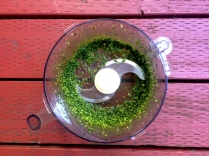
3. Coarsely chop the onion greens and place in a food processor, along with pine nuts, parmesan and garlic. Pulse until a thick paste forms. While food processor is running, add olive oil in a slow stream until pesto is smooth.

4. Place potatoes in a large bowl and fold in pesto until potatoes are coated. Drain onion whites and add to bowl, along with parsley, lemon juice and nutmeg. Toss until combined. Season to taste with salt and pepper.

Marquis de Sade: Molten Chocolate Espresso Cake with Pomegranate

Tags

, , , , , , , , ,

Marquis de Sade - Molten Chocolate Espresso Cake

I have always been semi-mortified about special requests in restaurants. Meg Ryan’s orders in When Harry Met Sally still fill me with third-party embarrassment. When I was in high school, my friends and I decided, instead of going to junior prom, we’d spend our ticket money on a fancy dinner in San Francisco instead. I anticipated it for weeks, poring over the menu in advance like it was some kind of ancient codex. After much deliberation, I picked the black pepper-crusted tuna steak—which, of course, arrived raw. 

What to do? Amazingly (this being California in the 90s), I hadn’t yet eaten raw fish and wasn’t planning to start then. But, determined to be accommodating  I picked at the seared edges of the tuna until a friend noticed, rolled her eyes, and asked our waiter to re-fire it. I watched him parade the plate back to the kitchen, as if announcing to the room, “That girl in the corner table is so uncultured, she didn’t know tuna is served rare, and we are all paying the price.” 

My tolerance for special requests has improved since then (It helps that I’m no longer in high school, when even the wrong nail polish was the apex of embarrassment). And whatever I order, I know it will never compare to the culinary demands of the Marquis de Sade, who showed as much disregard for dining conventions as he did for sexual ones—that is, pretty much none whatsoever.

For one thing, if I were in prison, I assume that I wouldn’t have a lot of input about the food; you get what you get. Not so the Marquis. In one of his many jail stints, he counseled the chef of the Bastille about the daily menu: it had to include a custard (vanilla or coffee flavored only), baked apples, and “an excellent soup (I will not repeat this adjective; soups must always be excellent.” Try this today, and I bet you’d get a big fat of soup in your face. It would not be the excellent kind, either.

I also admit that I’ve never once ordered cookies shaped to specific dimensions. The Marquis was all over this one. His requests to the Bastille are charming compared to the letters he wrote his wife, Renee, from prison, which listed his extensive food needs, including biscuits “six inches long by four inches wide and two inches high.” He was not only particular about his sweets; his appetite for them was insatiable. Another letter to Renee asked for “four dozen meringues; two dozen sponge cakes (large); four dozen chocolate pastille candies, vanillaed, and not that infamous rubbish you sent me in the way of sweets last time.”

And woe unto the person who forgets the chocolate. “The next time you send me a package … try to have some trustworthy person there to see for themselves that some chocolate is put inside,” he snarked. He may have been a libertine in the bedroom, but in the dining room with the Marquis, you don’t fool around.

* * *

Molten chocolate espresso cake with pomegranate recipe

IMG_1603

As a fellow chocolate fiend, my biggest annoyance is when baked goods labeled “chocolate” just don’t taste like it. My favorite cakes are the ones with only a whisper of flour and sugar, where chocolate loudly makes its presence known. So I can relate to one of the Marquis most common complaints: more chocolate, please. “The sponge cake is not at all what I asked for,” he wrote to Renee. “I wanted it to be chocolate inside, of which it contains not the slightest hint.”

So how should a chocolate cake taste, Marquis? “It ought to have the same taste as when you bite into a bar of chocolate. I wish it to be a chocolate cake, and of chocolate so dense that it is black, like the devil’s arse is blackened by smoke.” Leave it to him to take “sinfully delicious” to a whole new level.

If that hasn’t put you off dessert, try these. They’re “cakes”, sure, but only for a moment—until you break into them and they become just what the Marquis called for, a melted chocolate bar.

(Adapted from Cooking Lightironically enough)

3/4 cup all-purpose flour
2/3 cup unsweetened cocoa powder
5 teaspoons instant espresso powder
1 1/2 teaspoons baking powder
1/4 teaspoon salt
1/4 cup unsalted butter, softened
2/3 cup granulated sugar
2/3 cup packed brown sugar
4 eggs
1 1/2 teaspoons vanilla extract
1 (2.6-ounce) bar dark (71% cocoa) chocolate (such as Valrhona Le Noir Amer), finely chopped
Pomegranate seeds, for garnish (optional)

1.  Grease 10 (4-ounce) ramekins. In a small bowl, sift together flour, cocoa, espresso powder, baking powder, and salt.

2. Place butter in a large bowl; beat with a mixer at medium speed 1 minute. Add granulated and brown sugars, beating until well blended, about 5 minutes. Add eggs, one at a time, and vanilla, beating until well blended.

3. Fold flour mixture into sugar mixture; fold in chocolate. Divide batter evenly among ramekins; arrange ramekins on a jelly-roll pan. Cover and refrigerate 4 hours or up to 2 days.

3. Preheat oven to 350°F. Remove ramekins from fridge and let stand at room temperature 10 minutes. Uncover and bake for 12 minutes or until cakes are puffy and slightly crusty on top (do not overbake – trust me, they’re done). Let sit for 1 minute, then unmold. Top with pomegranate seeds if using; serve immediately. If you can’t wait to unmold them, just eat them out of the ramekin. It’s not a sin.

D.H. Lawrence: Polenta with Sausage Ragù

Tags

, , , , , , , , , ,

D.H. Lawrence - Polenta with Sausage Ragu

One hundred years ago, D.H. Lawrence was awaiting the publication of what would become his most famous (and most controversial) novel. Sons and Lovers celebrates its centennial this May—but in the weeks leading up to its release, Lawrence’s thoughts were elsewhere, in a little house across the Alps: “I want to go back to Italy,” he wrote.

Lawrence made his first trip to Italy while working on Sons and Lovers, and he felt an immediate connection. “I think I shall be happy there, and do some good work,” he said in 1912, just before settling near Lago di Garda, a few miles from Verona. Several months later, his writing was already moving along. “I do my novel well, I’m sure. It’s half done.”

But when taking a break from his desk, Lawrence was at work in the kitchen, which he praised in letters home. “There’s a great open fireplace, then two little things called fornelli – charcoal braziers – and we’ve got lots of lovely copper pans, so bright. Then I light the fornello and we cook. It’s an unending joy.” He found beauty in the smallest act of cooking—he loved his pots so much, he made sketches of them. Everything is just red earthenware, roughly glazed, and one can cook in them beautifully.”

For Lawrence, Italian cuisine meant a chance to experiment with ingredients of all kinds, from the quotidian to the obscure. “We eat spaghetti and risotto and so on all of our own making,” he wrote. ”We eat quantities of soup … midday polenta made of maize flour boiled to a stiff porridge that one cuts in slices with a string … queer vegetables - cardi – like thistle stalks, very good – and heaps of fresh sardines.” He frowned upon the tendency of the locals to use too much oil, but had certain indulgences of his own: “Maggi and I grate pounds of cheese,” he admitted. 

If we’re lucky, we discover for ourselves what Lawrence found in Italy: that place that inspires all our creative pursuits, whether it’s at the desk or at the stove. The freedom and adventure he felt there, through, dissipated when he left Italy to go north. “I have suffered from the tightness, the domesticity of Germany. It is our domesticity which leads to our conformity, which chokes us.” Little did he know how non-conformist his new novel would be seen—a little reminder of Italy that lingered there. 

* * *

Polenta with sausage and mushroom ragu recipe

Lawrence didn’t stay away from Italy for long; in 1914, he and his wife-to-be, Frieda, returned for an eight-month stay, and began to cook again, focusing on the specialties of the north that they had come to love: risotto, polenta, and hearty sauces and soups.

“We are cooking out of Mrs Waterfield’s book,” Frieda wrote in a letter home, referring to Lina Duff Gordon’s Home Life in Italya cookbook written and illustrated by two other ex-pats who lived close by. The book is now in the public domain, so you can browse through the recipes the Lawrences likely used, including one for D.H.’s beloved polenta, stirred until creamy then poured on “a wooden slab to the thickness of an inch” to harden into cakes.

“Polenta, when made with a well-flavored sauce, is an excellent dish,” Gordon notes. She starts her sauce out with “the usual soffrito of onion, parsley, funghi, a sausage and some mortadella (bacon would do as well).” All those meaty flavors come together in this sausage and mushroom ragu. Serve à la Lawrence—with a liberal grating of cheese. 

Polenta:
1 cup whole milk
1 cup cornmeal
1/2 teaspoon salt
1/4 cup grated Parmigiano-Reggiano

Sausage and Mushroom Ragù:
1 teaspoon olive oil
1 pound hot Italian sausages
1 yellow onion
12 ounces shitake mushrooms
2 slices bacon
4 large basil leaves
1 can (14 ounces) diced tomatoes
1 cup chicken broth
2 teaspoons red wine vinegar
Salt and pepper to taste

1. Combine milk and salt with 2 cups water in a small saucepan over medium heat. Bring to a boil. Slowly add cornmeal, stirring constantly, and reduce heat to low. Continue to stir 10 minutes, then add salt and pepper to taste. Pour polenta into an 8×10 inch baking pan. Set aside.

2. Heat oil in a large pot. Add sausages and cook until the fat is rendered and sausages start to brown, about 5 minutes. Transfer sausages to a plate lined with paper towels and set aside.

3. Chop onion, mushrooms, bacon and basil leaves in 1/2-inch pieces, then add to the remaining fat in the pot. Cook over medium heat until onions are soft, about 10 minutes.

4. Preheat broiler. Add tomatoes, broth and vinegar to pot, then lower heat and let simmer 10 minutes. Cut sausages into 1-inch pieces and add to sauce until cooked through, 5 minutes. Season with salt and pepper.

5. While sauce is reducing, put baking pan with polenta under the broiler until the top is crispy, 5 to 7 minutes. Remove from broiler and sprinkle cheese over the hot polenta. Cut into squares, top with sausage ragù, and serve.

Jane Austen: Brown Butter Bread Pudding Tarts

Tags

, , , , , , , , , , ,

Jane Austen - Devizes Cheesecake

Even when you love to cook, there are those times when it would be nice to have just a little help: when you promised to make something for the office potluck but forgot to go shopping; when that dinner party you’re hosting sneaks up on you; when your in-laws you dearly want to impress are in town and all you have in the pantry are the three jars of peanut butter you bought before Hurricane Sandy.

Wouldn’t it be easier to live in Jane Austen’s world, where you could hand off such tasks to a very capable cook? Remember poor Mr. Collins in Pride and Prejudice, who, when asking which of the Bennets had prepared the meal, “was set right by Mrs. Bennet, who assured him with some asperity… that her daughters had nothing to do in the kitchen.”

Like Elizabeth Bennet, Austen wouldn’t be caught dead with a roasting pan—but she did know her way around one. After all, she wrote her novels in the middle of the drawing room, constantly interrupted by household demands. “I carry about the keys of the wine and closet, and twice since I began this letter have had orders to give in the kitchen,” Austen wrote to her sister, Cassandra. Maybe that’s why her novels are full of meals: she couldn’t write a few sentences without being asked to approve a dinner menu.

Austen was in charge of sourcing ingredients, preferring to grow fresh produce on the property. “What kind of kitchen garden is there?” she writes anxiously when her family is contemplating a move to Chawton. “I do not fail to spend some part of every day in the kitchen garden.” She also oversaw what was to be planted, and where. “The Border under the Terrace Wall is clearing away to receive Currants & Gooseberry bushes, & a spot is found very proper for Raspberries,” she reports.

Then there was the entertaining: a long parade of tea parties and dinner chats, so elegant in books but exhausting in the offing. After one particularly tiring evening, Austen wrote to her sister, “When you receive this, our guests will be all gone or going; and I shall be left … to ease the mind of the torments of rice pudding and apple dumplings, and probably regret that I did not take more pains to please them all.” Of course, she could always blame the cook if things didn’t work out. But that’s the upside to doing all the cooking yourself: When it’s good, you get to take all the credit.

* * *

Jane Austen - Devizes Cheesecake Recipe

Several books have been written about the meals Austen might have eaten, based on the hints from her letters: She mentions legs of mutton, lobster, pea soup, and chows down on more than a few apple pies. But my favorite food moment is when Austen and her nieces take a trip to Devizes, a town in Wiltshire, and order a local specialty: “some cheesecakes, on which the children made so delightful a supper as to endear the town of Devizes to them for a long time.”

But before you break out the cream cheese, Devizes cheesecakes are not what you’re probably expecting. The original recipe was actually a helpful way for cooks to use leftover cake, combining the crumbs with a custard base and pouring it all in a pastry shell. It’s like a smoother, creamier, cake-ier bread pudding—not your typical New York cheesecake, but I’ll take it any day.

You might be asking, “Who has leftover cake?” and to that I say: good point. But this is the perfect recipe to rescue those mistake cakes: the fallen, the dry and the flavorless. Tamar Adler, in the delightful An Everlasting Meal, has a chapter on turning kitchen wrongs into rights, and this takes a page from her book. Brown butter, nutmeg and cinnamon can hide a multitude of pastry sins.

(Lightly adapted from Saveur)

1 sheet (about 1/2 lb.) thawed frozen puff pastry
4 tablespoons butter
1 rennet tablet (**See note)
1 cup milk
1/2 cup sugar
1 egg, lightly beaten
3/4 cup cake crumbs (angel food or pound cake work well)
1/2 teaspoon ground nutmeg
1/2 teaspoon cinnamon

1. Preheat oven to 375°F and grease 6 ramekins (6-ounce size). Roll out 1 sheet thawed frozen puff pastry on a lightly floured surface into a 12” x 15” rectangle. Make 6 circles, about 5” in diameter, on pastry. Cut out circles, press into ramekins, and prick all over with a fork. Refrigerate.

2. In a small pan, stirring constantly, melt butter over medium heat until it is golden brown. Set aside to cool.

3. Dissolve rennet tablet in 2 tablespoons warm water in a small saucepan. Over low heat, add milk and sugar and stir 5 seconds, just long enough to get the sugar off the bottom of the pan. Using a kitchen thermometer, cook without stirring until mixture reaches 98°F. Remove from heat and cool 5 minutes.

4. Remove ramekins from fridge. Stir egg, cake crumbs, nutmeg and cinnamon into milk mixture. Stir in brown butter. Spoon filling into ramekins and bake until pastry is golden, about 25 minutes.

** Rennet is used for cheesemaking and gives this pudding its custardy consistency. You can find it in specialty groceries or most Whole Foods Markets. Check with the cheese counter if you can’t spot it.

Franz Kafka: Potato Mushroom Soup

Tags

, , , , , , , , , ,

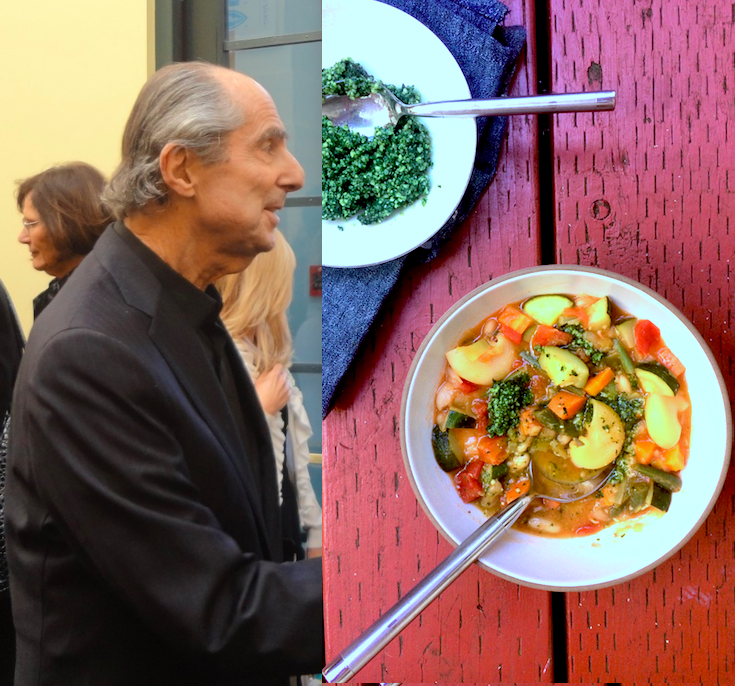
Franz Kafka - Potato Mushroom Soup

Another year, another fad diet. Every January, we’re told to go Paleo, go South Beach, go Atkins. It’s a culinary labyrinth that has existed for centuries—and Franz Kafka was an early captive.

Kafka famously followed a strict vegetarian regime; in an anecdote from friend and biographer Max Brod, Kafka proudly discussed his diet choices with a fish in the Berlin aquarium, saying, “Now at least I can look at you in peace. I don’t eat you anymore.” But if you think Kafka eschewed meat for moral reasons, think again. It was all a fad.

“Franz’s attitude toward the ‘natural health methods’ … was one of intense interest,” wrote Brod, and vegetarianism was only one of the trends that held Kafka in thrall. He was also a convert to “fletcherizing,” a British craze from the turn of the 20th century that advocated chewing each bite of food 32 times before swallowing. I saw the same thing on an episode of Sex and the City 100 years later, proving that some diets really never die.

Plus, meat is just so embarrassing when it gets stuck in your teeth, am I right? “Meat is the one thing that is so stringy that it can be removed only with great difficulty,” Kafka wrote disgustedly, “and even then not at once and not completely.” It’s a comment that could just as well have come from the title character in “A Hunger Artist,” who fasts because he can’t find food that he likes.

But Kafka relished his meals, particularly strawberries and cherries (which he would take several minutes just to smell before eating). “How he took such pleasure in eating a banana!” sighed his lover Dora Diamant. Brod agreed: “Although he was a teetotaler and a vegetarian, he knew how to appreciate the pleasures of beer, wine and meat.” Kafka would “take a sniff of drinks sometimes and praise their wonderful aroma.”

Kafka and Diamant dreamed of traveling to Israel together and opening a restaurant: she in the kitchen, he in the front. They never specified in their letters what type of restaurant it might be. But I wouldn’t go there for the steak.

* * *

Potato Mushroom Soup (Bramboracka) Recipe

After World War I, Kafka considered becoming a potato farmer. Food ran in the family; his grandfather had been a butcher, but clearly Kafka wasn’t going to go that route. He wound up producing prose rather than potatoes, but his works are still infused with the cuisine of his native Prague.

Soup, in particular, flows throughout Kafka’s stories and diaries: pea soup, goulash, even “fruit soup.” The most arresting image comes from Kafka’s diaries, where Max Brod sits on the ground, “eating a thick potato soup out of which potatoes peeped like large balls.” Leave it to Kafka to make something as warm and curative as soup sound downright creepy.

Brod was likely eating bramboracka, a traditional Czech dish loaded with underground treasures: mushrooms, carrots and the omnipresent potatoes. This version has a buttery, rich taste thanks to the roasted garlic—pure satisfaction, no meat required.

(Adapted from Czech in the Kitchen)

2 garlic heads, outer layers of skin removed
2 tablespoons butter (or olive oil, to make it vegan)
1 small yellow onion, diced
1 tablespoon flour
2 cups mushrooms (I used cremini, but button or shitake would be good too)
6 cups vegetable broth
3 to 4 carrots, chopped
2 leeks (white and light green parts), chopped
1 1/2 cups baby potatoes
1 tablespoon caraway seeds
1/2 teaspoon dried oregano
1/2 teaspoon salt
Freshly ground pepper

1. Preheat oven to 350°F. Slice off the top of each garlic head and drizzle with oil. Wrap both heads in foil and bake 45 minutes. Let cool, then squeeze or scoop roasted cloves into a small bowl. Set aside.

2. Warm butter in a large pot over medium heat. Add onion and sauté 2 minutes, then add flour and stir until lightly browned, another 2 minutes. Add mushrooms and cook until tender.

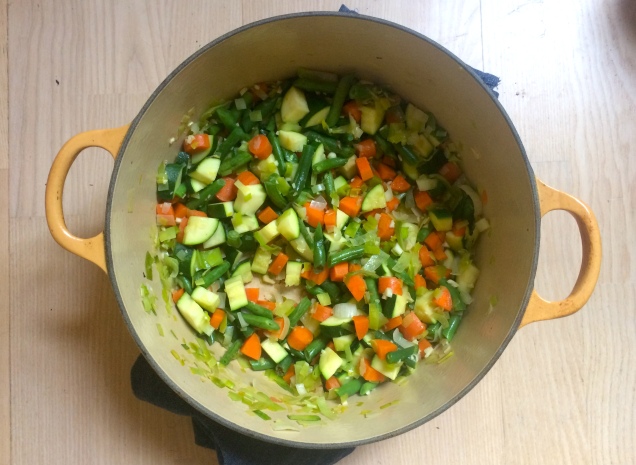
3. Add broth, carrots, leeks, potatoes, caraway seeds, oregano and salt. Add roasted garlic paste. Stir, then bring to a boil. Reduce heat to low and simmer 30 minutes, or until potatoes are tender. Season with additional salt and pepper to taste.

Virginia Woolf: Cottage Loaf

Tags

, , , , , , ,

Virginia Woolf - Cottage Loaf

Every time I get discouraged by writing, I engage in a bit of schadenfreude, and soothe myself with the frustrations of others. “I write two pages of arrant nonsense after straining … Then I trust to some inspiration on re-reading.” That’s Virginia Woolf while writing The Wavesbut I’m pretty sure I said the same thing, more or less, while writing this post.

This constant self-effacement is a theme that runs through Woolf’s letters. Her talents didn’t really lie in the library, she would tell you. They were in the kitchen. ”I have only one passion in life — cooking,” Woolf wrote to her friend (and occasional lover) Vita Sackville-West. “I have just bought a superb oil stove. I can cook anything … I assure you it is better than writing these more than idiotic books.”

Where Woolf hesitated to praise her own writing, she wasn’t nearly so shy about her talent for baking. “Cooked lunch today and made a loaf of really expert bread,” she wrote. Bread was her specialty, particularly a traditionally British double-decker creation: the snowmanesque cottage loaf. Her dedication to the kitchen was unusual for a woman of the upper-middle class. She did, however, draw the line at doing the dishes (“How servants preserve either sanity or sobriety if that is 9/10ths of their lives … God knows”).

In Recollections of Virginia Woolf, Louie Mayer, the Woolfs’ cook, marvels at Virginia’s calm expertise. “She showed me how to make the dough with the right quantities of yeast and flour, and then how to knead it. She returned three or four times during the morning to knead it again. Finally, she made the dough into the shape of a cottage loaf and baked it at just the right temperature.”

It’s Woolf’s birthday today; she would have been 131, although she didn’t make it even half that far, her mental illness wearing her away. But from Woolf’s letters, the time she spends cooking seems to be its own rest cure, clearing her head of everything else but the dough. “My bread bakes well,” she writes in her diary, and it resounds like a soothing mantra. If all else fails, I tell myself, my bread bakes well. My bread bakes well.

* * *

Virginia Woolf - Cottage Loaf Recipe

We don’t see many cottage loaves today. Even in the early 20th century, when Woolf was writing, they were going out of fashion. It’s believed they were originally shaped to save space in an oven — rising vertically instead of spreading out over the oven floor — but their unusual dimensions make them harder to cut or use for a sandwich.

But Woolf wasn’t the only literary champion of the cottage loaf. George Orwell, ever the expert about traditional English cooking, extolled its virtues as among the best food the U.K. had to offer, good just on its own. “If there is anything quite as good as the soft part of the crust from an English cottage loaf,” he wrote, “… I do not know of it.”

(Adapted from Bewitching Kitchen)

Preferment:
1 cup all-purpose flour
1 cup bread flour
1/2 teaspoon salt
1/2 teaspoon instant yeast
2/3 cup warm water

1. In a large bowl, sift together flours and salt. In a small bowl, dissolve yeast in water. Add to flour mixture and stir until dough forms. Let rest 10 minutes.

2. On a floured surface, knead dough briefly, then return to a greased bowl and allow to rise 1 hour at room temperature. Cover bowl with plastic wrap and refrigerate overnight.

Cottage loaf:
All of the preferment
1 teaspoon instant yeast
2/3 cup warm water
1 3/4 cups bread flour
1/4 cup rye flour
1/2 teaspoon salt

1. Remove the preferment from the refrigerator, cut into 8 wedges, and let sit 1 hour until it reaches room temperature.

2. In a small bowl, dissolve yeast in water. In a large bowl, mix together preferment, dissolved yeast, flours, and salt until a rough dough forms. On a floured surface, knead dough 10 to 15 minutes until smooth and elastic. Place in a greased bowl and let sit in a warm place 30 minutes, or until it has doubled in size.

3. Divide dough into 2 pieces (with 1/3 and 2/3 of the dough respectively) and form into tight balls. Place rounds on a greased baking sheet and set 10 minutes.

4. Preheat oven to 425°F. Place the smaller round on top of the larger round. Push a floured chopstick (or wooden spoon handle) completely through the center of the top round and 2/3 of the way into the bottom rounds to join them. Slash both rounds.

5. Bake 40 to 45 minutes, or until golden brown and loaf makes a hollow sound when tapped on the bottom.

Giveaway Update: A big hug and lots of chocolate to everyone who participated in the Paper and Salt birthday giveaway! I’m excited to announce that the winners are:

The New Yorker – Winnie
The Mid-Day Snacker – Meg Bowden
The Adventurer – Sara

Congratulations! I’ll be emailing/Facebook messaging you shortly so your books can find their new homes.

Of Books and Cooks: 5 Lessons from Year 1

Tags

, ,

2013 Book Giveaway

In January 2012, I started Paper and Salt. The past year brought a lot of new things: new jobs, new friends, new recipes, new books, new travels. But discussing authors’ favorite recipes here has been the best ‘new’ thing of that New Year, and (to mix up all my holidays at once) I’m thankful.

The past 12 months also brought many lessons about food blogging – new to me, although likely learned by you long ago:

1. Experiment. The best way to develop our own style is to dabble in others’ for a while. If you’re clinging to a sentence or a favorite ingredient, take a moment to let go. See how it feels.

2. Have patience. Taking pictures of food is even more about patience than it is a keen eye or a newfangled camera. You will move things around, making the most trifling of changes (This napkin here? Or here? Or … ?), ad infinitum, until your food gets cold and all the dishes you own are stacked in the sink, discarded after their short-lived modeling careers. And chances are, you’ll pick the first photo you took. Your patience will be what keeps you from throwing your camera across the room.

3. Be inspired. Despite the hours that go into cooking, writing, editing and photographing, the community of food bloggers still make time in the day to be extremely generous, and I’m indebted to many of them. I’ve updated the links section of this blog, if you’re ever in need of some delicious inspiration.

4. Persevere. Posts about baked goods will always, always garner more excitement and stomach rumblings than posts about salad. But never stop writing about salad, if that salad has some poetry in it.

5. Be brave. Writing, just the pure process of it, can be incredibly hard. But harder still is putting that writing out into the world, when you know it’s not perfect. You let it out of of your safe little nest of thought, unchaperoned and a bit underdeveloped, and hope it survives. But sometimes it does one better – sometimes it takes flight.

* * *

So here’s one more new thing to kick off 2013: a giveaway. Or, since we’re really starting this year off with a bang, three of them. Each prize includes two books close to my heart – one of the cooking variety, one just regular type – brought together by a tenuous theme:

bday image new yorkThe New Yorker: Few things make me feel as wistful for Old New York as much as reading The Age of Innocence. Named for the famed Manhattan food shopThe Silver Palate Cookbook isn’t turn-of-the-century old, but it’s become just as much of a classic for food lovers – the book that brought raspberry vinaigrette to kitchens everywhere.

bday image snacker

The Midday Snacker: Frank O’Hara wrote Lunch Poems on his breaks from work, roaming around Manhattan’s streets, and they’re best digested the same way: over a quick sandwich in a diner at noon, or on a midday picnic in the park. Finish your lunch with a bite-size treat from One Girl Cookies, with recipes from their award-winning shop in Brooklyn. The pumpkin whoopie pies might wind up being your entire lunch, if you’re not careful.

bday image adventurer

The Adventurer: As someone with a constant need to analyze, I was reminded by reading The Wind-Up Bird Chronicle that some things are not meant to be understood, but absorbed. When I first saw Eleven Madison Park: The Cookbook, I had the same reaction as reading Murakami for the first time: How did they do that? 

Three ways to enter the giveaway:

1) Comment on this post
2) Like Paper and Salt on Facebook
3) Tweet the link to this post

Apologies to those abroad, but to save myself the postage, only U.S. residents are eligible to win. But you can win multiple prizes, because why not?

The giveaway will end on Friday, January 25. Enjoy!

Follow

Get every new post delivered to your Inbox.

Join 416 other followers