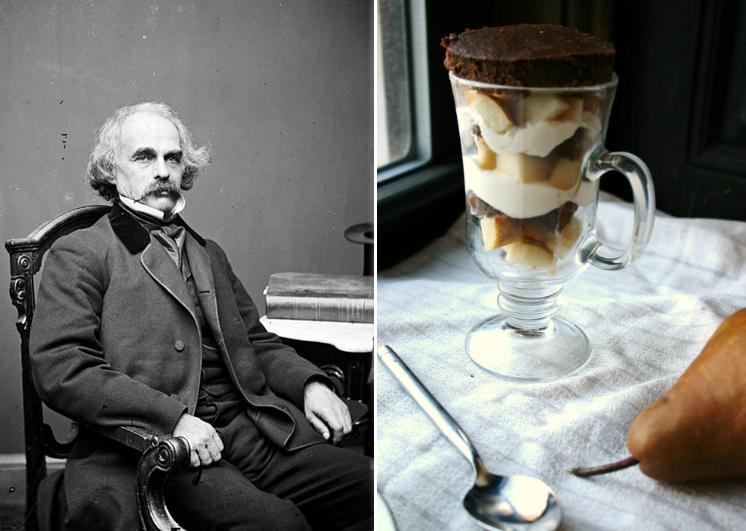
Nathaniel Hawthorne: Chocolate Bread Pudding Trifles

Nathaniel Hawthorne: Chocolate Pudding Cake with Roasted Pears

Although it’s conspicuously absent from biology classes and science textbooks, I’m convinced that certain humans (myself included) have developed a rare but necessary extension of the digestive system: the “dessert stomach.” How else to explain our ability to be simultaneously completely full of dinner, but so ready for the final course? Friends with actual medical training tell me it’s all psychological, but I’m going with the two-stomach theory.

After all, the evidence goes back hundreds of years, to the New England table of Nathaniel Hawthorne. When you look at the dinner party guest lists now, they read like a survey of American literature—Emerson, Thoreau and a young Louisa May Alcott might be spotted, digging in—but the food was just as important as the company. “Should we be the more ethereal, if we did not eat?” he wondered in a letter. “I have a most human and earthly appetite.”

Even after those elaborate meals, though, Hawthorne could always find a little extra room when the main courses were cleared. Writing to his son after a particularly overwhelming feast, he admitted, “I had hardly any appetite left.” Nevertheless, “I did manage to eat some currant pudding, and a Banbury cake, and a Victoria cake, and a slice of beautiful Spanish musk-melon, and some plums.” If Hawthorne came to your Thanksgiving, he’d be the guy “testing” every kind of pie on offer (and don’t forget the ice cream).

Fruit was a frequent after-dinner treat, and Hawthorne doted on the orchards on his land (“What is a garden without its currant-bushes and fruit-trees?” he wrote). But, as anyone with a dessert stomach can attest, fruit alone isn’t nearly enough. After his daily walk through the grounds, Hawthorne would eat “a pint bowl of thick chocolate (not cocoa, but the old-fashioned chocolate) crumbed full of bread.” When fruit was in season, he’d add it to the mix—a stealth move to combine two desserts in one.
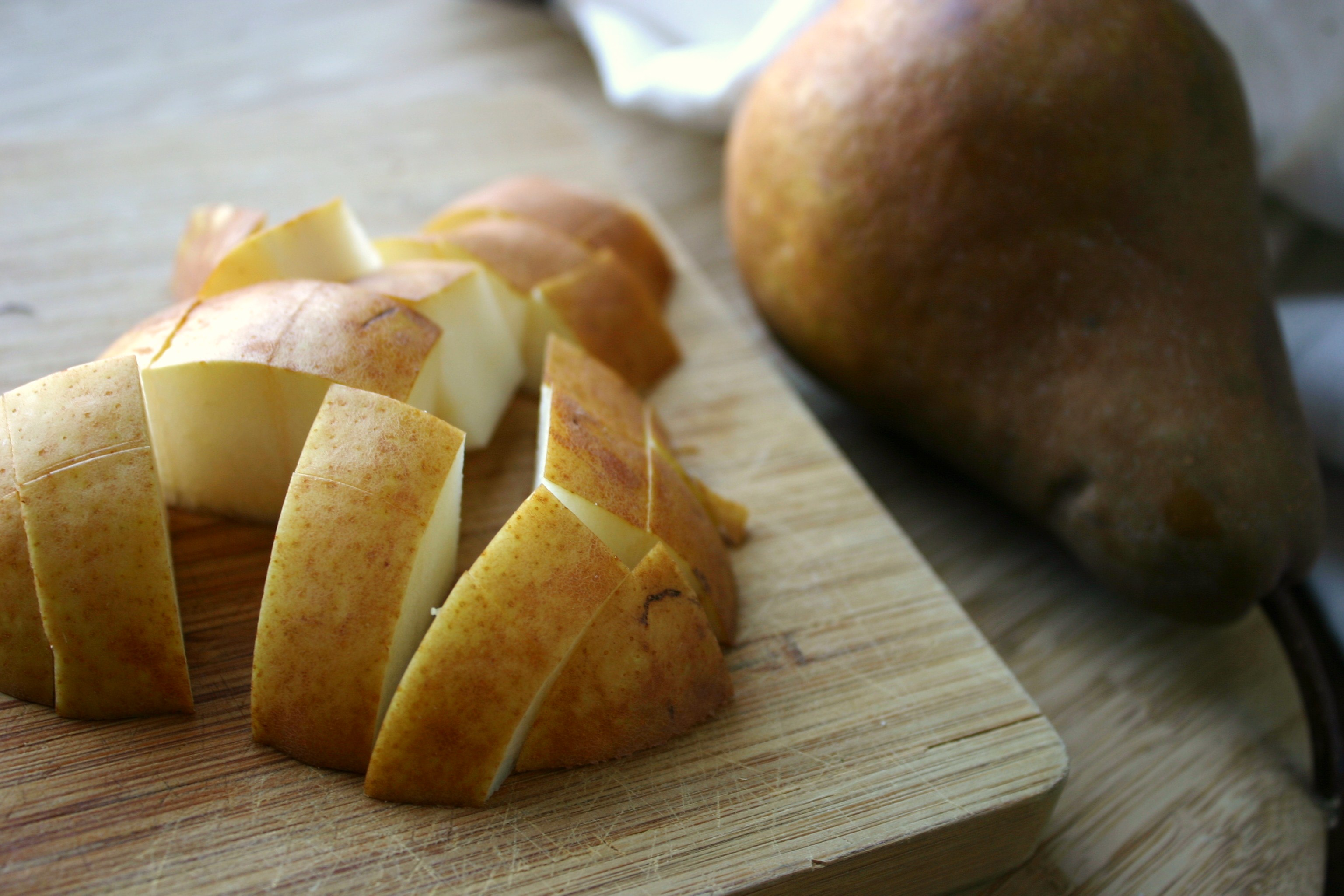
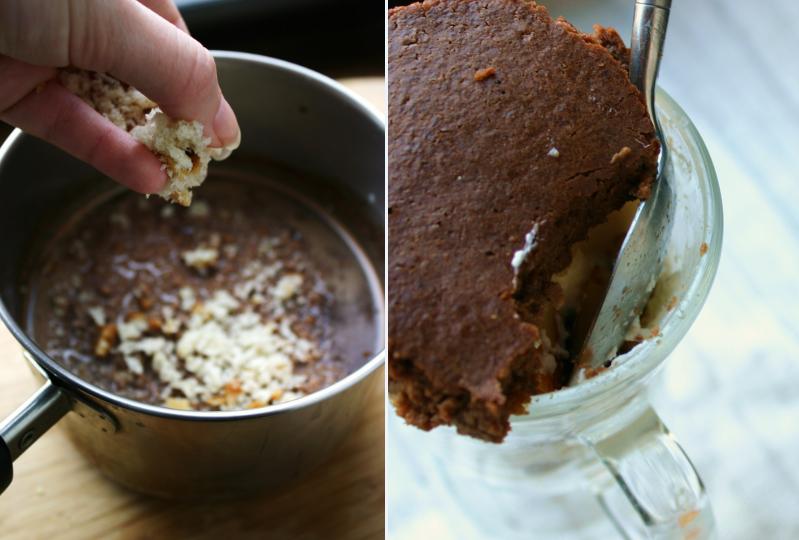
Chocolate Bread Pudding Trifle recipe hawthorne images

Continue reading “Nathaniel Hawthorne: Chocolate Bread Pudding Trifles”

Ray Bradbury: Pappa al Pomodoro

Ray Bradbury: Pappa al Pomodoro

In 1946, two 20-somethings met in a bookstore: he, an aspiring writer; she, the bookseller who sold him a copy of Best American Short Stories. “He carried a briefcase and wore a trenchcoat on a clear day, so I was immediately suspicious,” she recalled. Instead of stealing paperbacks, he invited her to lunch. But when Ray Bradbury married Maggie McClure a year later, he had only $8 in the bank. Suddenly, stealing books didn’t seem so implausible—and any future lunches would have to be done on the cheap.

Luckily, Bradbury’s tastes had always tended toward the economical. As a kid, he followed a strict (if not exactly spartan) diet of hamburgers, egg sandwiches and tomato soup. Eventually he expanded his dietary repertoire (“How many years I wasted not trying different foods, when they were so good,” he later told his family). But his love of tomato soup endured … not least because it fit his meager budget.

In their $30-a-month apartment in Venice, California, Bradbury cooked for Maggie in classic newlywed style—cracking open a can. “I did my writing at home, cleaned the house, and usually prepared dinner for us. It was usually Campbell’s soup,” he wrote. On special occasions, he would head to Clifton’s Cafeteria, a local haunt that attracted the starving-artist crowd by insisting that no one would be turned away hungry. Bradbury quickly became a fixture at the restaurant, holding regular meetings of the Science Fiction Society or just arriving alone, slurping his soup in the corner booth while drinking bottomless glasses of complimentary limeade.

Yet, even as Bradbury’s fame and bank account grew, he remained loyal to his favorite dish, ordering cans of soup by the case. “At one time, I had planned to have my ashes put into a Campbell’s tomato soup can and then have it planted on Mars,” he told Playboy in 1996, half a century after that first fateful date with Maggie. Through years of Campbell’s and cafeterias, she was the only woman he ever dated. In love, and in lunch, Bradbury’s taste never changed.

Ray Bradbury's Liquid Pizza Pappa al Pomodoro Recipe bradbury2 Continue reading “Ray Bradbury: Pappa al Pomodoro”

Stephen King: Cranberry Orange Cheesecake

Stephen King: Cranberry Orange Swirl Cheesecake

This week, the internet has been embroiled in debate about “literary elitism,” but that same highbrow disdain for lowbrow tastes isn’t just confined to the world of words. Whether it’s a bodice-ripping romance or a doughnut dripping with sugary glaze, certain books and dishes are repeatedly (and unfairly) condemned to a lower status on our shared cultural hierarchy. It’s time to redeem the “guilty pleasure.”

For many readers, Stephen King (subject of yet another internet debate) is one of those authors we regard with divided hearts: someone we love to read, but only when no one else is watching. We don’t discuss The Shining in book club or self-consciously read our first edition of It on the subway, hoping someone will notice. It seems natural that King himself would dismiss the entire idea of “high” versus “low.” But, as it turns out, even he buys into the guilty pleasure principle—at least where food is concerned.

After his wife, Tabitha, lost her senses of taste and smell, King became the de facto cook of the house, learning to bake his own bread and devising his own signature dish (baked salmon with brown sugar glaze). But despite his kitchen credentials, King is still sheepish about some of his go-to meals. “My eating habits are horrible,” he wrote on Twitter, as if to anticipate his culinary critics. “Favorite restaurant is Waffle House. How sad is that.”

The same bashfulness appears in King’s quick defense of the microwave: “If you’re sneering, it’s because you think the only things you can do with the microwave are make popcorn and nuke the living shit out of Stouffer’s frozen dinners.” King’s alternative, coating a trout fillet with lemon, olive oil and basil before zapping it for a few minutes, is nothing to be ashamed of. It’s microwaved, yes, but much more virtuous than the helmet-size bowl of cheesy pasta I make on lazy nights, telling myself I am, technically, “cooking.”

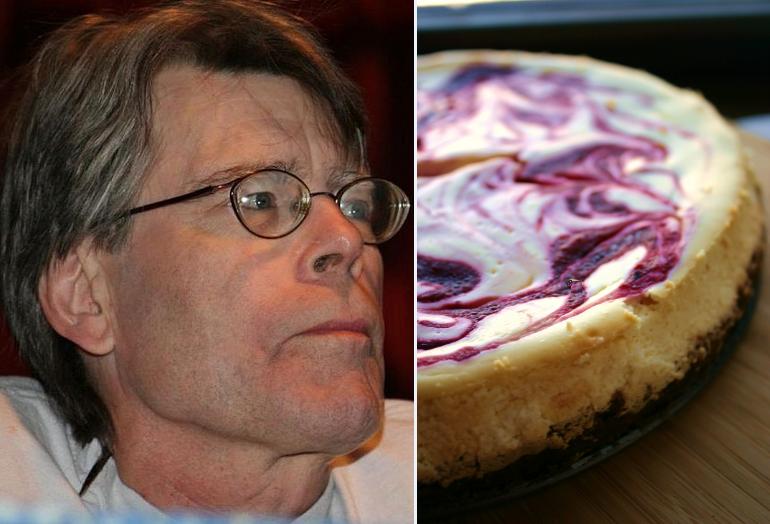
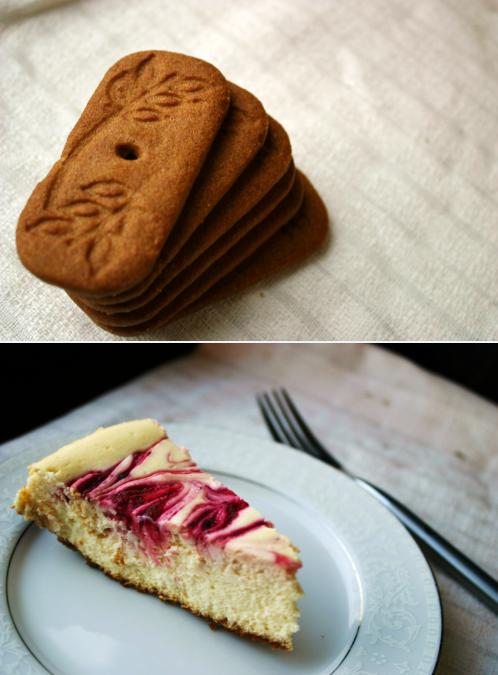
King’s favorite food, about which he clearly feels no embarrassment, has the reputation for being the ultimate indulgence: a “monster slice of cheesecake.” Although two slices is his preferred dessert (according to a menu of his ideal meal), King’s taste for cheesecake isn’t limited to post-dinner; he also will have a piece before sitting down to write. “Cheesecake is brain food,” he says, a joking justification for a dessert that doesn’t need any excuse.

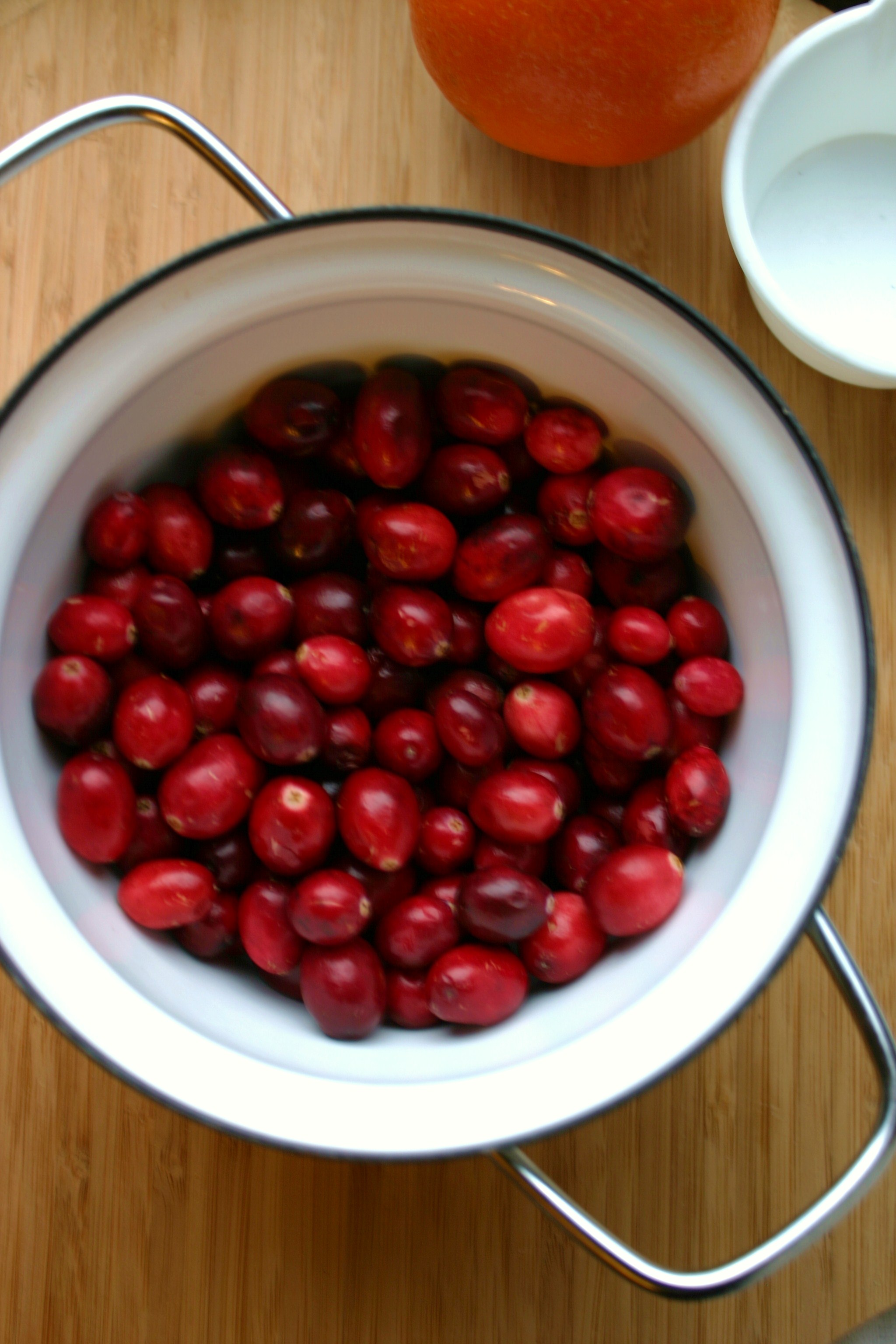
Cranberry orange cheesecake recipe

Cranberry orange cheesecake recipe

Continue reading “Stephen King: Cranberry Orange Cheesecake”

Mary Shelley: Kale and Fried Egg Tartine

Mary Shelley - Kale and Fried Egg Tartine

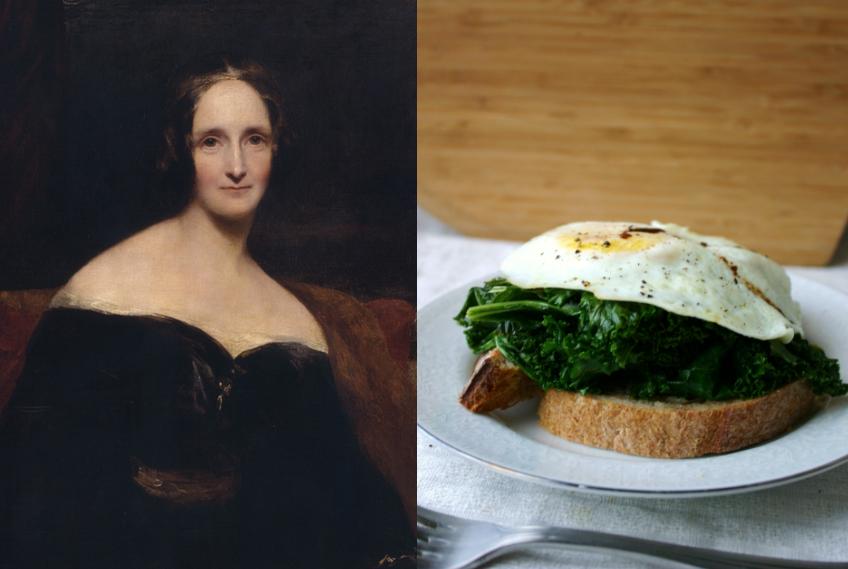
With the polar vortex hitting New York and my Californian disregard for warm coats, it was bound to happen: I am sick. Not sick enough to be devastating, but just sick enough to be achy, whiny, and wishing for a cup of tea and a bowl of soup at all times. Instead of indulging myself, though, I took a cue from Mary Shelley, pulled on my pajamas, and made kale.

It’s tempting to think of kale as a marvel of modern marketing, engineered by the savvy people of Whole Foods to make us eat our vegetables. But the leafy green was one of the most common types of produce in Europe before it was outpaced by cabbage around 1600, and its popularity continued into the 18th century. For Shelley, kale wasn’t a trend, something to be massaged or blended into drinks. It wasn’t “healthy.” It was comforting.

Mary was the resident caregiver in her literary family; her husband, the poet Percy Shelley, wasn’t so good at looking after himself. “He could have lived on bread alone without repining,” his biographer Richard Henry Stoddard wrote. “Vegetables, and especially salads … were acceptable.” Mary was the one who made sure her husband was fed, not that he noticed much. She “used to send him something to eat into the room where he habitually studied; but the plate frequently remained untouched for hours upon a bookshelf, and at the end of the day he might be heard asking, ‘Mary, have I dined?'”

Food has long been our chosen way of providing for those we love; when I was in college, my mom’s “care packages” were 5% socks, 95% cookies (a ratio I heartily approved of). Mary Shelley’s letters show just how far back the tradition goes. When her aunt Everina fell ill, Mary, far away in Rome, dispatched a friend to put together a care package of her own: “jelly, oranges, spongecakes and her favourite kale.” Kale became a frequent gift, an all-purpose treatment for what ails you.

A new batch of Shelley’s letters was recently discovered from when she herself was ill, with a brain tumor that would kill her a few years later. Percy was gone by then, as was Everina. The only person Mary had left to care for was herself, hopefully with her friends around her and some kale on the stove, cooking to heal the soul.

Kale and Fried Egg Tartine Recipe

Continue reading “Mary Shelley: Kale and Fried Egg Tartine”

Henry David Thoreau: Hazelnut Raisin Bread

Henry David Thoreau - Hazelnut Raisin Bread

With every new year, I find myself going back to bread. It’s the opposite of what we’re “supposed” to do in January; I should be telling you about a new energizing juice cleanse. But if we diet to restore the body, we bake to restore the spirit, cultivating the qualities we wish to embody throughout the year: the determination to begin, the self-assuredness to knead the dough, the resourcefulness to change course if it goes awry, the patience as it rises, the patience as it cooks, the patience as it cools. 

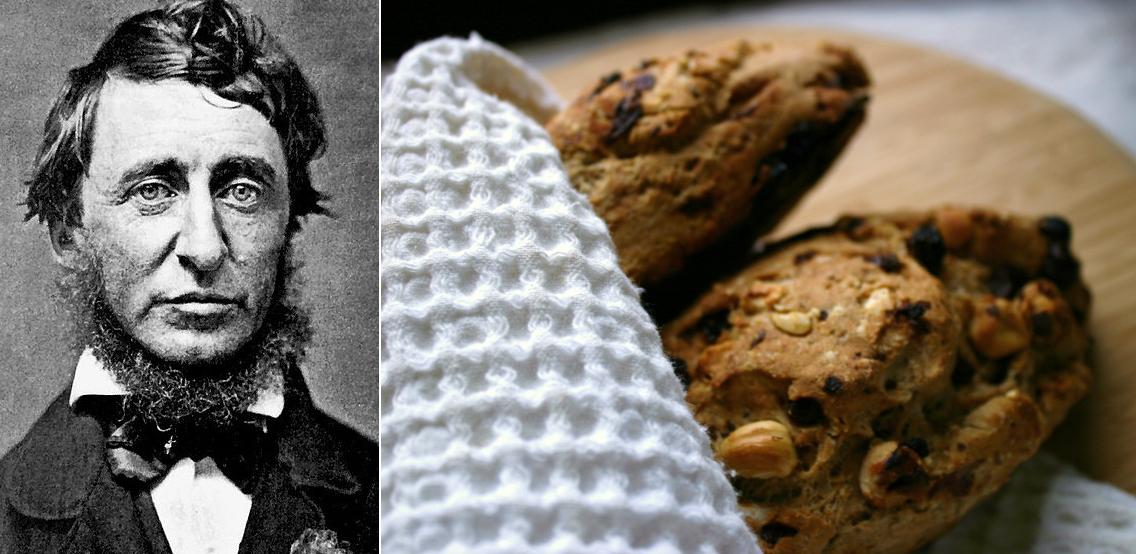
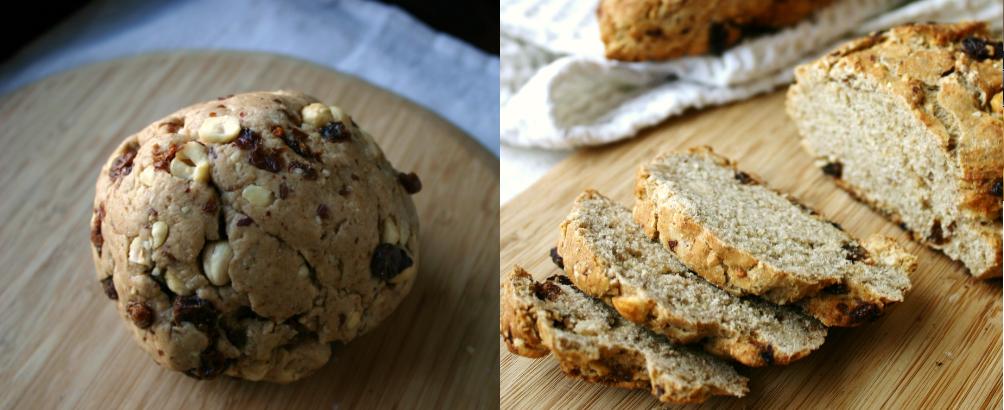
“I went to the woods because I wished to live deliberately,” Henry David Thoreau wrote about his two years on Walden Pond. He wasn’t referring to bread specifically, but baking requires a calmness, a deliberateness of the mind. No wonder it was one of the writer’s preferred ways to spend a day. As he wrote in Walden, “I like best the bread which I have baked, the garment which I have made, the shelter which I have constructed, the fuel which I have gathered.”

Thoreau’s tiny cabin was an early version of America’s Test Kitchen: The writer ran hundreds of little experiments on his bread recipe, borrowing local Native American techniques and even going back to Roman times for tips. Hoping to save on the cost of yeast, he dug up Cato the Elder’s unleavened recipe: “Put the meal into the trough, add water gradually, and knead it thoroughly. When you have kneaded it well, mould it, and bake it under a cover.” Bread hasn’t changed much since (although our instructions are decidedly longer).

Although Thoreau baked year-round, it was in the dark New England winters when he gave it special care. “In cold weather it was no little amusement to bake several small loaves … tending and turning them.” Baking helped counteract the mental freeze that came with the cold. “Our thoughts and sentiments answer to the revolution of the seasons,” he wrote in his journal. “Now I am ice, now I am sorrel.” We can’t be sorrel—vivacious and fresh—the whole year. But we can be warm, calm, comforting. We can be bread.

Almost as if anticipating the current assault on carbs, Thoreau’s passionate defense of his favorite food resonates today as it did in that small cabin. “Bread may not always nourish us; but it always does us good, it even takes stiffness out of our joints, and makes us supple and buoyant, when we knew not what ailed us, to recognize any generosity in man or Nature, to share any unmixed and heroic joy.”

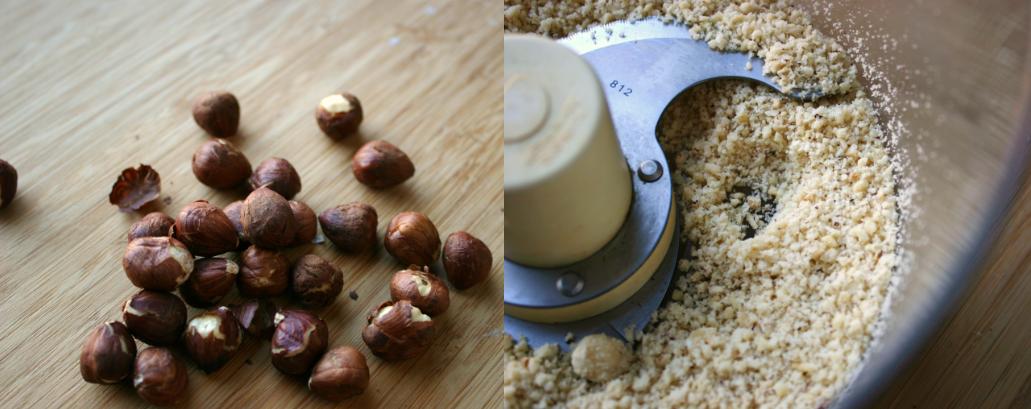
Hazelnut Raisin Bread Recipe thoreau images 2

Continue reading “Henry David Thoreau: Hazelnut Raisin Bread”

T.S. Eliot: Duck à l’Orange

T.S. Eliot - Duck a l'Orange

T.S. Eliot once asked his messenger boy what he would do with £5,000. “I’d have a good dinner,” the boy said. “Duckling and green peas, gooseberry tart and cream.” Having just moved to London, Eliot was impressed by the boy’s expensive taste. “Such is the society I move in in the city,” he wrote, where even 11-year-olds know their food. 

In 1916, Eliot’s own dinners were much less extravagant. Having accepted a humble teaching post that included most meals, he was shocked at food prices in the city: “Living is going up. Eggs are three pence,” he wrote. Rather than suffer the costs of dining out, Eliot and his wife, Vivien, preferred to invite friends over—keeping budget in mind. “We had five people to lunch, the most ambitious attempt we have ever made,” Eliot wrote to his mother. “It is easier to have people to lunch than to dinner, of course, because of the impossibility of serving meat; at lunch fish and spaghetti suffice.”

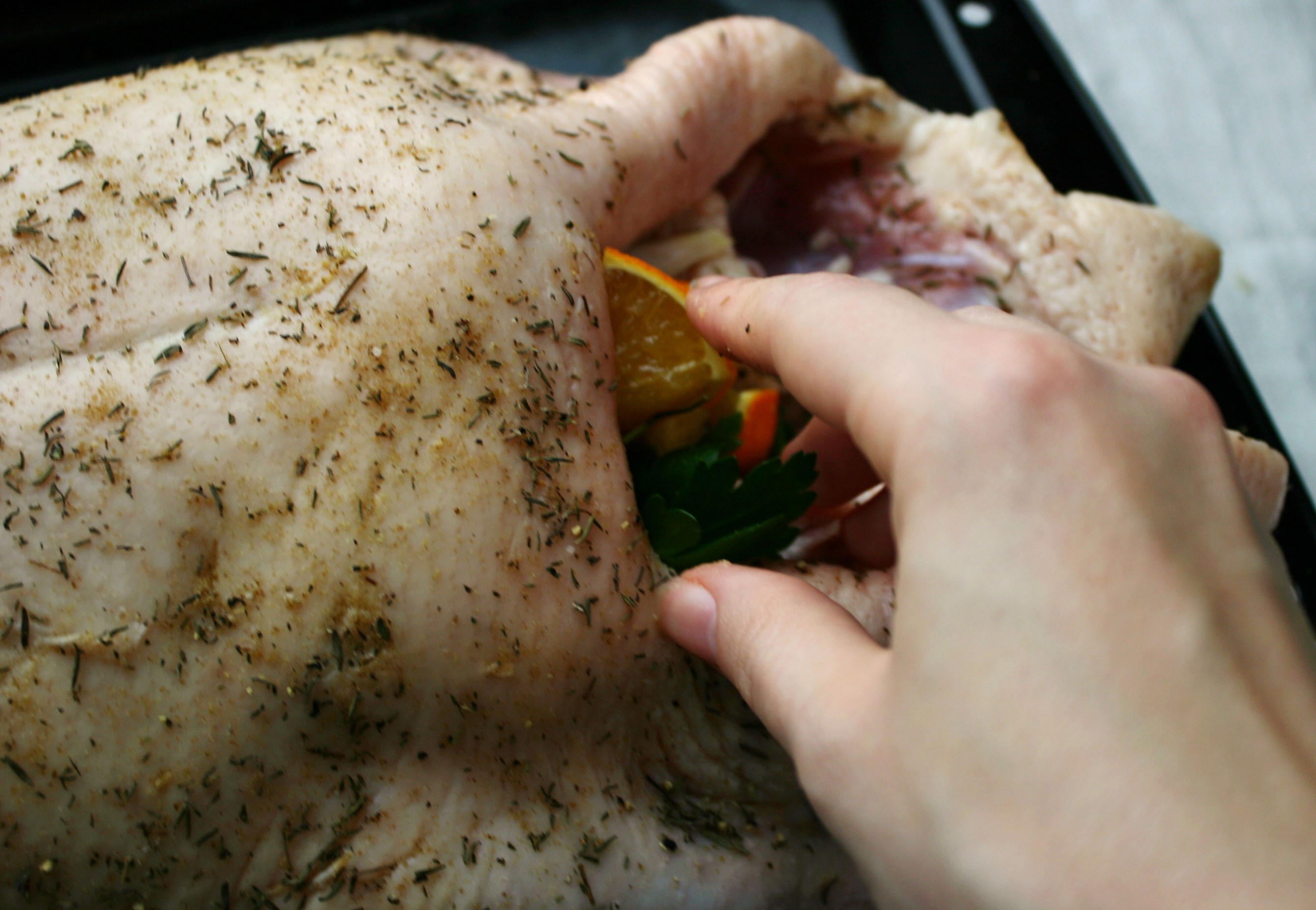
But as his success grew, Eliot’s tastes became increasingly refined, just like that young messenger’s. “I like good food,” he wrote to publisher Geoffrey Faber in 1927. “I remember a dinner in Bordeaux, two or three dinners in Paris, a certain wine in Fontevrault, and shall never forget them.” He recalled, with particular relish, a dinner in Paris held by the journal Action Française. “A private room in one of the best restaurants – fifteen people – and the most exquisite dinner I have ever tasted,” he wrote. “I remember the canard aux oranges with permanent pleasure.”

It’s harder to make my Christmas list every year—that is, to think of physical, wrappable “things.” I still want, but the wanting is less immediate, less tangible. That’s why, with Eliot in mind, I’m hoping for experiences this year: learning to make the perfect pasta dough, trying my first Guatemalan food, cooking a meal without worrying about dishes afterward. They won’t gather dust, they’ll never need recharging, and I can always keep them with me. As Eliot wrote, “The pleasures of dining well are not transitory, but abide forever.”

eliot1 eliot2

Continue reading “T.S. Eliot: Duck à l’Orange”

Henry Wadsworth Longfellow: Molasses Pumpkin Pie

Henry Wadsworth Longfellow - Molasses Pumpkin Pie

New Yorkers are rumored to be a cynical bunch—and, for the most part, they don’t disappoint. Moving here from California was like watching Annie Hall in reverse: shedding the golden optimism of the West Coast for the Woody Allen snarkiness of the East. Since sarcasm is my lingua franca, I usually fit right in … until November 1 rolls around. Because when it comes to holiday traditions, I’m an unrepentant sap.

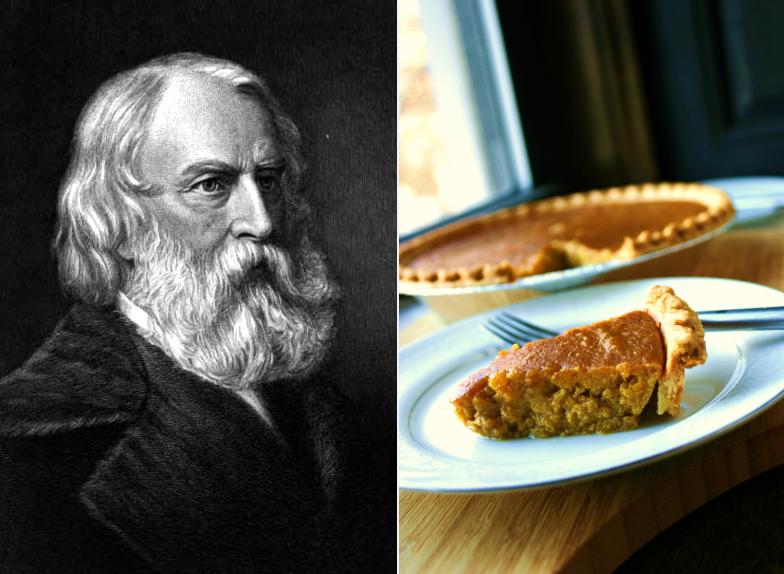
“There is no season which so vividly recalls the endearments of home and so fully awakens the recollections of its blessings as the return of these annual holidays,” Henry Wadsworth Longfellow wrote on Thanksgiving Day, 1828. I might put it a little less floridly, but Longfellow and I agree on the main points. We love the family gatherings. We love the familiar traditions. And most of all, we love to eat.

“Talking about Thanksgiving Day puts me in mind of the Pioneers and ten thousand other things,” he wrote to his sister Anne. And those ten thousand things? They’re all food: “geese, turkeys, ducks, chickens, roasted pork, plumb [sic] puddings, sour apples and molasses and pumpkin pies baked in milk pans.” Sure, the Pilgrims are important. But for Longfellow, pie is the priority.

Born and raised in Portland, Maine, Longfellow was particularly proud of pumpkin pie’s New England roots. He summarily dismissed British holiday desserts, saying that their traditional mince pies were “far surpassed by the ‘New England peculiar’ baked pumpkin and pan-dowdy.” When observing Thanksgiving in Venice in 1828, he reassured his father that his dessert needs were being handled. “You must not think … that I am deprived of all your New England comforts. On the contrary: my good landlady has promised me baked-pumpkin and hasty-pudding for dinner to day!” Crisis averted.

But more than pie, Longfellow relished the holiday’s sense of community, and extended an invitation to supper for others who were far from home; Charles Dickens, on his second tour of America in 1867, spent Thanksgiving at the Longfellows’ table. The holidays, Longfellow wrote, were meant to “gather friends and relatives together, and call in from the thoroughfares of the world those that have been thrown out of the family circle, and jostled apart in the crowd.”

Although he was one of the most popular poets of his day, Longfellow’s work is now often criticized for being overly sentimental. You might say the same about his thoughts on Thanksgiving: “At such times,” he wrote, “the heart clings to home, as the dying man clings to life.” Sappy? Sure. But for this cynical New Yorker, ’tis the season for a bit of saccharine, in both our hearts and our desserts.

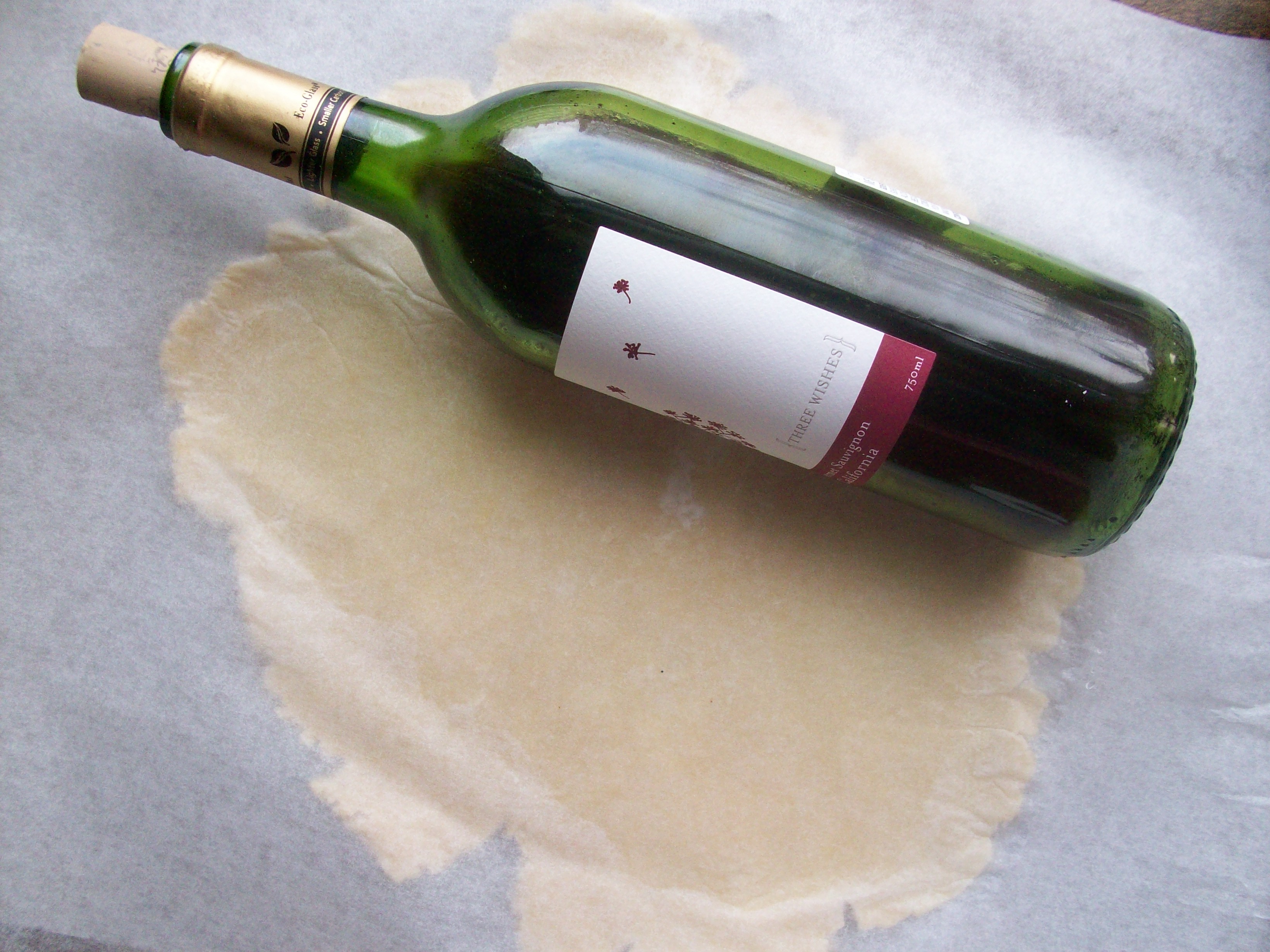
Molasses Pumpkin Pie from Scratch

Continue reading “Henry Wadsworth Longfellow: Molasses Pumpkin Pie”

L. Frank Baum: Gingerbread Cake with Butterscotch Sauce

L. Frank Baum: Gingerbread Cake with Butterscotch Sauce

More than leaving home or getting that first job, the defining moment of my adulthood was the realization that I could eat whatever I wanted, no longer restrained by the contents of my family’s pantry or my (nonexistent) allowance. “Growing up” meant learning to make your own menu, in a city of unlimited culinary options. And if you decided dinner will be a bag of discounted Snickers bars bought in a post-Halloween binge … that’s when you learned sometimes adults make bad decisions too.

This freedom, though, is temporary; it ends when you open your kitchen to others—a partner, a spouse, a family—and suddenly your meals are influenced by their presence. Someone else starts writing your menu. In the case of L. Frank Baum, that person was his wife, Maud.

Ten years after the stunning success of The Wonderful Wizard of Oz, Baum made the down payment on a grand Hollywood estate, which he and Maud dubbed Ozcot. Visiting the Baum household was like entering the Emerald City itself: the elegance, the parties, the three-oven range. Baum was known to order 100 pounds of cheese for a single soiree. Maud’s niece Matilda later remarked that those evenings “represented to me something that I knew nothing about, I was thrilled with the things they did, their food … everything.”

But while Baum chaired the party-planning committee, Maud ran the family kitchen with the efficiency of a train conductor. According to L. Frank Baum: Creator of Oz, the Baums ate three square meals a day, starting with breakfast at 8 a.m. (fruit, eggs, potatoes, “four to five cups of strong coffee with sugar and heavy cream”) and ending with a hearty dinner (“typically a thick cream soup, roast meat with gravy, potatoes and vegetables, and a rich dessert”).

Such regular mealtimes can sound like paradise to anyone who’s ever stared at the fridge, too tired to whip something up after work. But with it came a mandate: Don’t question Maud’s kitchen authority. Baum learned the hard way when he bought a box of jelly doughnuts for breakfast one morning. As punishment for meddling in the menu planning, Maud served the leftover doughnuts every morning for the next week, until they were so stale that Baum tried to bury them in the yard rather than face them again.

Thinking about Baum hiding the offending doughnuts in his napkin, it’s easy to see him as a grown-up child, living in a world where dinner is always served on time, where appetites are never spoiled. It’s a world that is startlingly like Oz, where (in Ozma of Oz) even the King has to be cautioned “not to eat too much cake late at night, or he would be ill.”

Gingerbread Cake with Butterscotch Sauce Recipe

Continue reading “L. Frank Baum: Gingerbread Cake with Butterscotch Sauce”

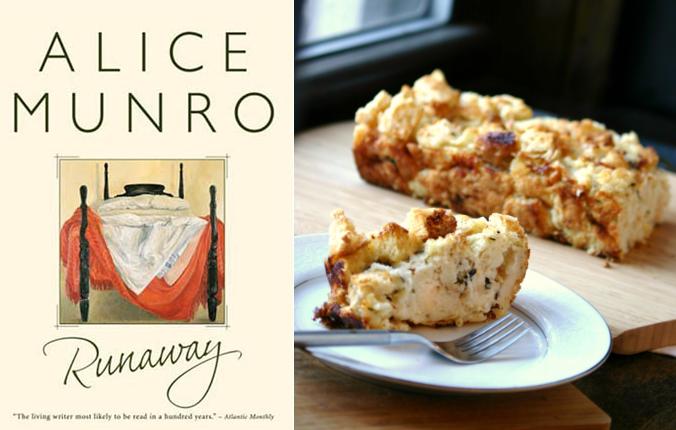
Alice Munro: Rosemary Bread Pudding

Alice Munro - Rosemary Bread Pudding

Last week, when Alice Munro found out she had won the Nobel Prize in literature, she was in bed. The prize committee had tried to reach her earlier by phone but ended up just leaving a voicemail, so it was Munro’s daughter who, hearing the announcement, ran to wake up her mom. That somehow seems fitting for Munro, whose stories revolve around intimate moments of domesticity. If Hemingway is a moveable feast, Munro is breakfast in bed.

Her writing is not only steeped in the household world; it also was created there. Munro’s desk is her dining room table, where she’s penned most of her work over the past few decades. As her interviewer at The Paris Review notes, “The dining room is lined floor to ceiling with books; on one side a small table holds a manual typewriter.” When she cooks in the neighboring kitchen, her work is never far away. Is it any wonder the two are connected in her stories, as in life?

Besides writing, cooking was the other constant in Munro’s own domestic drama. In her mostly autobiographical collection The View from Castle Rockshe recalls packing her father’s lunch in the morning, a regular chore: “three thick sandwiches of fried meat and ketchup. The meat was cottage roll ends or baloney, the cheapest meat you could buy.” Later, when she was married, Munro’s stories would continue to take a back seat to food prep. She told the Review, “I would write until everybody came home for lunch and then after they went back, probably till about two-thirty, and then I would have a quick cup of coffee and start doing the housework.”

Although Munro still cooks (one of her interviewers watched her prepare a meal, which made ample use of the Canadian countryside’s fresh herbs), she now often chooses to leave the kitchen to others. She regularly asks reporters to meet at her favorite restaurant in the nearby town of Gogerich, Ontario—Bailey’s Fine Dining—where she has a usual table (corner) and a usual drink (white wine, sauvignon blanc preferred, multiple pours encouraged).

Until just a few days before the award announcement, Haruki Murakami, known for his hulking postmodern novels, was said to be the front-runner for the Nobel. It’s hard to imagine a writer further than Munro. Her subjects are often described as “quiet” or “domestic” and (given that they’re short stories) “small.”

Munro herself sometimes doubted their impact; she told the New Yorker last year, “For years and years I thought that stories were just practice, till I got time to write a novel.” But the major recognition of her work helps us all remember what a “small” story can do—how an intimate revelation at the dining room table can hold as much truth as an epic; how a perfect fried baloney sandwich can sometimes hit the spot more than any six-course meal.

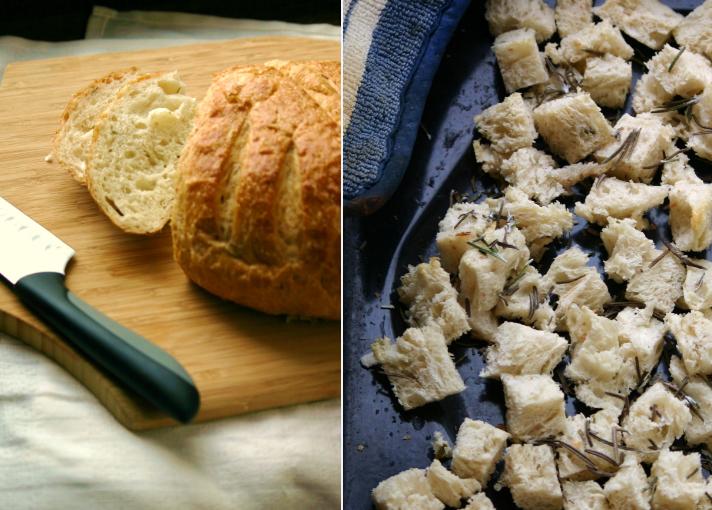
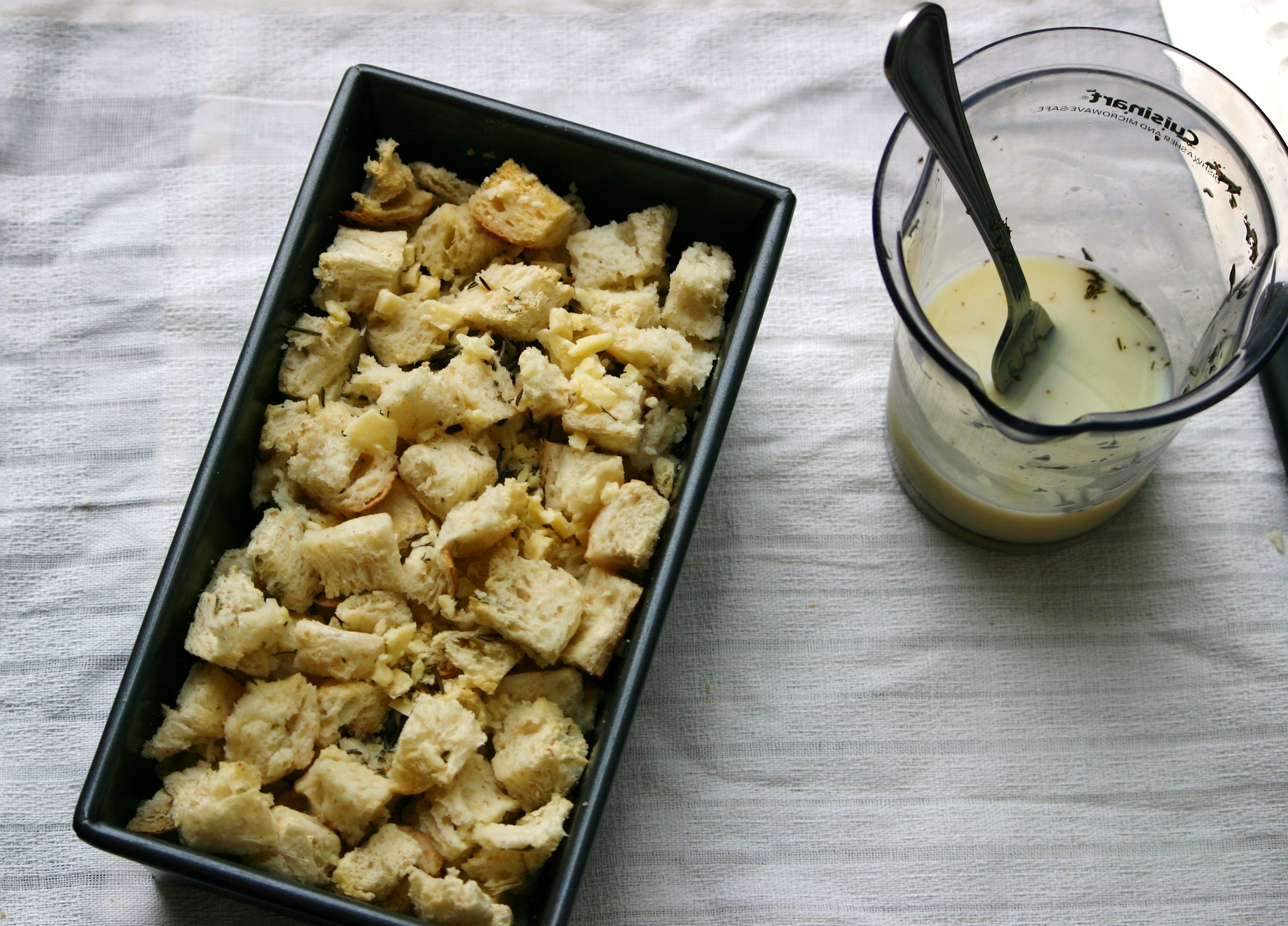
Rosemary Bread Pudding Recipe

munro3

Rosemary Bread Pudding Recipe

Continue reading “Alice Munro: Rosemary Bread Pudding”

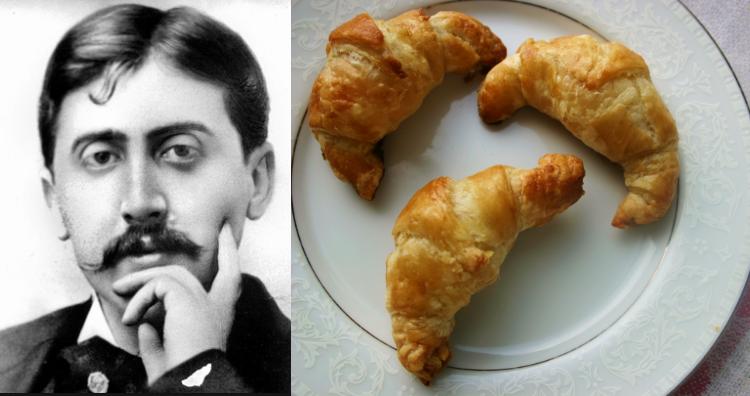
Marcel Proust: Quick Croissants with Coffee Glaze

Marcel Proust - Quick Croissants with Coffee Glaze

You were waiting for this, right? Authors and food equals Proust and madeleines. It’s arguably the most recognizable culinary pairing in literature, and definitely the one I’m asked about the most. (This site was almost named “Proust’s Madeleine,” or something equally pretentious, until the idea was greeted by faux barfing noises from my focus group/boyfriend.) So why hasn’t Marcel appeared here yet?

The thing is: There’s not a lot of evidence to suggest that Proust really ate madeleines. Although his vivid memories of the delicate cookies from In Search of Lost Time have become iconic, early versions of the novel actually don’t include madeleines at all. Instead, we see Marcel biting into a humble biscotte – a piece of dry toast. And as Edmund Levin’s meticulous experiments in tea-dunking and crumb-making reveal, Proust’s description of the famous treats doesn’t seem to match up with any known recipe. It’s likely that the madeleines of our imagination were just that: a figment of Proust’s culinary mind.

So what was Proust really eating? He’d be so glad you asked. Before asthma reduced his appetite (and even for an unhealthily long time after), Proust was a notorious glutton, stuffing himself so full that he sometimes resorted to wearing a corset. He blissfully described one of his meals, which included “two tournedos steaks—I ate every scrap—a dish—of chips (about twenty times as much as Félicie used to make), some cream cheese, some gruyère, two croissants, a bottle of Pousset beer.” He summed it up more succinctly in a letter to his mother: “Lunch is my favorite moment.”

But as his illness worsened, his need to write began to subsume his desire to eat, and breakfast became Proust’s meal of choice. Instead of the madeleines and tea we know from his fiction, the real Marcel demanded croissants and cafe au lait, brought to him in bed while he read the paper and began his work. He would dunk his croissant in the coffee (just as his fictional self would mimic with a cup of tea) and ate little else for the rest of the day.

Céleste Albaret, Proust’s trusted servant, later marveled at the writer’s ability to live on so little, after years of hedonistic eating. “The most extraordinary thing was how he could survive and work, ill as he was, … by living on the shadows of foods he’d known and loved in the past.” In the absence of beef and beer, Proust’s writing (and those morning croissants) was all that remained, evoking those tantalizing sense memories of meals gone by—his own personal madeleine moments.

Easy Croissant Recipe with Coffee Glaze

Continue reading “Marcel Proust: Quick Croissants with Coffee Glaze”