Willa Cather: Spiced Plum Kolache

Willa Cather - Spiced Plum Kolache

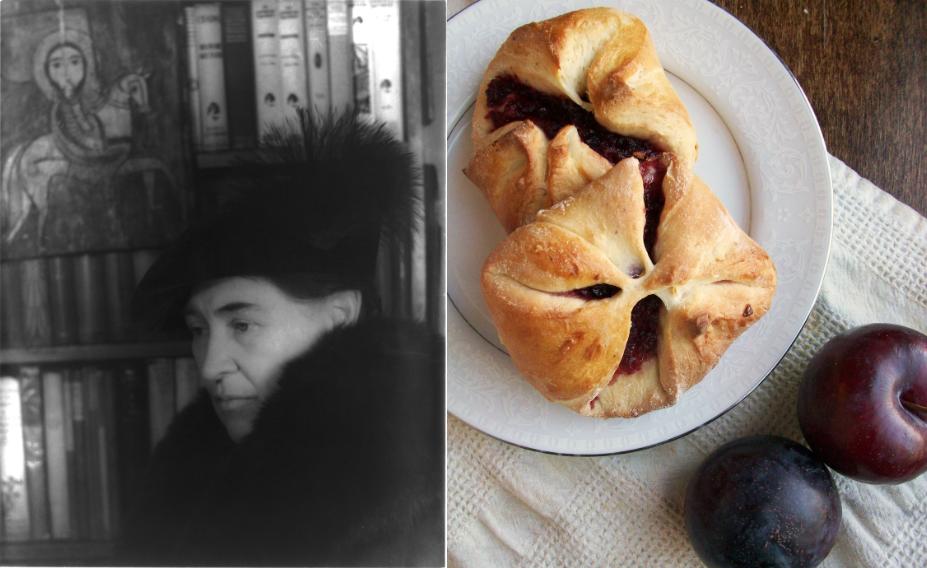
Two months ago, if you had asked me to describe Willa Cather, I would have pictured her writing in the middle of the Nebraska farmland, surrounded by as many sheaves of paper as sheaves of wheat. I didn’t realize that, when she was 23, Cather left the Great Plains for the big city; she moved to Pittsburgh and then to New York, where she lived for the rest of her life. She didn’t publish her first novel until 16 years after the move, when Fifth Avenue must have been just as familiar as the farm.

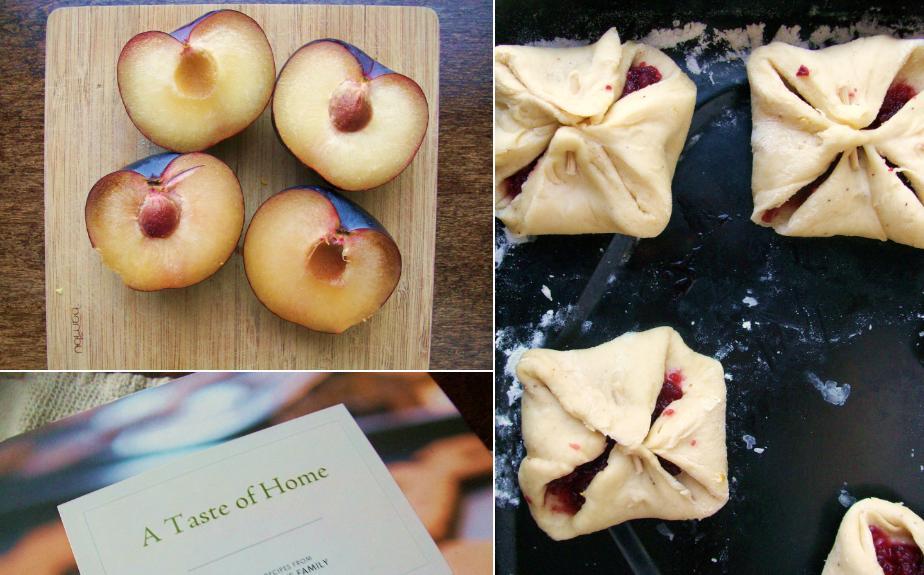
It’s no wonder, then, that food played such a major role in Cather’s writings: She needed it to bring her back to life on the frontier. With their incredible power to conjure up a time and place, food memories are some of the strongest associations around. More than anything else about a trip, I remember the meals: crabs in Baltimore, étouffée in New Orleans, pain au chocolat in Paris. When I left home in California for the unknowns of the East Coast, my mom sent me off with a bound compilation of our family’s favorite recipes. Seven years later, in my New York kitchen, I still flip it open when deciding what to make for dinner. It’s one of the best gifts I’ve ever gotten.

In Nebraska, Cather drew her cooking inspiration from Annie Pavelka, a Bohemian immigrant to the town of Red Cloud whose life (and food) would serve as the basis for My Ántonia. In her own New York kitchen, hundreds of miles from home, I imagine Cather consulting her recipes and rolling out her pastry dough like Annie did,  mentally recreating the pioneer communities of her childhood.

* * *
In Progress - Spiced Plum Kolache

Continue reading “Willa Cather: Spiced Plum Kolache”

Charles Dickens: Apples à la Princesse

Thinking of Dickensian food conjures up two extremes – the stuffed goose and figgy pudding feast of A Christmas Carol and the sad gruel rations of Oliver Twist. During Dickens’ 200th birthday celebrations this month, there was a lot of talk of the former. Nobody seemed as excited about the gruel, but there are plenty of resources to help you make an authentic Victorian version that actually sounds kind of great (Favorite BBC quote: “We were hoping he’d make it far more disgusting.”)

Given the fame that Dickens achieved in his lifetime, he didn’t have to beg for second helpings. But one of his favorite dishes, baked apples, was quite simple, not to mention practical: He swore by their ability to prevent seasickness.

Dickens became a baked apple convert while sailing to Boston in 1867. They were served at every meal during the Atlantic crossing, and he always helped himself. “I am confident that they did wonders, not only at the time, but in stopping the imaginary pitching and rolling after the voyage is over,” he wrote to his sister-in-law, Georgina Hogarth.

The magical apple diet clearly made an impression, and in 1881 Charles Dickens Jr. dedicated an entire cookery column to them in Household Words, a revived version of his father’s weekly magazine. Apples were getting cheaper and were beginning to be imported from abroad, so baked apples could be made by anyone, anytime. Perhaps thinking of his father, Dickens Jr. stressed the health benefits of the fruit. “It is unnecessary to say how valuable apples are as an article of diet.” Turns out, Dickens had been on the edge of a trend: The earliest version of our famous “An apple a day” saying was first published in Wales in 1866, just a year before his trip to the States.

* * *

Continue reading “Charles Dickens: Apples à la Princesse”