Of Books and Cooks: 5 Lessons from Year 1

2013 Book Giveaway

In January 2012, I started Paper and Salt. The past year brought a lot of new things: new jobs, new friends, new recipes, new books, new travels. But discussing authors’ favorite recipes here has been the best ‘new’ thing of that New Year, and (to mix up all my holidays at once) I’m thankful.

The past 12 months also brought many lessons about food blogging – new to me, although likely learned by you long ago:

1. Experiment. The best way to develop our own style is to dabble in others’ for a while. If you’re clinging to a sentence or a favorite ingredient, take a moment to let go. See how it feels.

2. Have patience. Taking pictures of food is even more about patience than it is a keen eye or a newfangled camera. You will move things around, making the most trifling of changes (This napkin here? Or here? Or … ?), ad infinitum, until your food gets cold and all the dishes you own are stacked in the sink, discarded after their short-lived modeling careers. And chances are, you’ll pick the first photo you took. Your patience will be what keeps you from throwing your camera across the room.

3. Be inspired. Despite the hours that go into cooking, writing, editing and photographing, the community of food bloggers still make time in the day to be extremely generous, and I’m indebted to many of them. I’ve updated the links section of this blog, if you’re ever in need of some delicious inspiration.

4. Persevere. Posts about baked goods will always, always garner more excitement and stomach rumblings than posts about salad. But never stop writing about salad, if that salad has some poetry in it.

5. Be brave. Writing, just the pure process of it, can be incredibly hard. But harder still is putting that writing out into the world, when you know it’s not perfect. You let it out of of your safe little nest of thought, unchaperoned and a bit underdeveloped, and hope it survives. But sometimes it does one better – sometimes it takes flight.

Continue reading “Of Books and Cooks: 5 Lessons from Year 1”
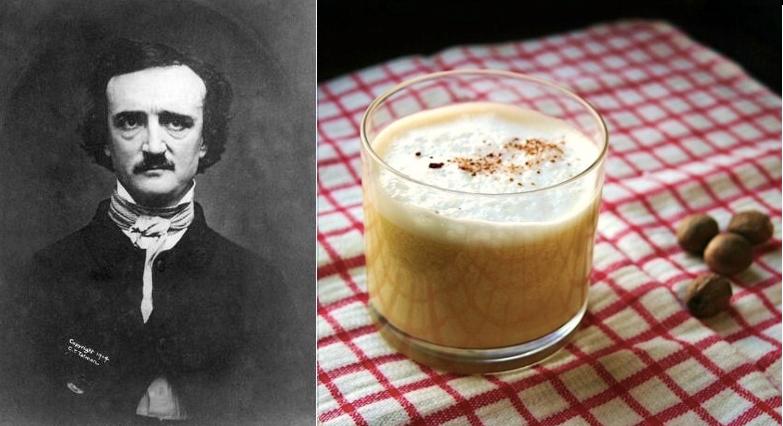
The Cocktail Hour: Edgar Allan Poe

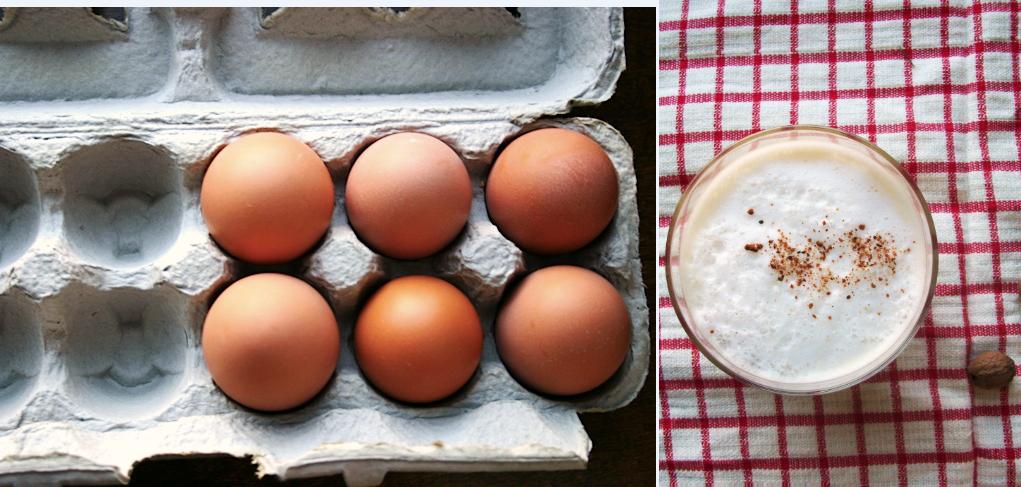
Edgar Allan Poe - Eggnog

With apologies to T.S. Eliot, April is not the cruelest month. That honor belongs to January. After a month of presents, family merriment, chocolate advent calendars and that great pine tree smell, we’re supposed to calmly accept the bleak grayness of winter for three more months?

This is where brandy comes in handy.

Getting a bit tipsy has long been a preferred cure for dreary days. For Edgar Allan Poe, a student at the University of Virginia in the 1820s, drinking apple toddies and eggnog was the extracurricular activity of choice (definitely better than marching band). According to his biographer James Albert Harrison, “a sensitive youth, … surrounded by the social circle that thought convivial drinking and card-playing ‘at Homes’ indispensable to remaining at all in polite society, would easily fall in with the habits of his ‘set,’ and perhaps cultivate them with passion or excess.” In other words, Poe was a lush, but it wasn’t his fault. He just went to a party school.

Poe’s taste for brandy, in particular, became legendary after he left Virginia and entered West Point in 1830. His roommate there, Thomas W. Gibson, recalled that Poe was “seldom without a bottle of Benny Haven’s best brandy. … He had already acquired the more dangerous habit of constant drinking.”

The reputation followed Poe for the rest of his life, and it was long assumed that his taste for drink was what killed him. Modern doctors believe he actually died of rabies; according to Jeff Jerome, curator of the Edgar Allan Poe House in Baltimore, Poe “may have had problems with alcohol as a younger man … but by the time he died at 40 he almost always avoided it.” Still, until just two years ago, a masked man would stop by Poe’s grave on the writer’s birthday, leaving a bottle of cognac on his tombstone for a toast in the afterlife.

* * *

poe images 1

Brandy, EAP's favorite

Continue reading “The Cocktail Hour: Edgar Allan Poe”

George Orwell: Treacle Tart

George Orwell - Treacle Tart

Imagine this: It’s a Sunday night, the end of a long weekend full of gift shopping, cookie baking, and fun-but-exhausting holiday merrymaking. You can’t possibly cook now, you decide, and turn to your trusty takeout-menu drawer. What are you in the mood for, though? Thai? Italian? Indian? Ethiopian?

If there’s one thing I bet you didn’t say, it’s “British.” Despite the U.K.’s recent restaurant renaissance, its meals have been a culinary punchline for nearly a century, ever since World War I hobbled the country’s food culture. George Orwell summed up its characteristics rather bluntly: “simple, rather heavy, perhaps slightly barbarous.”

Orwell was obviously never one to hide his feelings about food; his travel writings slam chefs everywhere from France to Burma. You’d think he’d be a little kinder to his home cuisine, but he savages everything from fish and chips (“definitely nasty, and has been an enemy of home cookery”) to rice puddings (“the kind of thing that one would prefer to pass over in silence”) to pretty much any kind of vegetable (“usually smothered in a tasteless white sauce”).

But Orwell did reserve some praise for what was, in his mind, Britain’s crowning culinary glory: “sweet dishes and confectionery—cakes, puddings, jams, biscuits.” Best of all were the Christmas treats: plum pudding, and treacle tart, “a delicious dish … hardly to be found in other countries.”

So how could a food lover like Orwell explain the U.K.’s mediocre showing in the kitchen? As he tells it, it’s because the best English cooking isn’t at a charming bistro or fancy restaurant, but is made at home, where foreigners don’t have access. That may be bad news for tourists—but it’s a moment for home cooks to shine. When we’re baking scones or Yorkshire puddings, Orwell says, we can be chefs of our own making.

* * *

orwell images

Continue reading “George Orwell: Treacle Tart”

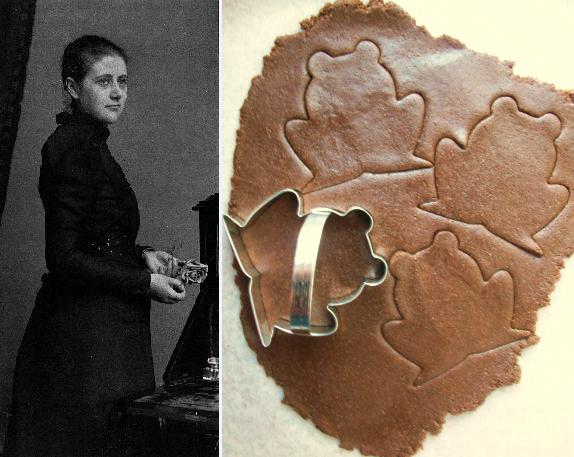
Beatrix Potter: Gingerbread Cookies

Among all children’s authors I loved growing up, Beatrix Potter always seemed the most wholesome by far. My favorite books were the eyebrow raisers: the delicious nastiness of Roald Dahl, the nightmarish worlds of Maurice Sendak. Even The Velveteen Rabbit gets borderline traumatizing. When the only person you truly love gets scarlet fever, and all your friends are burned, you can finally become “real” if you cry? That’s more drama than a episode of Dawson’s Creek.

I remembered Peter Rabbit and Jeremy Fisher as cuddly and innocent in comparison, but on a recent visit to the Morgan Library, I realized I had it all wrong: Potter had a not-so-secret dark side. Not a book goes by without some cute animal about to be skinned, drowned in a sack, or baked in a pie. Potter began her original draft of The Tale of Mr. Tod, “I am quite tired of making goody goody books about nice people.” Her editor nixed it; turns out, readers wanted those goody goody books.

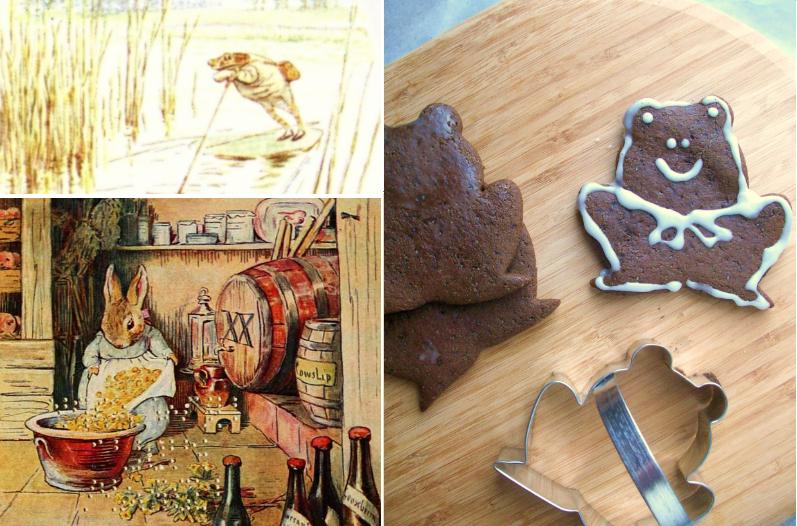
Still, a few less-than-goody bits made it into print. One of my favorite Potter characters is Cecily Parsley, an adorable rabbit who moonlights as a beer brewer. Potter’s illustrations show Cecily soaking some barley in front of comically large barrels marked “XX.” It’s impossible to imagine other favorite children’s characters doing the same: Anne of Green Gables opening up a distillery, or the Goodnight Moon mouse tippling on some homemade hooch.

Did Potter take a cue from Cecily and start her own homebrews? Probably not. She did cook; at her beloved Hill Top Farm, in England’s Lakes District, she planted an herb and vegetable garden that Peter Rabbit would have loved to pillage. Much of her produce came from those gardens, but not all her recipes were virtuous. When Potter’s family recipe book went up for auction this fall, hiding in her gingerbread was a good dose of ale—a little bit of naughty in the midst of all that sugar, spice, and everything nice.

* * *

Continue reading “Beatrix Potter: Gingerbread Cookies”

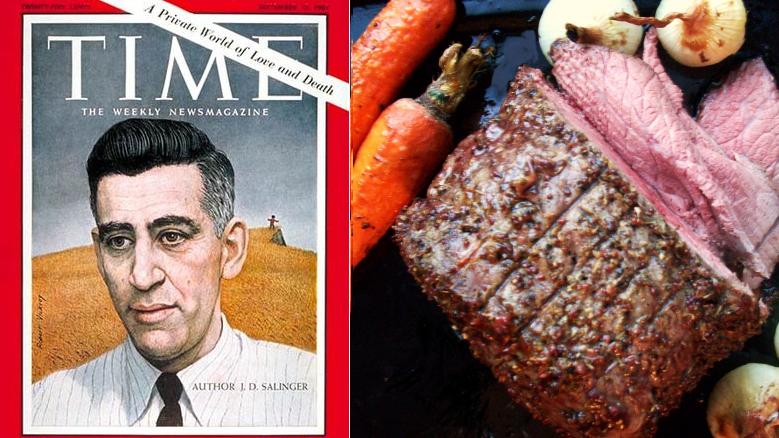
J.D. Salinger: Roast Beef with Dijon Herb Rub

I have never been someone who is good at eating alone. I’m sure there are people who pull it off beautifully: pulling up a stool at a bar, trading witty banter with the wait staff, exuding total contentedness with their own internal world while sipping a martini. But not me. I can only imagine eating alone in the saddest possible way: hunched over in a booth, its plastic coating sticking to the back of my legs, while I shovel a plate of pasta into my mouth and my tears mingle with the condensation on a plastic cup of Mr. Pibb.

It’s not that I don’t like being alone. Some things—museums, books—benefit from a little solitude. But food, to me, is meant to be shared. It’s why I love Thanksgiving, and why J.D. Salinger has always fascinated me. There are days when being a recluse sounds pretty appealing (I’m looking at you, mandatory “networking” events). But how often can you make yourself a lonely salad for dinner?

It wasn’t like that, really; not like Salinger shut himself up in the attic, getting food delivered via dumbwaiter. His family ate meals together, and you could catch him stopping by Howard Johnson’s or Burger King (his fast food of choice). Every Saturday, he even joined the queue for the legendary suppers served by the First Congregational Church in Hartland, Vermont. But you could always pick him out in a crowd. That guy sitting by the pies, writing in a spiral notebook, alone in a sea of people? That was Salinger.

Where he did like some company was at the movies; his daughter, Margaret, called watching Hitchcock films together “our shared world.” But once things got sappy, he was done. “Christ, all you and your mother want to see are sentimental pictures about Thanksgiving and puppy dogs,” he told Margaret. Maybe that’s why he preferred dining alone – because eating together brings out all these emotions in us. I’m sure I’ll be having some serious feelings this Thanksgiving. I wish the same for you – you know, if you’re into that kind of thing.

* * *

Continue reading “J.D. Salinger: Roast Beef with Dijon Herb Rub”

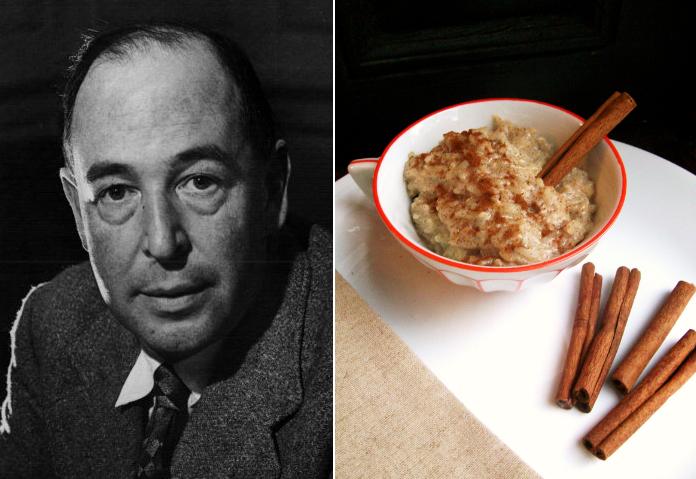
C.S. Lewis: Cinnamon Bourbon Rice Pudding

With Sartre and his halva addiction, Agatha Christie and her devotion to cream, and Wallace Stevens’ cookie obsession, writers seem to thrive on a sugar high. Halloween must be a very productive time of year, creatively speaking: too gloomy to go outdoors, and lots of candy at hand to fuel the creative spark. It makes you wonder how many Great American Novels could only have been written with a steady supply of cake, cookies, and caffeine.

But just as I was beginning to think that sweets were the secret to success, C.S. Lewis broke the mold. He is not only ambivalent toward candy – he actually refuses to eat it. To someone whose favorite part of Halloween is stocking up on half-price Reese’s the morning after (don’t judge), this is the most harrowing discovery of the season.

Lewis comes up with various excuses for avoiding sugary treats: “I’m getting terribly fat and have had to diet” or “I can’t afford to buy a new wardrobe every few months!” He once wrote to a friend, who apologized for sending him stationery rather than sweets, “I must confess that I eat notepaper and envelopes, so your very kind gift may be described as being that of the edible variety.” Which is all to say what Lewis would ultimately admit: “I have not a sweet tooth.”

But his distaste for the insubstantial went further than food. Lewis also disdained literature that went down a little too easily. He cautioned a friend against detective novels, saying, “A little sense of labour is necessary to all perfect pleasures I think: just as (to my palate at least) there is no really delicious taste without a touch of astringency … The apple must not be too sweet.” Who would have thought the immortal creator of Narnia could wind up being the trick-or-treater your mother would love: He’ll leave the M&Ms, and ask for a Granny Smith instead.

* * *

Continue reading “C.S. Lewis: Cinnamon Bourbon Rice Pudding”

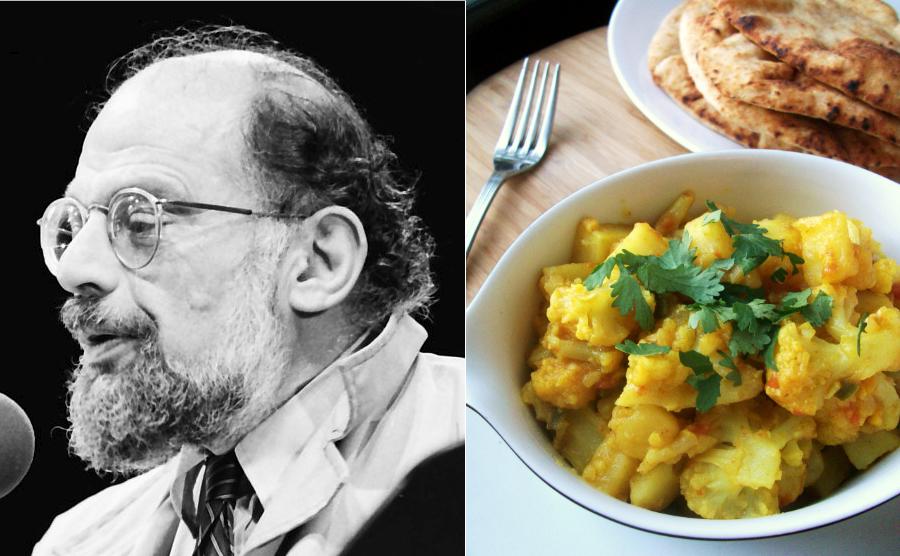
Allen Ginsberg: Aloo Gobi

When I was a kid, I hated lamb. Well, let me clarify: My mother hated lamb, so I hated lamb. I had never actually tasted it, since it was barred from our home, but that was entirely irrelevant to my 10-year-old self. My mom seemed to be right about everything else, so why would she be wrong about lamb?

It wasn’t until I moved away—with an apartment of my own and a boyfriend who tore into lamb like a rabid chupacabra—that I actually took a bite. It was at an Indian restaurant, another territory where my family had always been cautious. We’d consider the menu at length: lots of thoughtful nodding with a smattering of “hmm”s. Then we’d order the same chicken tikka masala and garlic naan we always did.

Allen Ginsberg had our number. Traveling around India in the 1960s, practicing Buddhism and Krishnaism, Ginsberg was eager to bring his new lifestyle to the States. He had just one concern, he told Hare Krishna founder A.C. Bhaktivedanta Swami Prabhupada. Could Americans handle the food?

Allen Ginsberg: So my question is this: … Is this something that a large mass of people can enter into?
Srila Prabhupada: In time, yes. Why not? …
Allen Ginsberg: Yes, but what it requires is an adaptation to Indian dress and
Srila Prabhupada: That is not very important.
Allen Ginsberg: And an adaptation to Indian food. …
Srila Prabhupada: Then that is Indian food? Do you mean to say it is Indian food?
Allen Ginsberg: Well, the curried vegetable dishes.

Although Ginsberg seems skeptical that potential converts could handle the Hare Krishna diet, he was a culinary adventurer himself. In his letters, Ginsberg lists dozens of local delicacies he sampled over the course of his wanderings, like a beat-poet Anthony Bourdain. In Hong Kong, he recommends the 100-year eggs; in Korea, try the snail and cuttlefish dish; in Denver, check out the all-organic Mercury Cafe (where you could catch him singing the occasional set with his rock band).

But even Ginsberg had his own culinary prejudices to overcome. In a letter to the poet Gary Snyder, he expressed surprise at how well he ate in India. “Food quite good … Bombay has great food all over. I’ve even drunk water practically all over and not been bugged. And everybody tells me it was instant death.”

* * *

Continue reading “Allen Ginsberg: Aloo Gobi”

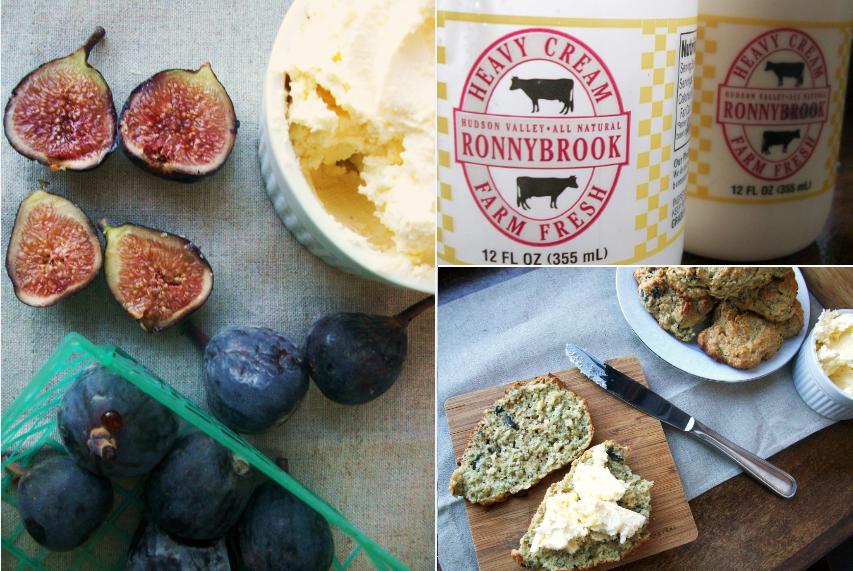
Agatha Christie: Fig and Orange Scones with Devonshire Cream

Certain foods defy any attempt at portion control. Think chocolate chips, or those disturbingly addictive pretzel pieces that must be flavored with some kind of stimulant in addition to the honey mustard. I have such a Cheez-It obsession that, studying abroad in Paris and unable to find them in any grocery, I ordered three boxes online in a hunger-fueled panic. My host mother – who, in typical French fashion, served perfectly portioned meals on an adorable tea tray – brought the package to my room with a look of pure horror. I guiltily ate a whole box as soon as her back was turned.

But Agatha Christie clearly felt no such shame when it came to her food addiction: She loved cream, and all of Devon county knew it. “Agatha was very fond of food – she was passionate about cream,” the local vicar’s daughter remembered. “She would have it by the cupful. She would have a cup of cream by her typewriter.” Even Christie’s fictional characters couldn’t escape the obsession. Miss Marple is similarly famed for her love of cream, and even the picky Hercule Poirot partakes.

Christie made minor attempts to curb her appetite, to no avail. “She used to drink cream from a huge cup with ‘Don’t be greedy’ written on the side, an injunction she never showed any sign of obeying,” her grandson Mathew recalled. Frankly, I think that anyone who has a designated cream-sipping cup is fighting a losing battle with willpower, but I’m the one with a personal bag of chocolate chips in the pantry, so who am I to judge?

There was only one person who had control over Christie’s dessert intake: her butler. George Gowler oversaw the elaborate two-hour dinner parties at Greenway, Christie’s country estate. But instead of letting her choose the menu for the final course, Gowler would randomly assign everyone a different plate of fruit – a game of dessert roulette – allowing guests to choose their favorite dish only once a week. Christie’s favorite was fresh figs, which you can still sample from the trees she grew at Greenway. But beware if you encounter them in one of her mysteries: One unlucky lady who indulges in Syrup of Figs gets poisoned for her trouble. Safer to stick with the cream instead.

* * *

Continue reading “Agatha Christie: Fig and Orange Scones with Devonshire Cream”

John Cheever: Turkey Monte Cristo Sandwich

Whenever I need to make idle chatter, talking about meals is generally a safe, friendly topic – unless that meal is brunch. I’m going to go out on a limb here and say that lunch and dinner are pretty universally well liked. And while the merits of breakfast have certainly been debated (despite being repeatedly chastised for not eating it, I somehow am still alive), brunch just gets people unusually riled up.  For the anti-brunch lobbyist, the idea of forking over $20 for a couple of eggs leaves a bad taste in the mouth that no bottomless-mimosa deal can wash away.

But even the most dedicated day drinkers can’t hold a candle to John Cheever, whose brunches consisted of “a secret slug of whiskey at eleven … two martinis at noon.” In his journals, Cheever’s infamous struggle with alcoholism plays out in the endless litany of gin and tonics, martinis, and nightcaps that make up his daily menu, starting well before noon. Food is an afterthought, usually appearing sandwich form. “I work until one, when I eat my sandwiches and take a rest,” Cheever wrote of his daily routine, a schedule that looks very virtuous when the drinks are edited out.

It wasn’t until Cheever moved to Los Angeles in 1960, to adapt D.H. Lawrence’s The Lost Girl for the screen, that he began taking an interest in food – both as a way to stave off depression, and because it was all conveniently paid for by the studio. “I’d reach for the phone and order the most elaborate breakfast I could think of,” he told The Paris Review, “and then I’d try to make it to the shower before I hanged myself.”

For Cheever, a native New Englander, Hollywood didn’t have much going for it, except where sandwiches were concerned. He recounts in his letters the discovery of a new sandwich, like a rare and exotic bird: “For lunch Carl had something called a Monte Christo sandwich. This is made of three slices of French toast, turkery [sic] meat between the toast, the top sprinkled with powdered sugar and the whole cut into three sections, each looking like a Napoleon. This is eaten with a knife and fork. And this is my only life in Hollywood note for today.” For a sandwich aficionado at the time, this was a moment of revelation. It is also, I hesitate to add, an ideal morning meal after a long night of drink.

* * *

Continue reading “John Cheever: Turkey Monte Cristo Sandwich”

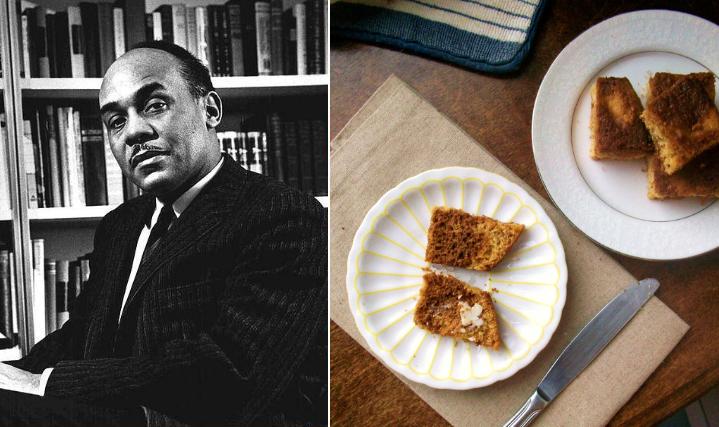
Ralph Ellison: Molasses Cornbread

There’s a scene in Ralph Ellison’s The Invisible Man that has become one of the most famous food passages in history. The unnamed narrator, passing a sweet-potato vendor on the road, is transported back to his childhood in the South, happily recalling meals of fried chicken and chitterlings – foods that soon became too racially charged for him to enjoy. But in this moment, the narrator is changed: He gets three orders of potato, newly determined to eat what he likes without shame. “I yam what I am,” he shouts, transformed (and if your mind went straight to Popeye, just remember what a dramatic effect food had on him).

Food unexpectedly changed the course of Ellison’s life: When he started studying music at the Tuskegee Institute, he also began working long hours in the dining hall, in order to pay off his tuition. You could find him on the early shift – 5 a.m. to 1 p.m. – baking cornbread and pouring bowls of molasses for the breakfast service. And after graduation, it was cooking – not music – that landed Ellison a job. Failing to score a coveted spot as a trumpeter in a military band, he instead found work as a cook on a Liberty ship, turning out versions of the Southern staples he learned at Tuskegee: cornbread, biscuits and fried pies.

It wasn’t until Ellison began traveling abroad, away from the Southern dishes that had defined his early years, that he realized how they had worked their way into his being. Living in Rome in 1956, Ellison wrote to his friend and fellow writer Albert Murray, “I got no way to get any corn bread … no sweet potatoes or yellow yams, a biscuit is unheard of – they think it means a cookie in this town – and their greens don’t taste like greens.”

Today fried chicken and stewed greens have gained gourmet cred – collard green risotto is totally a thing – but there will always be foods that feature guilt as a main ingredient. The phrase “you are what you eat” has become a grim warning, baking shame into things that ought to be enjoyed in moderation. We focus so much on the physical effects of our diet, it’s easy to forget that food can change us in other ways – ones that don’t involve calories or celery sticks but instead affect our minds and hearts: sweet potatoes for comfort, ice cream for renewal, chocolate for joy.

* * *

Continue reading “Ralph Ellison: Molasses Cornbread”