Virginia Woolf: Cottage Loaf

Virginia Woolf - Cottage Loaf

Every time I get discouraged by writing, I engage in a bit of schadenfreude, and soothe myself with the frustrations of others. “I write two pages of arrant nonsense after straining … Then I trust to some inspiration on re-reading.” That’s Virginia Woolf while writing The Wavesbut I’m pretty sure I said the same thing, more or less, while writing this post.

This constant self-effacement is a theme that runs through Woolf’s letters. Her talents didn’t really lie in the library, she would tell you. They were in the kitchen. “I have only one passion in life — cooking,” Woolf wrote to her friend (and occasional lover) Vita Sackville-West. “I have just bought a superb oil stove. I can cook anything … I assure you it is better than writing these more than idiotic books.”

Where Woolf hesitated to praise her own writing, she wasn’t nearly so shy about her talent for baking. “Cooked lunch today and made a loaf of really expert bread,” she wrote. Bread was her specialty, particularly a traditionally British double-decker creation: the snowmanesque cottage loaf. Her dedication to the kitchen was unusual for a woman of the upper-middle class. She did, however, draw the line at doing the dishes (“How servants preserve either sanity or sobriety if that is 9/10ths of their lives … God knows”).

In Recollections of Virginia Woolf, Louie Mayer, the Woolfs’ cook, marvels at Virginia’s calm expertise. “She showed me how to make the dough with the right quantities of yeast and flour, and then how to knead it. She returned three or four times during the morning to knead it again. Finally, she made the dough into the shape of a cottage loaf and baked it at just the right temperature.”

It’s Woolf’s birthday today; she would have been 131, although she didn’t make it even half that far, her mental illness wearing her away. But from Woolf’s letters, the time she spends cooking seems to be its own rest cure, clearing her head of everything else but the dough. “My bread bakes well,” she writes in her diary, and it resounds like a soothing mantra. If all else fails, I tell myself, my bread bakes well. My bread bakes well.

* * *
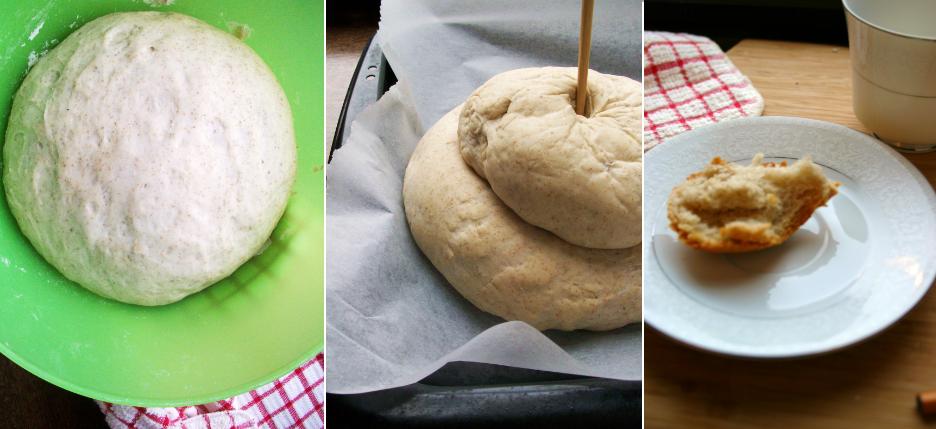
Virginia Woolf - Cottage Loaf Recipe

Continue reading “Virginia Woolf: Cottage Loaf”

Of Books and Cooks: 5 Lessons from Year 1

2013 Book Giveaway

In January 2012, I started Paper and Salt. The past year brought a lot of new things: new jobs, new friends, new recipes, new books, new travels. But discussing authors’ favorite recipes here has been the best ‘new’ thing of that New Year, and (to mix up all my holidays at once) I’m thankful.

The past 12 months also brought many lessons about food blogging – new to me, although likely learned by you long ago:

1. Experiment. The best way to develop our own style is to dabble in others’ for a while. If you’re clinging to a sentence or a favorite ingredient, take a moment to let go. See how it feels.

2. Have patience. Taking pictures of food is even more about patience than it is a keen eye or a newfangled camera. You will move things around, making the most trifling of changes (This napkin here? Or here? Or … ?), ad infinitum, until your food gets cold and all the dishes you own are stacked in the sink, discarded after their short-lived modeling careers. And chances are, you’ll pick the first photo you took. Your patience will be what keeps you from throwing your camera across the room.

3. Be inspired. Despite the hours that go into cooking, writing, editing and photographing, the community of food bloggers still make time in the day to be extremely generous, and I’m indebted to many of them. I’ve updated the links section of this blog, if you’re ever in need of some delicious inspiration.

4. Persevere. Posts about baked goods will always, always garner more excitement and stomach rumblings than posts about salad. But never stop writing about salad, if that salad has some poetry in it.

5. Be brave. Writing, just the pure process of it, can be incredibly hard. But harder still is putting that writing out into the world, when you know it’s not perfect. You let it out of of your safe little nest of thought, unchaperoned and a bit underdeveloped, and hope it survives. But sometimes it does one better – sometimes it takes flight.

Continue reading “Of Books and Cooks: 5 Lessons from Year 1”

The Cocktail Hour: Edgar Allan Poe

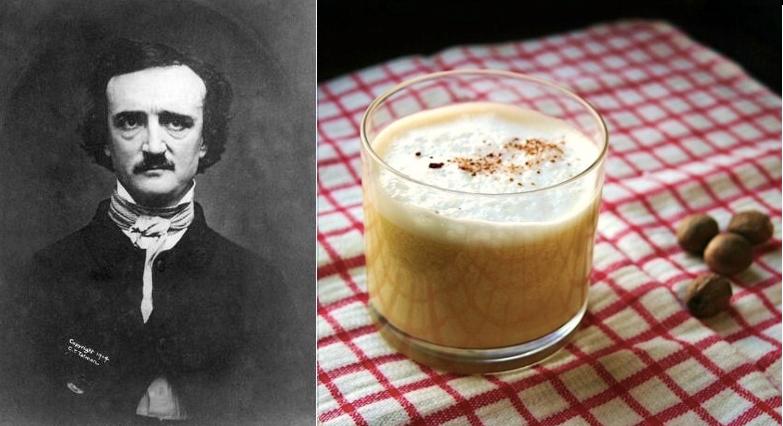
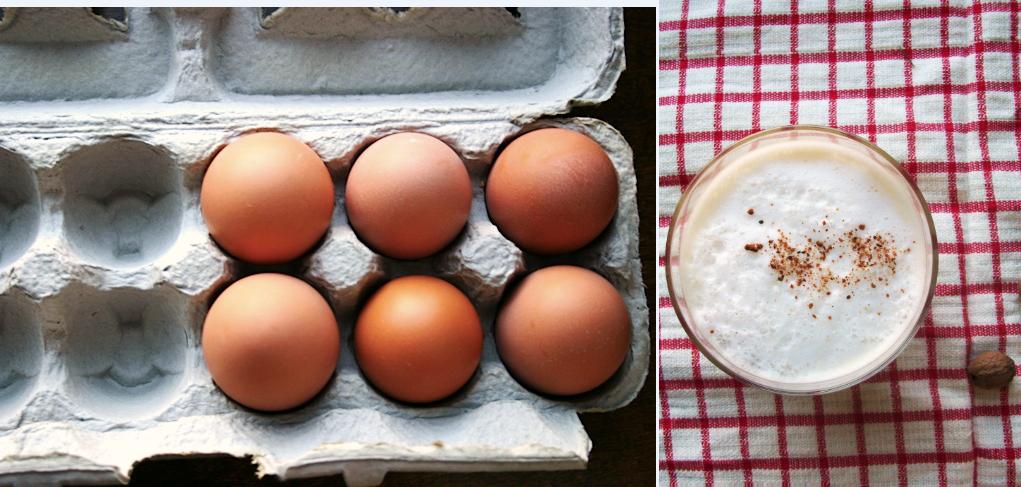
Edgar Allan Poe - Eggnog

With apologies to T.S. Eliot, April is not the cruelest month. That honor belongs to January. After a month of presents, family merriment, chocolate advent calendars and that great pine tree smell, we’re supposed to calmly accept the bleak grayness of winter for three more months?

This is where brandy comes in handy.

Getting a bit tipsy has long been a preferred cure for dreary days. For Edgar Allan Poe, a student at the University of Virginia in the 1820s, drinking apple toddies and eggnog was the extracurricular activity of choice (definitely better than marching band). According to his biographer James Albert Harrison, “a sensitive youth, … surrounded by the social circle that thought convivial drinking and card-playing ‘at Homes’ indispensable to remaining at all in polite society, would easily fall in with the habits of his ‘set,’ and perhaps cultivate them with passion or excess.” In other words, Poe was a lush, but it wasn’t his fault. He just went to a party school.

Poe’s taste for brandy, in particular, became legendary after he left Virginia and entered West Point in 1830. His roommate there, Thomas W. Gibson, recalled that Poe was “seldom without a bottle of Benny Haven’s best brandy. … He had already acquired the more dangerous habit of constant drinking.”

The reputation followed Poe for the rest of his life, and it was long assumed that his taste for drink was what killed him. Modern doctors believe he actually died of rabies; according to Jeff Jerome, curator of the Edgar Allan Poe House in Baltimore, Poe “may have had problems with alcohol as a younger man … but by the time he died at 40 he almost always avoided it.” Still, until just two years ago, a masked man would stop by Poe’s grave on the writer’s birthday, leaving a bottle of cognac on his tombstone for a toast in the afterlife.

* * *

poe images 1

Brandy, EAP's favorite

Continue reading “The Cocktail Hour: Edgar Allan Poe”