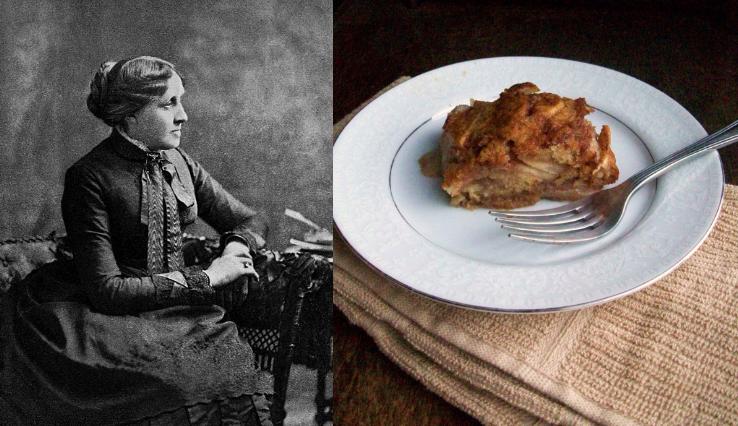
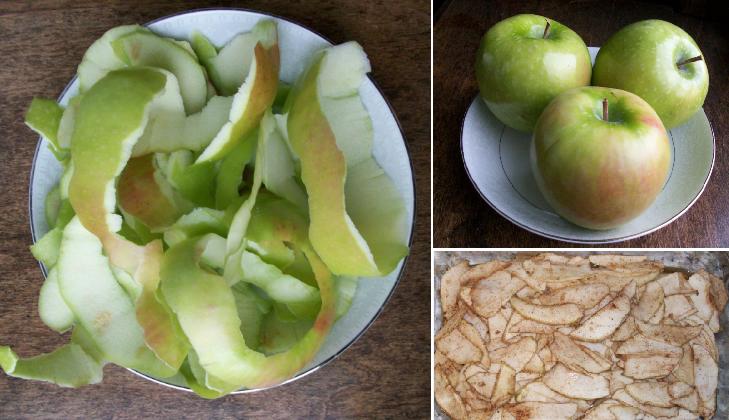
Charles Dickens: Apples à la Princesse

Thinking of Dickensian food conjures up two extremes – the stuffed goose and figgy pudding feast of A Christmas Carol and the sad gruel rations of Oliver Twist. During Dickens’ 200th birthday celebrations this month, there was a lot of talk of the former. Nobody seemed as excited about the gruel, but there are plenty of resources to help you make an authentic Victorian version that actually sounds kind of great (Favorite BBC quote: “We were hoping he’d make it far more disgusting.”)

Given the fame that Dickens achieved in his lifetime, he didn’t have to beg for second helpings. But one of his favorite dishes, baked apples, was quite simple, not to mention practical: He swore by their ability to prevent seasickness.

Dickens became a baked apple convert while sailing to Boston in 1867. They were served at every meal during the Atlantic crossing, and he always helped himself. “I am confident that they did wonders, not only at the time, but in stopping the imaginary pitching and rolling after the voyage is over,” he wrote to his sister-in-law, Georgina Hogarth.

The magical apple diet clearly made an impression, and in 1881 Charles Dickens Jr. dedicated an entire cookery column to them in Household Words, a revived version of his father’s weekly magazine. Apples were getting cheaper and were beginning to be imported from abroad, so baked apples could be made by anyone, anytime. Perhaps thinking of his father, Dickens Jr. stressed the health benefits of the fruit. “It is unnecessary to say how valuable apples are as an article of diet.” Turns out, Dickens had been on the edge of a trend: The earliest version of our famous “An apple a day” saying was first published in Wales in 1866, just a year before his trip to the States.

* * *

Continue reading “Charles Dickens: Apples à la Princesse”

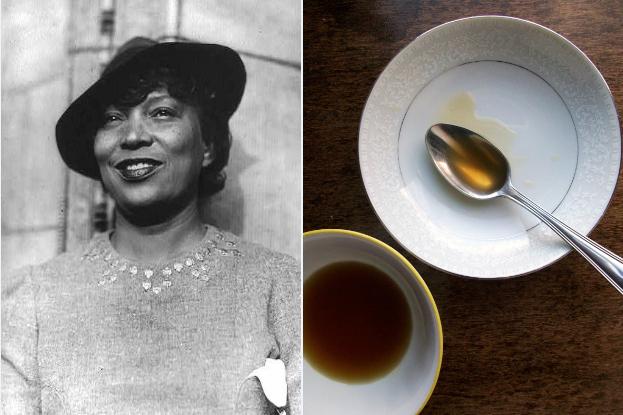
Zora Neale Hurston: Chicken Consommé

“So, what’s your backup plan?”

Everyone who lusts after a job in some creative field runs into this inevitable question. When I was 10, I told my mother I was destined for Broadway. When pressed for a possible fallback, I shrugged and said I could always go into journalism. She has worried about me ever since.

In the fall of 1931, Zora Neale Hurston was working on several projects, all of them artsy and none of them lucrative: short stories, concerts, book proposals. Recently divorced and without a steady income, she was being supported by her godmother, the philanthropist and New York socialite Charlotte Osgoode Mason. Mason and my mother would have had a lot to talk about. “I know that you worry about my future,” Hurston wrote to her godmother. “Therefore, if I had a paying business—which after all could not take up a great deal of my time,—I’d cease to be a problem.”

That’s how she came up with her backup plan to become “New York’s Chicken Specialist.”

Like any good start-up entrepreneur, Hurston did her research. She surveyed the local competition: “I have been sampling the chicken soups already on the market and find not one really fine one.” She outlined the business model: Ever practical, she would use all parts of the bird. The bones would be for soup. The chicken breasts, “they’d be my salad material. The other part of the chicken would emerge as a la king.”

But despite her concessions toward her godmother and her own pragmatism, Hurston never wavered in her assurance about her real talent. “I firmly believe that I shall succeed as a writer, but the time element is important,” she wrote to Mason. “Besides I like to cook.”

* * *

Continue reading “Zora Neale Hurston: Chicken Consommé”

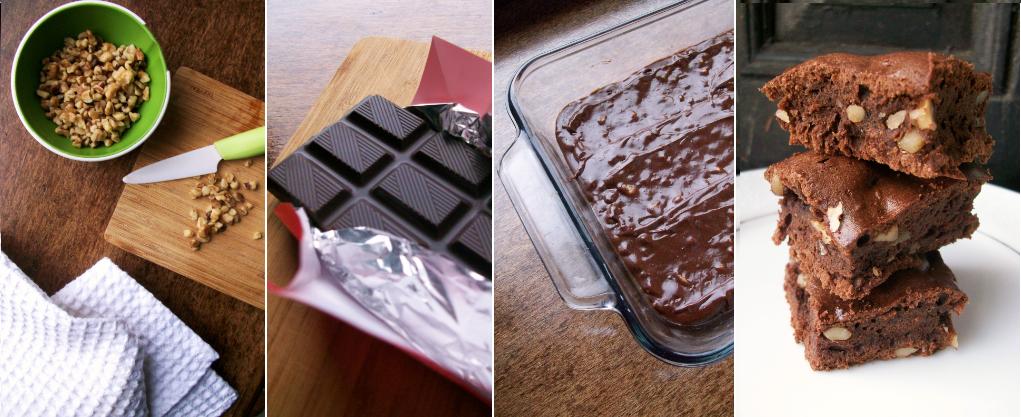
Elizabeth Bishop: The Brownie Recipe

Baking, especially baking bread, is one of those activities that is perennially nerdy-cool, like knitting or discussing artisan teas. If you’ve ever talked with rhapsodic satisfaction about your sourdough starter, you’re a part of it. But you’re not the first.

Elizabeth Bishop was one of the earliest to recognize the proto-hipster qualities of baking from scratch, after the 1920s inventions of Betty Crocker mixes and Wonder Bread made it unnecessary. “My part-time work at present seems to be baking bread,” she wrote to Robert Lowell in 1960, adding presciently, “it sounds food-faddish I’m afraid.”

Although she was always an occasional baker, making treats for cake sales and birthdays, it wasn’t until landing in Brazil in 1951 that Bishop made it a habit. Her trip, which began as a travel fellowship, turned into a 15-year stay, and she soon became a very popular neighbor thanks to one of her signature recipes: brownies.

The earliest published recipes for brownies appeared in Chicago and New England the early 1900s, but according to Bishop they hadn’t made it to South America by the 1950s. Her version was an instant hit. “Since Brazilians are mad about anything chocolate … I have been requested to bring along 4 dozen brownies (something I’ve introduced to Brazil) and a large chocolate cake,” she writes to Lowell in the fall of 1957. “You see how innocent our lives are here—just making money and eating sweets.”

There’s an intimacy about baking, which might be why I always like to celebrate Valentine’s Day with homemade desserts. But reading from the correspondence between Bishop and Lowell is just as romantic to me – no bodice-ripping, but plenty of wit, flirtation, and the kind of tenderness that bespeaks a very deep love.

* * *

Continue reading “Elizabeth Bishop: The Brownie Recipe”

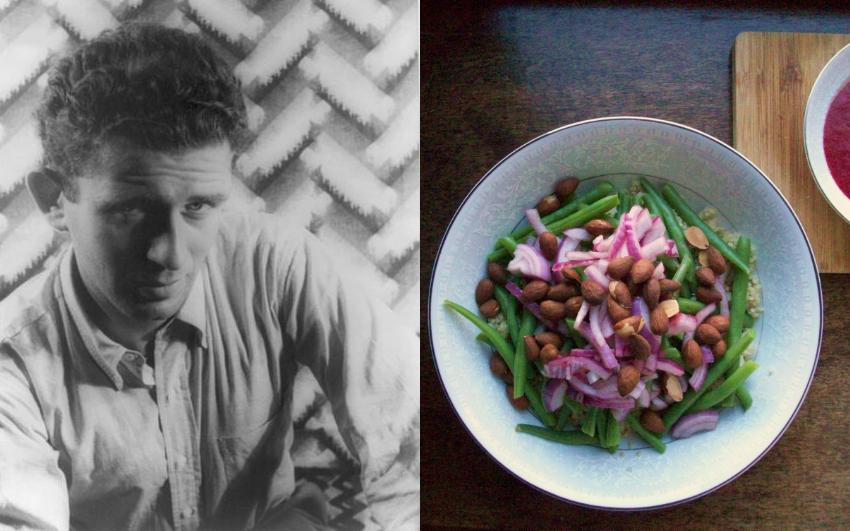
Norman Mailer: Green Bean Salad with Raspberry Vinaigrette

In his famous appearance on The Dick Cavett Show, after headbutting Gore Vidal backstage, Norman Mailer humbly referred to himself as a “dizzying intellect.” I’ll leave that literary debate to his critics, but at least in the kitchen, Mailer was a thinker.

In his semi-recent memoir, Dwayne Raymond discusses his firsthand experience with the giant brain; he helped research Mailer’s last novel, The Castle in the Forest, but also served as confidant, tech support, chef, and guinea pig for some of Mailer’s more unique food creations.

Mailer theorized on food like a man obsessed. Occasionally this would manifest itself in more compulsive ways, like meticulously cutting a grapefruit in exactly nine sections. But you could see it more often in his pursuit of the culinary Shangri-La: a recipe that would maximize flavor, nutrition, and integrity of the ingredients all in one.

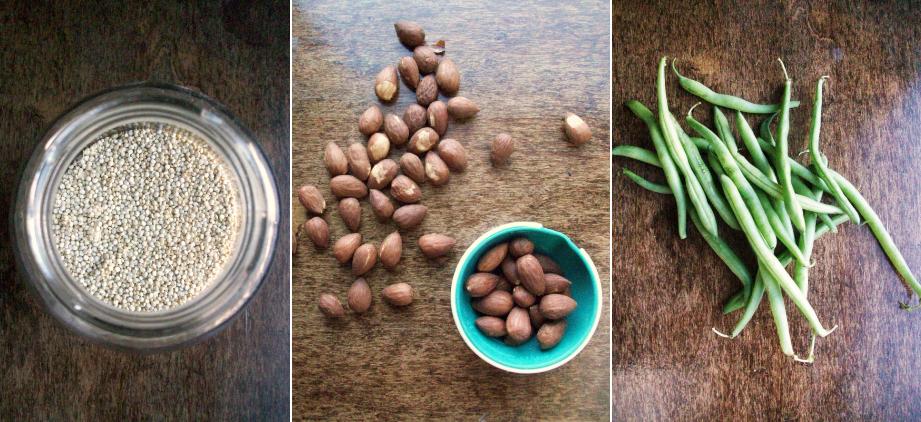
Not that these concoctions were necessarily successful. Case in point: a ghasty-sounding salad made of green beans and teriyaki-infused oatmeal (to lower cholesterol). Another “experimental” salad recipe involved the addition of Häagen-Dazs Raspberry Sorbet to a vinaigrette. “It didn’t occur to him that the whole concept was dreadful; that wasn’t the way his mind worked,” Raymond writes. “Norman believed that anything awful could be fixed if enough work was put into it.”

In that spirit, I decided to take on an awful-yet-fixable dish. Re-enter the green bean and oatmeal salad.

* * *

Continue reading “Norman Mailer: Green Bean Salad with Raspberry Vinaigrette”

Jean-Paul Sartre: Halva with Almonds

Food often tops our list of guilty pleasures, but it’s hard to think of famous writers indulging in the gratuitous and occasionally sordid ways we do. When I was in college, part of my late-night routine was to buy a huge bag of Tostitos with lime, eat the whole thing while writing a paper and—in one final profligacy—scrape the fake citrus-flavored salt out of the corners of the bag. Trying to imagine Camus doing that just feels wrong.

But there’s probably a kernel of truth to it, if Jean-Paul Sartre’s letters are anything to go by. Sartre had his cravings too, and while he was fighting with the French army during World War II, his letters to Simone de Beauvoir repeatedly mention the same thing. He demands halva.

In between discussions of Weltanschauung and his work on Being and Nothingness, Sartre can’t stop talking about halva. “Don’t forget,” he reminds de Beauvoir in 1939, when asking her to send two boxes. Then, in a following letter: disaster. “I was in an excellent mood today, and then I got your books (the Romains) but no halva. Is there another package?”

But when Sartre does receive halva, multiple times over the next few years, his joy is palpable. “The halva arrived in good order … Thank you very much, my little sweet. We ate the whole box at lunch.” And later: “I gave the halva to Pieter, who carried on about it so, that I bawled him out. At this very moment he’s eating a big chunk with great satisfaction.”

The letters between Sartre and de Beauvoir are also incredibly beautiful. But Sartre’s sweet tooth makes him just a bit more relatable. Existentialists: They’re just like us.

* * *

Continue reading “Jean-Paul Sartre: Halva with Almonds”

Louisa May Alcott: Apple Slump

If something called a “slump” doesn’t make you salivate, how about eating a “grunt”? No? Then Louisa May Alcott will have your helping. They’re two different names for the same homey New England dessert: a dumpling crust over a baked (or steamed) fruit base, which was said to make grunting noises as it cooked down.

Another name? Pandowdy. Still hungry?

But Alcott loved the dish so much that she nicknamed her house after it. Orchard House, where she lived for nearly 20 years, famously provided the setting for Little Women as well as the backdrop to many Alcott family adventures. With a 12-acre apple orchard, as well as neighbors including Nathaniel Hawthorne and Ralph Waldo Emerson, it was an idyllic place both to grow up and to bake.

Louisa’s parents, well-known transcendentalists, had tried and failed to start an agrarian commune called Fruitland (sadly not a fruit-based theme park) before buying Orchard House in 1857. So when Alcott and Hawthorne often referred to the new house as Apple Slump, it was both a fond reference to the favorite dessert as well as a wink at the prior collapse of Fruitland, a slump in its own right.

* * *

Continue reading “Louisa May Alcott: Apple Slump”