Kurt Vonnegut: Spiked Three Musketeers Bars

Kurt Vonnegut: Spiked Three Musketeers Bars

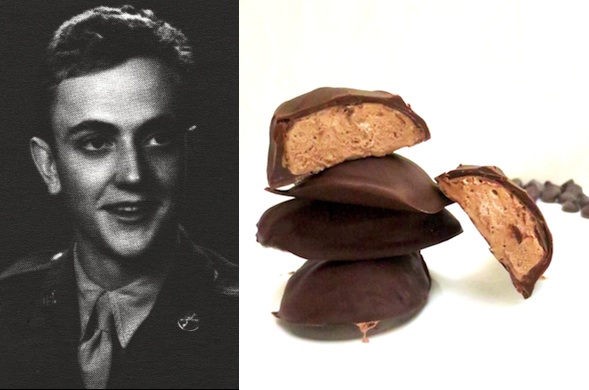
To paraphrase Freud, sometimes a candy bar is just a candy bar. But a good one often takes on greater meaning: as a motivator, a mood-changer and, in my kindergarten class, a valuable form of currency. Trading candy at lunch seemed to determine the whole school’s social hierarchy—and nothing commanded a higher price than a Three Musketeers. Something about that weirdly aerated filling and the sweet-on-sweet combination of chocolate and nougat made our sugar-driven hearts race and sent the bids soaring.

But for Kurt Vonnegut, a world away from the playground, candy bars became something even more valuable: a reminder of home, when it never seemed further away. Part of the Allied invasion of France during WWII, Vonnegut’s regiment was captured by German forces. For six months, he and his fellow soldiers dreamed about their lives before the war—and the food they would eat if they ever returned.

Thanksgiving turkey was the most popular topic of culinary conversation among the other men, but Vonnegut had a different focus. “[He] obsessed about candy bars,” his biographer Carl Shields wrote in And So It Goes. “He swore he was going to eat every kind ever made when he got home—Almond Joy, Milky Way, PayDay, Hershey’s, Clark Bar—and loved to talk about what it would be like with his mouth stuffed.”

Three Musketeers, however, would take a special place in Vonnegut’s memories, and his fiction. In Slaughterhouse Five, the novel most directly inspired by his time as a prisoner of war, the candy bar pops up by name several times. And the name he gives his trio of central characters? The Three Musketeers.

Even years later, Vonnegut’s childlike devotion to sweets persisted; instead of offering visitors coffee, the default drink of writers everywhere, he’d suggest hot chocolate. And although he paired his nightly meals with two more adult pursuits—a glass of Scotch and water, jazz—his preferred recipes were equally simple, favorites of the kindergarten set that would have been a hot commodity on my childhood playground. His daughter, Edie, remembers the day he asked her for a recipe he particularly liked, “the one where the cheese melts.” It was grilled cheese.

vonnegut 1

IMG_1314

Continue reading “Kurt Vonnegut: Spiked Three Musketeers Bars”
Roald Dahl: Frozen Homemade Kit-Kat Cake

Roald Dahl: Homemade Frozen Kit-Kat Cake

As I was growing up, no book did more to encourage my incipient interest in dessert than Charlie and the Chocolate Factory. Willy Wonka’s world offered a blissful alternate universe, where candy was not dangerous, or merely delicious, but magical. How different this is from the food corporations we hear about today—the ones that have conspired to hook us on salt, sugar and fat. There aren’t many Wonkas in the world anymore; we’re in a food world run by Slugworths.

Roald Dahl himself was the industry’s perfect victim, growing up just as large chocolate companies were asserting their influence. When he was born, in 1916, “The chocolate revolution had not begun,” he wrote in the Sunday Magazine. “There were very few delicious chocolate bars to tempt us.” But soon, chocolate was everywhere—and nowhere was it more influential than in Dahl’s own backyard. His boarding school, Repton, was right down the road from the Cadbury chocolate factory, which would frequently enlist the boys to test new creations, mailing them boxes of bars to try.

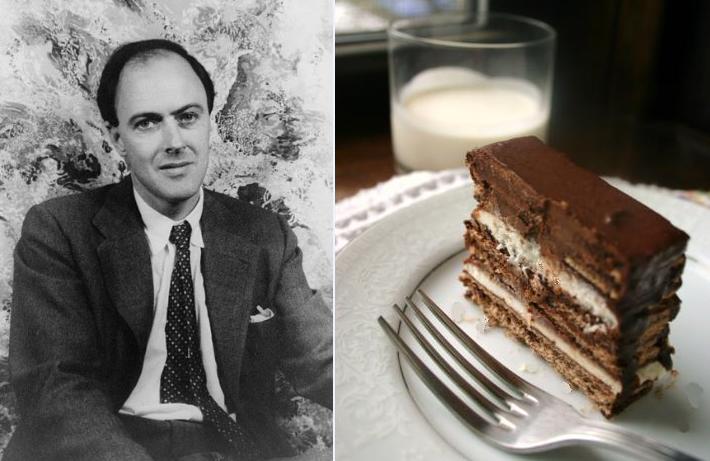
The golden age, according to Dahl, was from 1930-37; that’s when the world saw the debut of the Mars Bar, Rolos and (Dahl’s personal favorite) the Kit-Kat. Until his death, in 1990, Dahl would eat at least one Kit-Kat every day. (His dog, Chopper, preferred Smarties, eating four after lunch and four after dinner) He would save their silver wrappers, adding them to a giant foil ball on his desk, where visitors to the Dahl house can still see it today.

Dahl was hooked early—but he began to notice the candy industry’s increasing interest in the “bland, almost tasteless” tastes the public preferred. His special disdain was reserved for one of Cadbury’s bestsellers, “the blandest and most disgusting thing of all,” the Crème Egg. These “fondant-filled horrors” didn’t have any of the surprises—the delightful crunch, the bright colors, the sharp flavors—of Dahl’s beloved bars. “Nobody I know eats them. But somebody obviously does, by the bucketful.”

Because it wasn’t sugar that hooked Dahl, after all; it was food’s magical ability to amaze, to astonish, to transform. When Dahl’s first wife fell ill, he would surprise her at breakfast with pink milk, because—why not pink milk? Like Wonka, Dahl saw how food opens us to a world of new sensations, new possibilities, new sensations. With every new taste, childlike, we encounter a bit of wonder.

Frozen Homemade Kit-Kat Cake Recipe

Continue reading “Roald Dahl: Frozen Homemade Kit-Kat Cake”