Marcel Proust: Quick Croissants with Coffee Glaze

Marcel Proust - Quick Croissants with Coffee Glaze

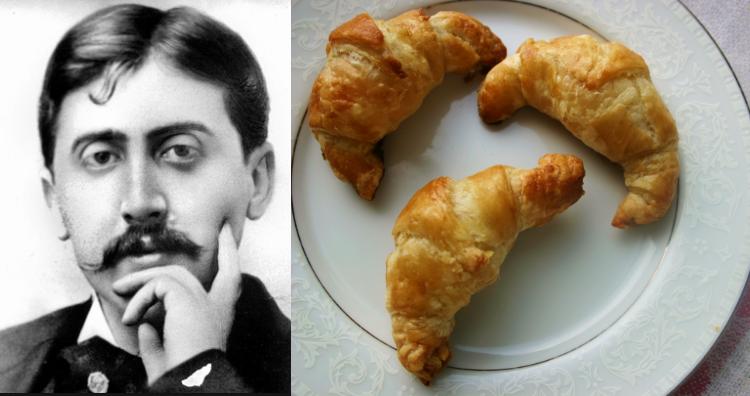
You were waiting for this, right? Authors and food equals Proust and madeleines. It’s arguably the most recognizable culinary pairing in literature, and definitely the one I’m asked about the most. (This site was almost named “Proust’s Madeleine,” or something equally pretentious, until the idea was greeted by faux barfing noises from my focus group/boyfriend.) So why hasn’t Marcel appeared here yet?

The thing is: There’s not a lot of evidence to suggest that Proust really ate madeleines. Although his vivid memories of the delicate cookies from In Search of Lost Time have become iconic, early versions of the novel actually don’t include madeleines at all. Instead, we see Marcel biting into a humble biscotte – a piece of dry toast. And as Edmund Levin’s meticulous experiments in tea-dunking and crumb-making reveal, Proust’s description of the famous treats doesn’t seem to match up with any known recipe. It’s likely that the madeleines of our imagination were just that: a figment of Proust’s culinary mind.

So what was Proust really eating? He’d be so glad you asked. Before asthma reduced his appetite (and even for an unhealthily long time after), Proust was a notorious glutton, stuffing himself so full that he sometimes resorted to wearing a corset. He blissfully described one of his meals, which included “two tournedos steaks—I ate every scrap—a dish—of chips (about twenty times as much as Félicie used to make), some cream cheese, some gruyère, two croissants, a bottle of Pousset beer.” He summed it up more succinctly in a letter to his mother: “Lunch is my favorite moment.”

But as his illness worsened, his need to write began to subsume his desire to eat, and breakfast became Proust’s meal of choice. Instead of the madeleines and tea we know from his fiction, the real Marcel demanded croissants and cafe au lait, brought to him in bed while he read the paper and began his work. He would dunk his croissant in the coffee (just as his fictional self would mimic with a cup of tea) and ate little else for the rest of the day.

Céleste Albaret, Proust’s trusted servant, later marveled at the writer’s ability to live on so little, after years of hedonistic eating. “The most extraordinary thing was how he could survive and work, ill as he was, … by living on the shadows of foods he’d known and loved in the past.” In the absence of beef and beer, Proust’s writing (and those morning croissants) was all that remained, evoking those tantalizing sense memories of meals gone by—his own personal madeleine moments.

Easy Croissant Recipe with Coffee Glaze

Continue reading “Marcel Proust: Quick Croissants with Coffee Glaze”
Marquis de Sade: Molten Chocolate Espresso Cake with Pomegranate

Marquis de Sade - Molten Chocolate Espresso Cake

I have always been semi-mortified about special requests in restaurants. Meg Ryan’s orders in When Harry Met Sally still fill me with third-party embarrassment. When I was in high school, my friends and I decided, instead of going to junior prom, we’d spend our ticket money on a fancy dinner in San Francisco instead. I anticipated it for weeks, poring over the menu in advance like it was some kind of ancient codex. After much deliberation, I picked the black pepper-crusted tuna steak—which, of course, arrived raw. 

What to do? Amazingly (this being California in the 90s), I hadn’t yet eaten raw fish and wasn’t planning to start then. But, determined to be accommodating  I picked at the seared edges of the tuna until a friend noticed, rolled her eyes, and asked our waiter to re-fire it. I watched him parade the plate back to the kitchen, as if announcing to the room, “That girl in the corner table is so uncultured, she didn’t know tuna is served rare, and we are all paying the price.” 

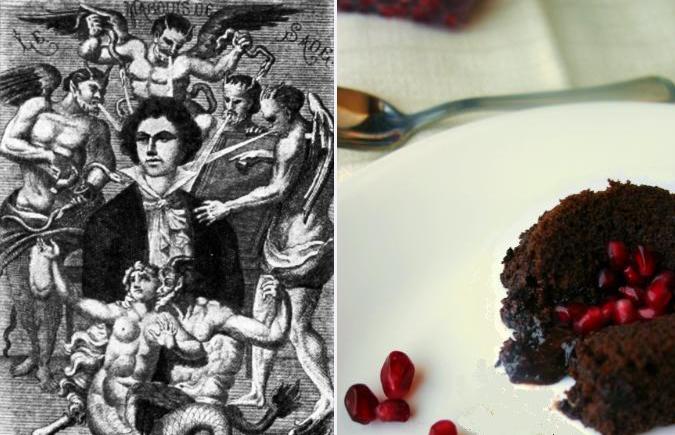
My tolerance for special requests has improved since then (It helps that I’m no longer in high school, when even the wrong nail polish was the apex of embarrassment). And whatever I order, I know it will never compare to the culinary demands of the Marquis de Sade, who showed as much disregard for dining conventions as he did for sexual ones—that is, pretty much none whatsoever.

For one thing, if I were in prison, I assume that I wouldn’t have a lot of input about the food; you get what you get. Not so the Marquis. In one of his many jail stints, he counseled the chef of the Bastille about the daily menu: it had to include a custard (vanilla or coffee flavored only), baked apples, and “an excellent soup (I will not repeat this adjective; soups must always be excellent.” Try this today, and I bet you’d get a big fat of soup in your face. It would not be the excellent kind, either.

I also admit that I’ve never once ordered cookies shaped to specific dimensions. The Marquis was all over this one. His requests to the Bastille are charming compared to the letters he wrote his wife, Renee, from prison, which listed his extensive food needs, including biscuits “six inches long by four inches wide and two inches high.” He was not only particular about his sweets; his appetite for them was insatiable. Another letter to Renee asked for “four dozen meringues; two dozen sponge cakes (large); four dozen chocolate pastille candies, vanillaed, and not that infamous rubbish you sent me in the way of sweets last time.”

And woe unto the person who forgets the chocolate. “The next time you send me a package … try to have some trustworthy person there to see for themselves that some chocolate is put inside,” he snarked. He may have been a libertine in the bedroom, but in the dining room with the Marquis, you don’t fool around.

* * *

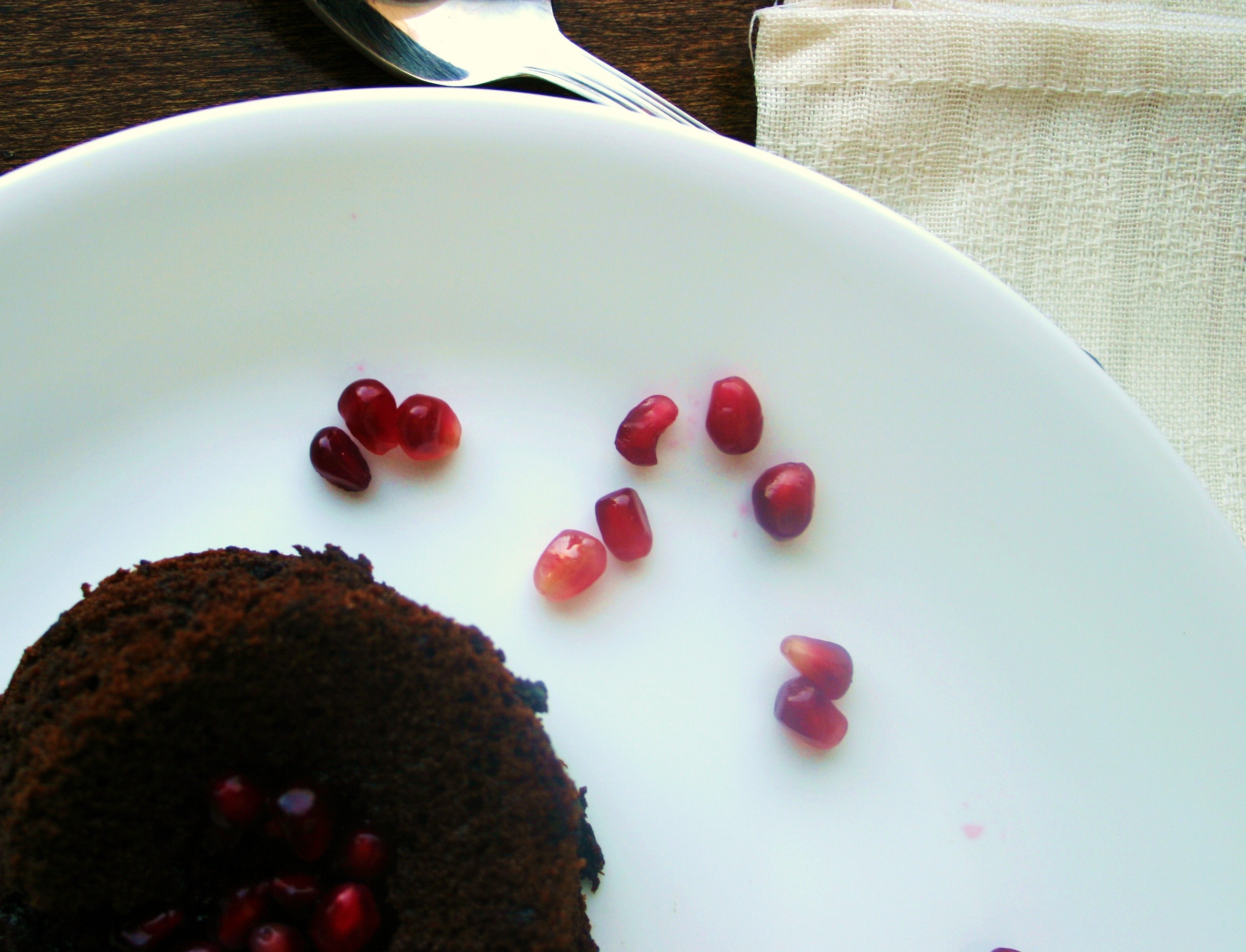
Molten chocolate espresso cake with pomegranate recipe

IMG_1603

Continue reading “Marquis de Sade: Molten Chocolate Espresso Cake with Pomegranate”