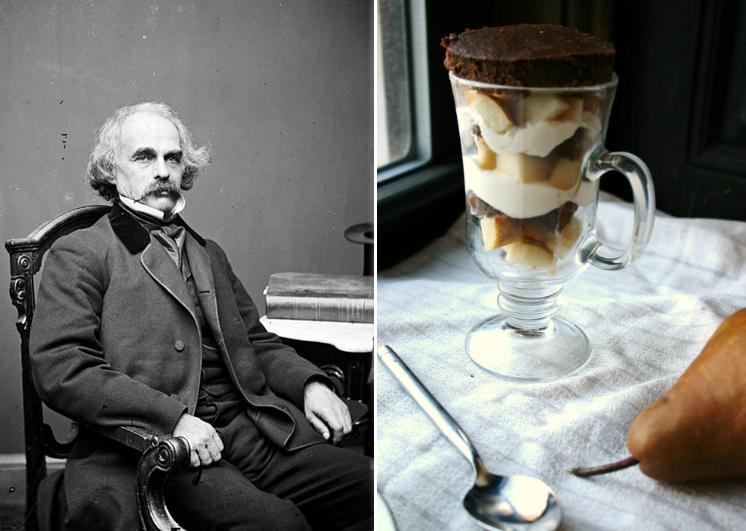
Nathaniel Hawthorne: Chocolate Bread Pudding Trifles

Nathaniel Hawthorne: Chocolate Pudding Cake with Roasted Pears

Although it’s conspicuously absent from biology classes and science textbooks, I’m convinced that certain humans (myself included) have developed a rare but necessary extension of the digestive system: the “dessert stomach.” How else to explain our ability to be simultaneously completely full of dinner, but so ready for the final course? Friends with actual medical training tell me it’s all psychological, but I’m going with the two-stomach theory.

After all, the evidence goes back hundreds of years, to the New England table of Nathaniel Hawthorne. When you look at the dinner party guest lists now, they read like a survey of American literature—Emerson, Thoreau and a young Louisa May Alcott might be spotted, digging in—but the food was just as important as the company. “Should we be the more ethereal, if we did not eat?” he wondered in a letter. “I have a most human and earthly appetite.”

Even after those elaborate meals, though, Hawthorne could always find a little extra room when the main courses were cleared. Writing to his son after a particularly overwhelming feast, he admitted, “I had hardly any appetite left.” Nevertheless, “I did manage to eat some currant pudding, and a Banbury cake, and a Victoria cake, and a slice of beautiful Spanish musk-melon, and some plums.” If Hawthorne came to your Thanksgiving, he’d be the guy “testing” every kind of pie on offer (and don’t forget the ice cream).

Fruit was a frequent after-dinner treat, and Hawthorne doted on the orchards on his land (“What is a garden without its currant-bushes and fruit-trees?” he wrote). But, as anyone with a dessert stomach can attest, fruit alone isn’t nearly enough. After his daily walk through the grounds, Hawthorne would eat “a pint bowl of thick chocolate (not cocoa, but the old-fashioned chocolate) crumbed full of bread.” When fruit was in season, he’d add it to the mix—a stealth move to combine two desserts in one.
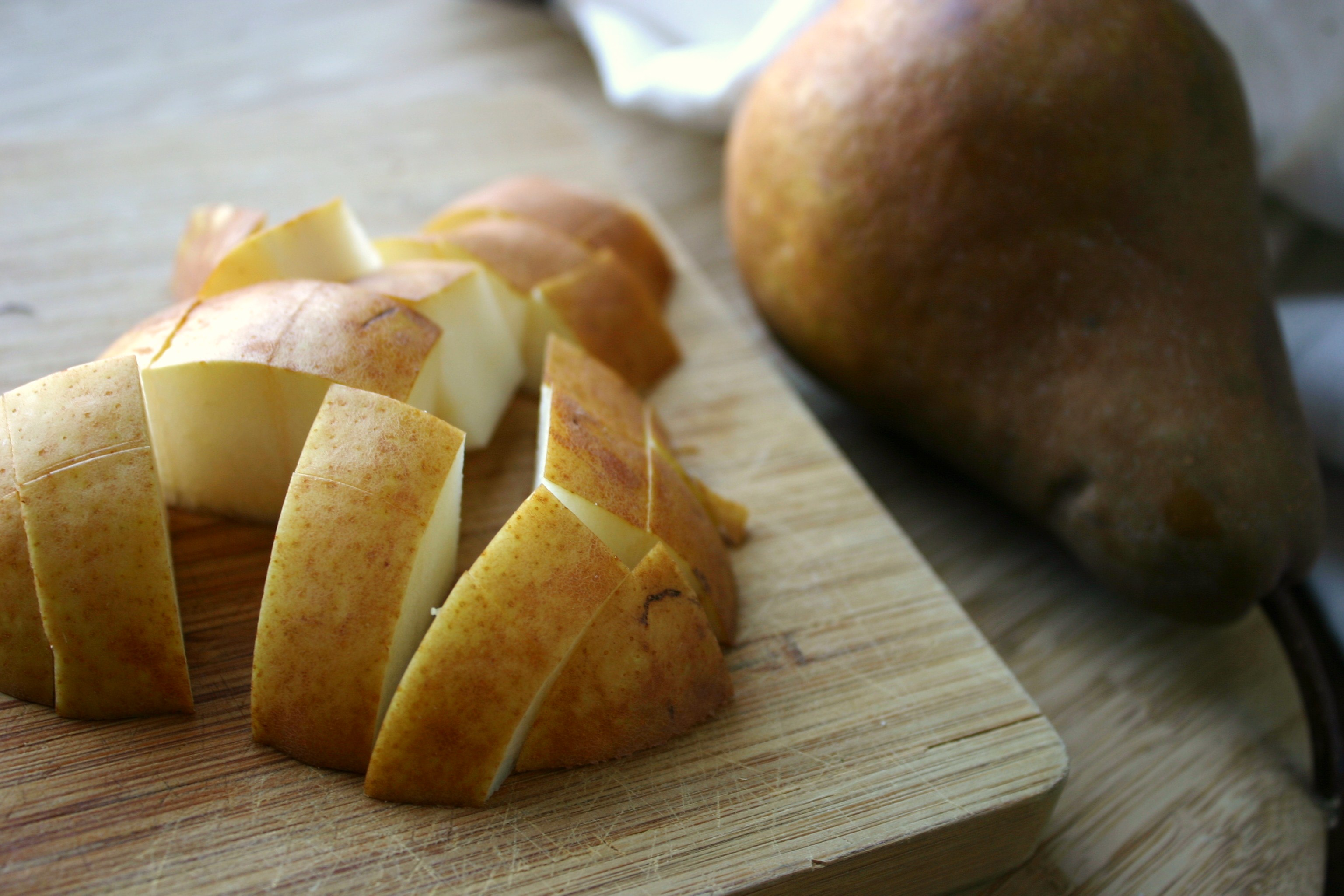
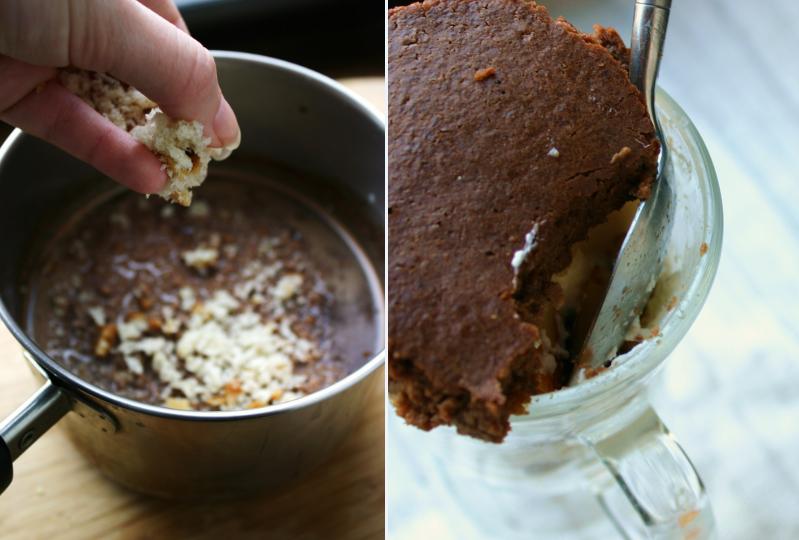
Chocolate Bread Pudding Trifle recipe hawthorne images

Continue reading “Nathaniel Hawthorne: Chocolate Bread Pudding Trifles”

George Orwell: Treacle Tart

George Orwell - Treacle Tart

Imagine this: It’s a Sunday night, the end of a long weekend full of gift shopping, cookie baking, and fun-but-exhausting holiday merrymaking. You can’t possibly cook now, you decide, and turn to your trusty takeout-menu drawer. What are you in the mood for, though? Thai? Italian? Indian? Ethiopian?

If there’s one thing I bet you didn’t say, it’s “British.” Despite the U.K.’s recent restaurant renaissance, its meals have been a culinary punchline for nearly a century, ever since World War I hobbled the country’s food culture. George Orwell summed up its characteristics rather bluntly: “simple, rather heavy, perhaps slightly barbarous.”

Orwell was obviously never one to hide his feelings about food; his travel writings slam chefs everywhere from France to Burma. You’d think he’d be a little kinder to his home cuisine, but he savages everything from fish and chips (“definitely nasty, and has been an enemy of home cookery”) to rice puddings (“the kind of thing that one would prefer to pass over in silence”) to pretty much any kind of vegetable (“usually smothered in a tasteless white sauce”).

But Orwell did reserve some praise for what was, in his mind, Britain’s crowning culinary glory: “sweet dishes and confectionery—cakes, puddings, jams, biscuits.” Best of all were the Christmas treats: plum pudding, and treacle tart, “a delicious dish … hardly to be found in other countries.”

So how could a food lover like Orwell explain the U.K.’s mediocre showing in the kitchen? As he tells it, it’s because the best English cooking isn’t at a charming bistro or fancy restaurant, but is made at home, where foreigners don’t have access. That may be bad news for tourists—but it’s a moment for home cooks to shine. When we’re baking scones or Yorkshire puddings, Orwell says, we can be chefs of our own making.

* * *

orwell images

Continue reading “George Orwell: Treacle Tart”