Alice Munro: Rosemary Bread Pudding

Alice Munro - Rosemary Bread Pudding

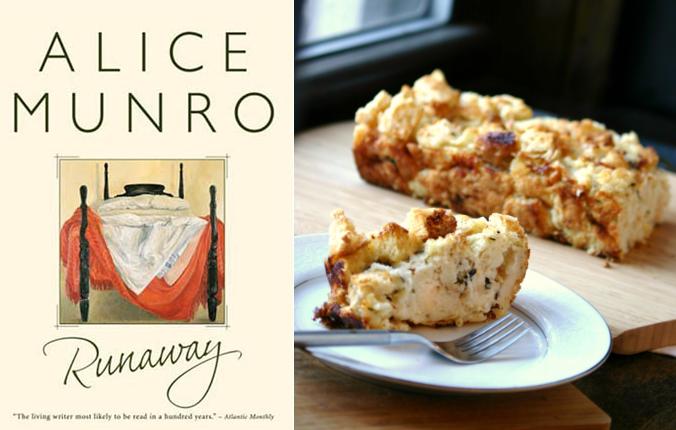
Last week, when Alice Munro found out she had won the Nobel Prize in literature, she was in bed. The prize committee had tried to reach her earlier by phone but ended up just leaving a voicemail, so it was Munro’s daughter who, hearing the announcement, ran to wake up her mom. That somehow seems fitting for Munro, whose stories revolve around intimate moments of domesticity. If Hemingway is a moveable feast, Munro is breakfast in bed.

Her writing is not only steeped in the household world; it also was created there. Munro’s desk is her dining room table, where she’s penned most of her work over the past few decades. As her interviewer at The Paris Review notes, “The dining room is lined floor to ceiling with books; on one side a small table holds a manual typewriter.” When she cooks in the neighboring kitchen, her work is never far away. Is it any wonder the two are connected in her stories, as in life?

Besides writing, cooking was the other constant in Munro’s own domestic drama. In her mostly autobiographical collection The View from Castle Rockshe recalls packing her father’s lunch in the morning, a regular chore: “three thick sandwiches of fried meat and ketchup. The meat was cottage roll ends or baloney, the cheapest meat you could buy.” Later, when she was married, Munro’s stories would continue to take a back seat to food prep. She told the Review, “I would write until everybody came home for lunch and then after they went back, probably till about two-thirty, and then I would have a quick cup of coffee and start doing the housework.”

Although Munro still cooks (one of her interviewers watched her prepare a meal, which made ample use of the Canadian countryside’s fresh herbs), she now often chooses to leave the kitchen to others. She regularly asks reporters to meet at her favorite restaurant in the nearby town of Gogerich, Ontario—Bailey’s Fine Dining—where she has a usual table (corner) and a usual drink (white wine, sauvignon blanc preferred, multiple pours encouraged).

Until just a few days before the award announcement, Haruki Murakami, known for his hulking postmodern novels, was said to be the front-runner for the Nobel. It’s hard to imagine a writer further than Munro. Her subjects are often described as “quiet” or “domestic” and (given that they’re short stories) “small.”

Munro herself sometimes doubted their impact; she told the New Yorker last year, “For years and years I thought that stories were just practice, till I got time to write a novel.” But the major recognition of her work helps us all remember what a “small” story can do—how an intimate revelation at the dining room table can hold as much truth as an epic; how a perfect fried baloney sandwich can sometimes hit the spot more than any six-course meal.
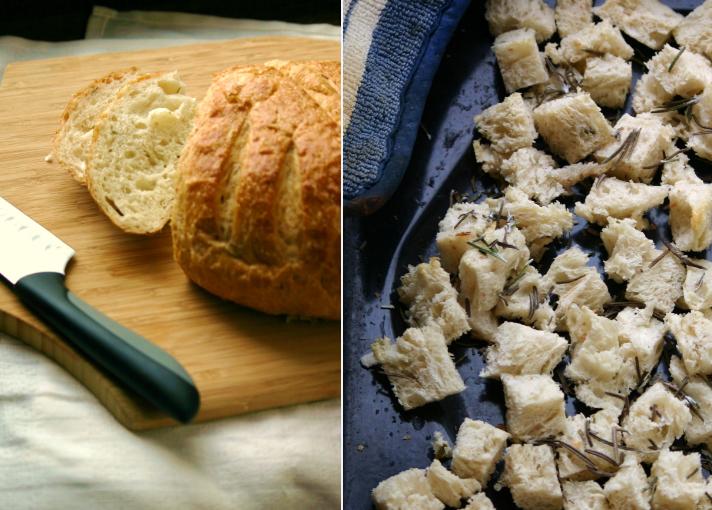
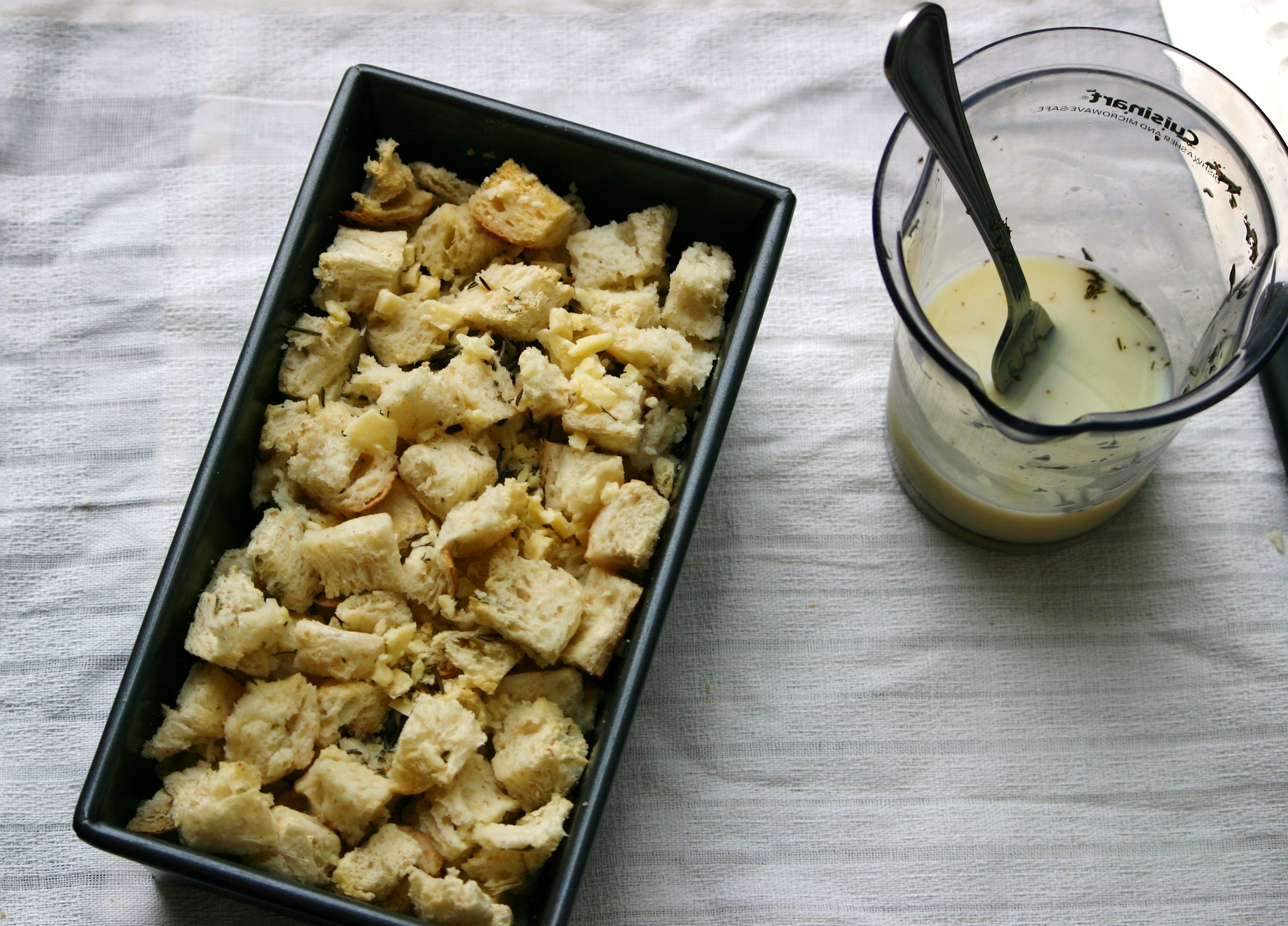
Rosemary Bread Pudding Recipe

munro3

Rosemary Bread Pudding Recipe

Continue reading “Alice Munro: Rosemary Bread Pudding”

The Cocktail Hour: Carson McCullers

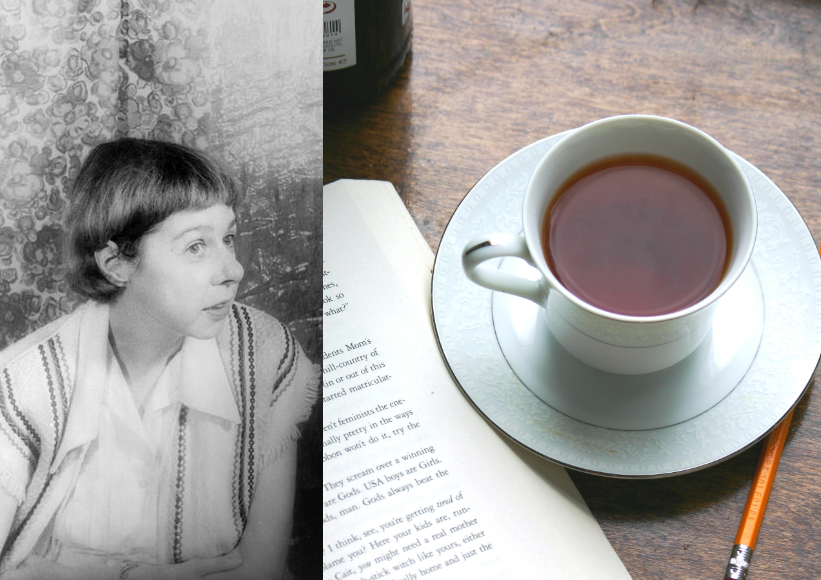
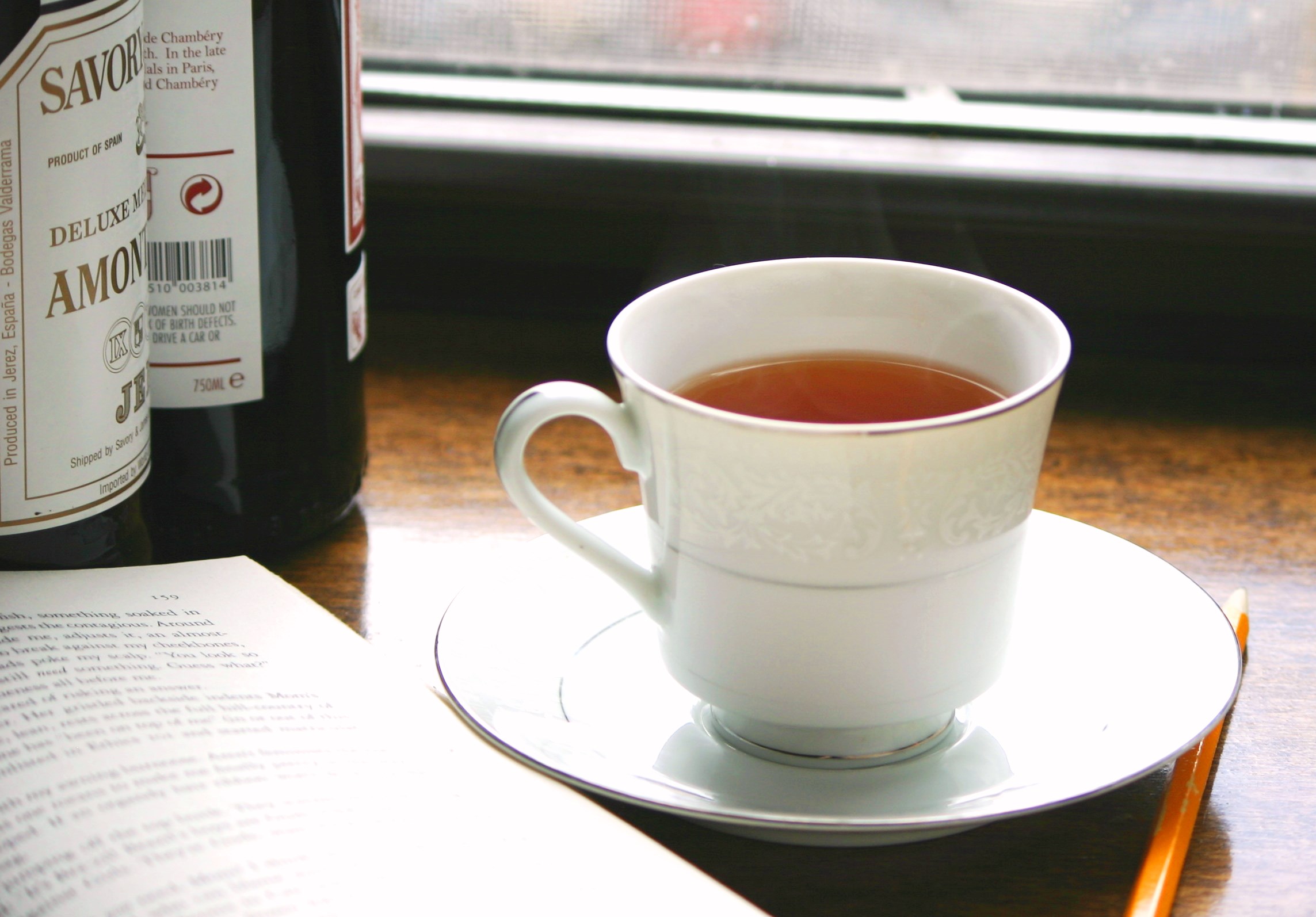
Sherry Tea Cocktail Hot Toddy Recipe

If you’ve ever lived with roommates, you know that the kitchen can be a dangerous place—and not because of the sharp objects. Battles in the tiny kitchens of New York are usually fought on a more passive-aggressive level, tearing apart even the closest of friends: skirmishes over fridge space, scuffles over stolen food, brawls about dishwashing duty.

That’s what happened in Brooklyn in 1940, when a motley crew moved into a dilapidated brownstone at 7 Middagh Street: poet W.H. Auden; playwright Jane Bowles; her husband, Paul; and Carson McCullers, whose debut novel The Heart Is a Lonely Hunter was the blockbuster book of the summer. Add composer Benjamin Britten and burlesque artist Gypsy Rose Lee, and you had a very eclectic roster of roommates—none of whom was particularly interested in doing the dishes.

Which isn’t to say they didn’t create enough of them. McCullers was the de facto chef of the house, though her signature dishes left a little to be desired. According to a biography by Virginia Spencer Carr, The Lonely Hunter, McCullers’ specialties included “canned green pea soup enlivened with small chunks of wieners, and a unique dish which she labeled ‘spuds Carson,’ made with creamed potatoes, ripe olives, minced onions, and grated cheese.” Recipes were something McCullers “preferred to talk about, to envision the results rather than to actually cook them.” In other words, she improvised.

Instead, McCullers devoted the majority of her attention—and budget—to drinking. While living with her first husband, Reeves McCullers, she splurged on gallons of sherry, while dinners consisted mainly of eggs, bread and milk. By the time she moved to Middagh Street, McCullers still didn’t have recipes for actual meals, but she did have her signature drink down: a mix of hot tea and sherry, which she called “sonnie boy” and kept in a trusty thermos. She and the thermos were soon inseparable (there’s a picture of the two of them in The Lonely Hunter, with McCullers looking much happier than she did with the husband).

McCullers’ dubious skill in the kitchen was matched by her disregard for cleaning it. She would often forget about things on the stove, and return to find dinner burnt to a crisp, stuck to the pan. Visitors noted that “many of her pans, with remnants of charred food in them, were in soak on the kitchen floor.” This didn’t go over too well with the roommates—particularly Auden, the den mother of the group, who was in charge of both mealtimes (breakfast at 9 a.m. sharp.) and toilet paper patrol (one square per flush).

In his 1941 poem “New Year Letter,” Auden praises the merits of routine, work hours and regular meals. He doesn’t mention clean dishes, but you have to wonder if living with McCullers prompted the rant. Does a clean house really inspire creativity? Or is the cleaning just a distraction from inspiration itself? It’s an ongoing roommate debate—and if you live with a writer, one that might just be immortalized in verse, for future generations to read.

Carson McCullers - Cocktail Hour

Continue reading “The Cocktail Hour: Carson McCullers”