George Orwell: Treacle Tart

George Orwell - Treacle Tart

Imagine this: It’s a Sunday night, the end of a long weekend full of gift shopping, cookie baking, and fun-but-exhausting holiday merrymaking. You can’t possibly cook now, you decide, and turn to your trusty takeout-menu drawer. What are you in the mood for, though? Thai? Italian? Indian? Ethiopian?

If there’s one thing I bet you didn’t say, it’s “British.” Despite the U.K.’s recent restaurant renaissance, its meals have been a culinary punchline for nearly a century, ever since World War I hobbled the country’s food culture. George Orwell summed up its characteristics rather bluntly: “simple, rather heavy, perhaps slightly barbarous.”

Orwell was obviously never one to hide his feelings about food; his travel writings slam chefs everywhere from France to Burma. You’d think he’d be a little kinder to his home cuisine, but he savages everything from fish and chips (“definitely nasty, and has been an enemy of home cookery”) to rice puddings (“the kind of thing that one would prefer to pass over in silence”) to pretty much any kind of vegetable (“usually smothered in a tasteless white sauce”).

But Orwell did reserve some praise for what was, in his mind, Britain’s crowning culinary glory: “sweet dishes and confectionery—cakes, puddings, jams, biscuits.” Best of all were the Christmas treats: plum pudding, and treacle tart, “a delicious dish … hardly to be found in other countries.”

So how could a food lover like Orwell explain the U.K.’s mediocre showing in the kitchen? As he tells it, it’s because the best English cooking isn’t at a charming bistro or fancy restaurant, but is made at home, where foreigners don’t have access. That may be bad news for tourists—but it’s a moment for home cooks to shine. When we’re baking scones or Yorkshire puddings, Orwell says, we can be chefs of our own making.

* * *

orwell images

Continue reading “George Orwell: Treacle Tart”

Beatrix Potter: Gingerbread Cookies

Among all children’s authors I loved growing up, Beatrix Potter always seemed the most wholesome by far. My favorite books were the eyebrow raisers: the delicious nastiness of Roald Dahl, the nightmarish worlds of Maurice Sendak. Even The Velveteen Rabbit gets borderline traumatizing. When the only person you truly love gets scarlet fever, and all your friends are burned, you can finally become “real” if you cry? That’s more drama than a episode of Dawson’s Creek.

I remembered Peter Rabbit and Jeremy Fisher as cuddly and innocent in comparison, but on a recent visit to the Morgan Library, I realized I had it all wrong: Potter had a not-so-secret dark side. Not a book goes by without some cute animal about to be skinned, drowned in a sack, or baked in a pie. Potter began her original draft of The Tale of Mr. Tod, “I am quite tired of making goody goody books about nice people.” Her editor nixed it; turns out, readers wanted those goody goody books.

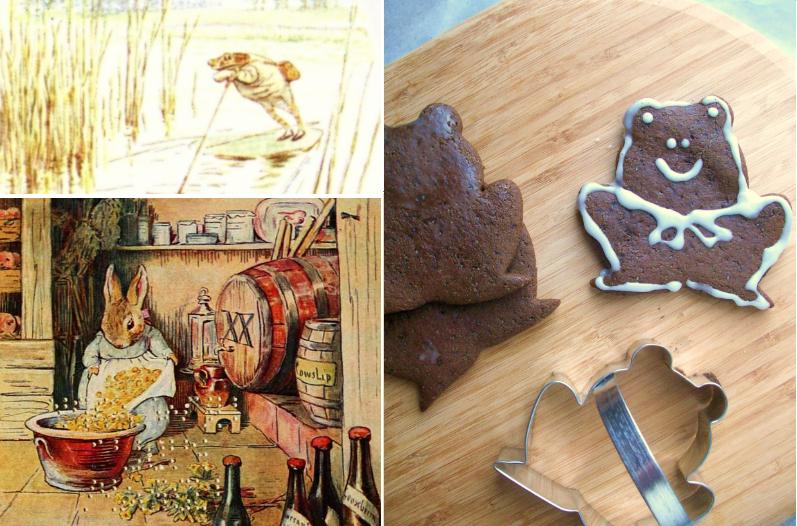
Still, a few less-than-goody bits made it into print. One of my favorite Potter characters is Cecily Parsley, an adorable rabbit who moonlights as a beer brewer. Potter’s illustrations show Cecily soaking some barley in front of comically large barrels marked “XX.” It’s impossible to imagine other favorite children’s characters doing the same: Anne of Green Gables opening up a distillery, or the Goodnight Moon mouse tippling on some homemade hooch.

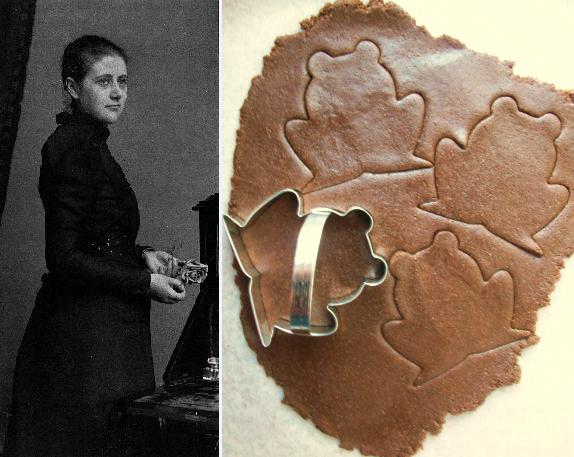
Did Potter take a cue from Cecily and start her own homebrews? Probably not. She did cook; at her beloved Hill Top Farm, in England’s Lakes District, she planted an herb and vegetable garden that Peter Rabbit would have loved to pillage. Much of her produce came from those gardens, but not all her recipes were virtuous. When Potter’s family recipe book went up for auction this fall, hiding in her gingerbread was a good dose of ale—a little bit of naughty in the midst of all that sugar, spice, and everything nice.

* * *

Continue reading “Beatrix Potter: Gingerbread Cookies”