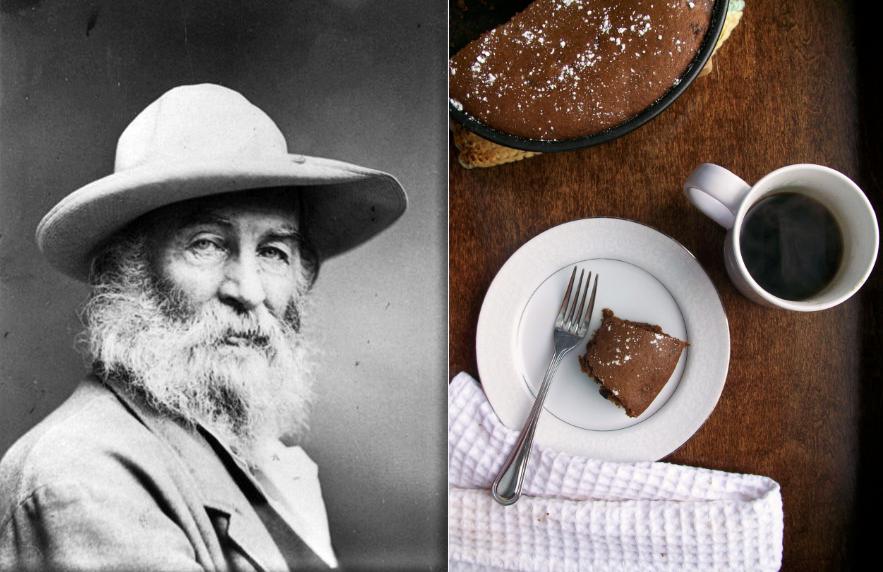
Walt Whitman: Cranberry Coffee Cake

For a transcendentalist, Walt Whitman was a bit of a hoarder. Just take a look at his daybooks, and you’ll see a list of the scraps he saved over the years: photos, receipts, weather reports, news articles, classified ads, and dozens of press mentions of Whitman himself. He meticulously monitored the papers, carefully cataloging his presence in the world. If he were around today, you just know he would be a chronic self-Googler, or maybe a habitual lurker in the comments section of New York magazine.

Among Whitman’s collection of papers from the 1880s are the few recipes he liked enough to preserve: one for doughnuts and one for coffee cake, making him a man after my own (pastry-clogged) heart. He regularly gave coffee cakes as gifts, probably because he wanted to receive them himself. In a letter from 1877, he wrote, “I was foolish enough to take a good strong drink, & eat a couple of slices of rich cake late at night – & I shan’t do any thing of the kind again.” Yeah, I’ve heard that one before. It’s what I tell myself before checking to see if the ice cream place down the street delivers (the beauty of New York is that it does).

That year, Whitman was recovering from a stroke and had moved to New Jersey under the care of his brother. “But I am pretty well,” he wrote, “& feel more able & sassy every day.” More than anything in Leaves of Grass, these letters from Whitman have inspired my new personal philosophy: Live every day with sass, and with several slices of cake.

* * *

Continue reading “Walt Whitman: Cranberry Coffee Cake”

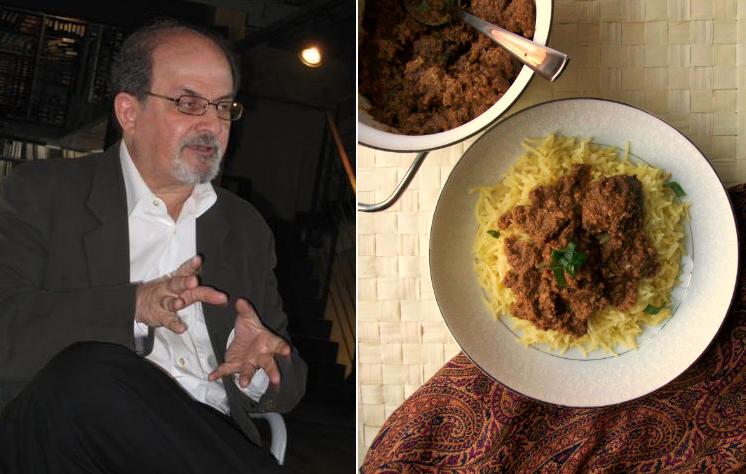
Salman Rushdie: Lamb Korma

You can’t escape food when reading Salman Rushdie. Start looking and suddenly it’s everywhere: Pyarelal’s saffron pulao in Shalimar the Clown, Sisodia’s feast in The Satanic Verses, the grandmother’s pantry in Midnight’s Children.

It’s the same with the real Rushdie; he’s a man surrounded by food. His marriage to Top Chef and cookbook author Padma Lakshmi is an obvious connection. But so is his involvement with At Vermilion, the Manhattan restaurant that once offered a tasting menu devoted to his work (complete with autographed novel to take home, goodie bag style). You think you’re reading an article about the fatwa and boom —out of the blue, it links to the author’s recipe for curry. Food just follows him.

Why Rushdie decided to give Parade magazine his korma recipe, I’ll never know (it doesn’t quite jibe with other articles on offer: “Fire Up the Griddle! Pancakes for Every Meal of the Day”). But his description of the family history behind the dish (it’s his son’s favorite as well) reminds me why food plays such a crucial role in his novels: Community comes together over a good meal.

Korma was a favorite dish in Midnight’s Children, too, but in a less heartwarming, more threatening context. “This, whatsitsname, is a very heavy pot,” that grandmother says, “and if just once I catch you in here, whatsitsname, I’ll push your head into it, add some dahi, and make, whatsitsname, a korma.” I decided to go with Rushdie’s version of the recipe instead – more lamb, less dismemberment.

* * *

Continue reading “Salman Rushdie: Lamb Korma”

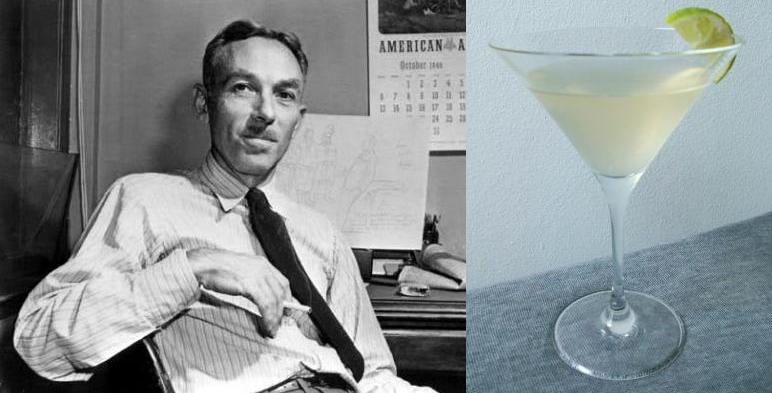
The Cocktail Hour: E.B. White

Learning about the drinking habits of your favorite children’s book author is both disconcerting and a little thrilling. It’s like that teenage realization, so obvious yet somehow inconceivable, that your parents likely were sloshed at some point during your early years and you didn’t even notice.

When you’re raised with Charlotte and Stuart Little, it’s harder to remember E.B. White’s other pursuits, ones that make him a more likely candidate to kick off a cocktail feature. Besides revising that English-major staple The Elements of Style, he was one of The New Yorker’s top contributors for an incredible 50 years. After a half-century in that crowd, you’re bound to pick up a few mixology tricks.

Writers are a notoriously well-soused bunch. But a martini probably has the most literary pedigree of any drink in the repertoire: the publishers’ three-martini lunch, Dorothy Parker’s poem, James Bond. White was one of its most vocal devotees, praising it as “the elixir of quietude. … Martinis, if anything, have a muting effect on the constant ringing in my ears.”

It’s still hard for me to picture White, martini glass in hand, writing the words I would later read with a flashlight under the covers. It’s easier to imagine him early on: just out of Cornell and working at an ad agency, looking for a newspaper job on his lunch breaks. “I wouldn’t mind going without the food if I could have a little luck with the jobs, but it’s damn hard to have neither success nor sandwiches at noon,” he wrote in 1921. When his first New Yorker piece was published, four years later, I envision him sitting down with a celebratory turkey club and pouring out a much-deserved drink.

* *  *

Continue reading “The Cocktail Hour: E.B. White”